
Institution Profiling / Internet infrastructure institution

FTC’s Khan hopes to open AI models to enhance competition

FTC’s Khan hopes to open AI models to enhance competition is tracked as a internet infrastructure institution within the internet infrastructure ecosystem.

FTC’s Khan hopes to open AI models to enhance competition
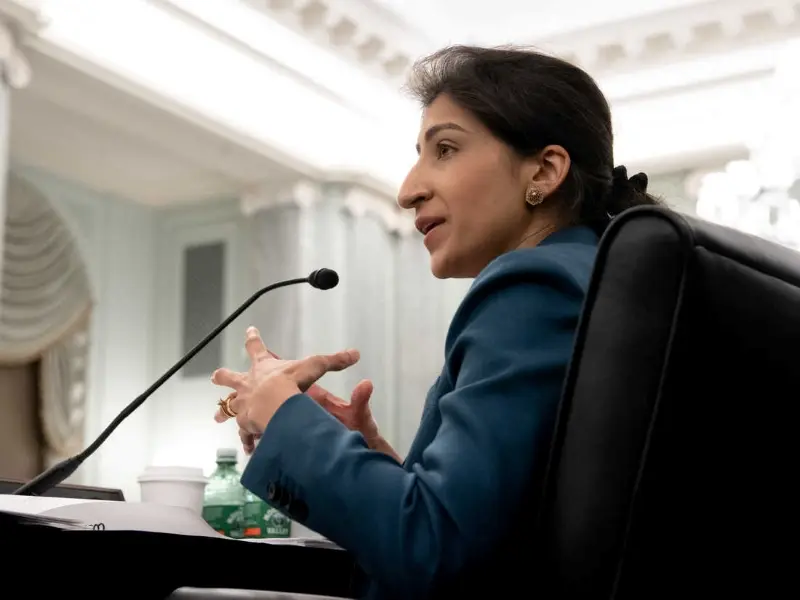
Caption: FTC’s Khan hopes to open AI models to enhance competition visual context for BTW intelligence coverage. · Source context: Existing article media was retained or restored as the subject-specific visual basis. · Relevance reason: FTC’s Khan hopes to open AI models to enhance competition is the primary subject or event subject; the image supports the article's market reading. · Image provenance: Existing curated article image retained because it is subject- or event-specific and not a generic pool placeholder.

Sources

Public references used for this article.

External references will appear here after editorial citation review.

CategoryInstitution

FTC’s Khan hopes to open AI models to enhance competition is tracked as a internet infrastructure institution within the internet infrastructure ecosystem.

RegionAsia Pacific

FTC’s Khan hopes to open AI models to enhance competition has public-source relevance to network operations, governance, dependency mapping, or market structure.

Signal FocusInternet infrastructure institution

FTC’s Khan hopes to open AI models to enhance competition has public-source relevance to network operations, governance, dependency mapping, or market structure.

Content TypeProfile

FTC’s Khan hopes to open AI models to enhance competition is tracked as a internet infrastructure institution within the internet infrastructure ecosystem.

Primary DomainTechnology

Public-source signals support medium-impact monitoring for infrastructure visibility and dependency analysis.

TopicInternet infrastructure institution

FTC’s Khan hopes to open AI models to enhance competition is profiled by BTW Media because published evidence links it to internet infrastructure, governance, operational dependencies, or market visibility.

ImpactMedium

Public-source signals support medium-impact monitoring for infrastructure visibility and dependency analysis.

Confidence?Confidence Grade
0.90–1.00AHigh — direct sources
0.75–0.89A/BStrong
0.55–0.74B/CMedium
0.35–0.54C/DWeak–medium
0.10–0.34DWeak signal
0.00–0.09DInternal monitoring
Limited confidence (76%)

Several public sources

FTC’s Khan hopes to open AI models to enhance competition is profiled by BTW Media because published evidence links it to internet infrastructure, governance, operational dependencies, or market visibility.

  • Open AI models have the potential to enhance competition in the industry by allowing developers more freedom to customise them.
  • The Biden administration is actively considering guidelines on the use and safety of open-weight models to ensure responsible and ethical use.

OUR TAKE
Federal Trade Commission Chair Lina Khan supports the use of open-weight models and emphasises their ability to empower startups by providing them with greater control over AI technologies, including investigations into companies like Microsoft, with a focus on preventing monopolistic practices and fostering a more open and competitive market environment in the AI industry.
-Lia XU, BTW reporter

What happened

Federal Trade Commission Chair Lina Khan supported open artificial intelligence models, particularly open-weight models, during an event at Y Combinator in San Francisco. She highlighted the potential of these models to enhance competition within the industry by providing developers with more flexibility to customise them.

People are concerned about the potential risks associated with open AI models. Critics have warned that companies from geopolitical rivals like China could take advantage of these models. Meanwhile, the Biden administration is actively considering guidelines on the use and safety of open-weight models.

Meta Platforms Inc. and Mistral AI are focused on releasing open-weight models. Still, others like Google and OpenAI prefer closed models, like the Llama 3.1 model with an open-access strategy introduced by Meta.

According to Khan, “The FTC is doing our part to be vigilant and to open up the market”. The FTC is actively involved in inquiries related to AI and the focus is on preventing monopolistic practices.

Also read: Altrove uses AI models and lab automation to create new materials

Also read: AI lies: Should we worry about deceptive AI models?

Why it’s important

Open artificial intelligence models, like open-weight models, are crucial. Because they have the potential to foster competition within the industry by providing developers with more freedom to customise them. By enabling developers to customise AI models with fewer restrictions, open AI models make the technology more accessible to smaller companies and researchers, fostering innovation and diversity in the field.

Besides, this action also plays a role in democratising access to AI technologies. It allowed a broader range of users to leverage these tools for various applications. The FTC’s involvement in inquiries related to AI and potential monopolistic practices demonstrates a commitment to creating a fair and competitive market environment that benefits consumers and promotes technological progress.

The significance of open AI models lies in their ability to drive innovation, competition, and collaboration in the AI industry, ultimately benefiting developers and users by creating a more diverse, accessible, and fair technological landscape.

At A Glance

  • Name: FTC’s Khan hopes to open AI models to enhance competition
  • Type: Internet infrastructure institution
  • Base: Asia Pacific
  • Profile focus: Institution

What It Does

  • Public records support monitoring of its role, services, and key relationships.

Why It Matters

  • Public-source signals support medium-impact monitoring for infrastructure visibility and dependency analysis.
  • Operational criticality: Medium
  • Time horizon: Next quarter

What To Watch

  • Monitoring focuses on verified service continuity, governance changes, and relationship signals.
NowMedium priority

Track verified source updates, role changes, and current public evidence.

QuarterMedium policy sensitivity

Public-source signals support medium-impact monitoring for infrastructure visibility and dependency analysis.

YearNext quarter outlook

Longer-term relevance depends on verified operating, policy, and relationship changes.

Member Briefing

Deeper Profile Context

Login is required to unlock the full profile briefing and source notes.

Only for Strategy Circle

Strategic Circle Access

Open to all readers. Unlock profile briefings after joining and logging in.

Join Strategic Circle

Only for Leadership Alliance

Leadership Alliance Access

For owners and management of IP-holding companies. Login required to unlock.

Join Leadership Alliance
← BackAll Companies