
Topic
Software Lifecycle and Lock-in
Within the Topic facet, Software Lifecycle and Lock-in topic intelligence connects articles that share a specific subject, signal focus, or monitoring theme. The page gives readers a richer path through related reporting, source evidence, market actors, and infrastructure implications, with enough context to understand why the topic matters across company movements, governance decisions, regional exposure, and operational risk. Readers can compare recurring signals, affected organisations, public evidence, market context, service continuity, procurement, competition, compliance, and strategic planning questions behind the subject instead of stopping at a thin list of matching articles. It explains what the topic covers, which infrastructure actors or policies are involved, what evidence supports the coverage, and why the subject may matter for operators, customers, investors, and policy readers.
CASE FILE
The VPN Number Arrived. Admission Was Still Open
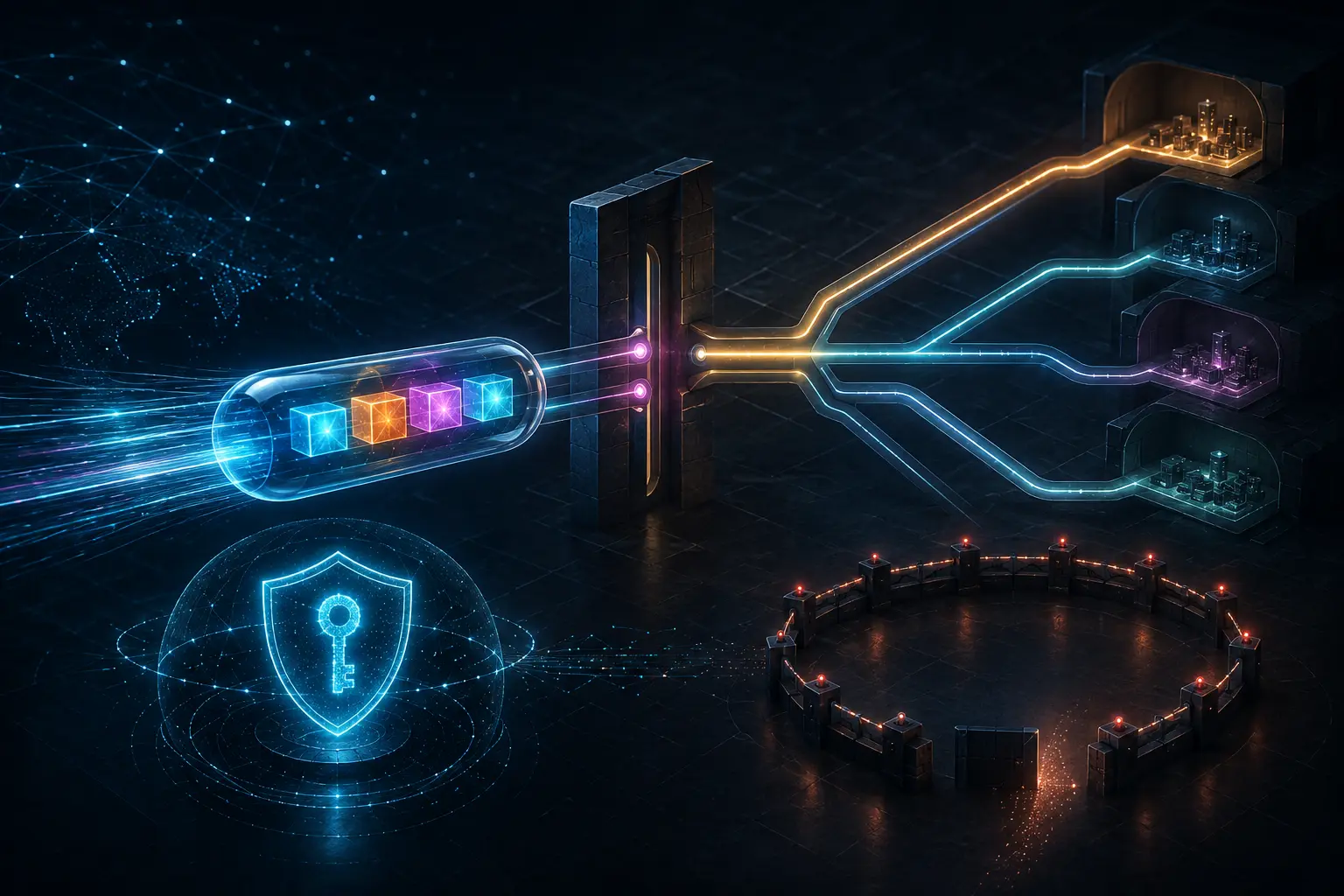
RFC 9837 puts a 32-bit VPN service selector inside an IPv6 packet. The field can tell an egress router which forwarding entry to use. It cannot tell that router whether the sender had the right to choose it. That second claim belongs to the tunnel and the domain boundary.

IETF
CATS Versioned Its Metric Manifest. The Score Still Does Not Name It
The newest CATS metric draft makes a sensible bargain: vendors agree once on how computing scores are normalized and combined, store that agreement in a version-controlled manifest, distribute it during initialization and avoid negotiating algorithms in every live message. But…

History
The Table Measured What an Application Could Use, Not the Disk: RFC 1514
A host can report a perfectly accurate disk capacity and a smaller, equally accurate amount of usable storage. The disagreement begins only when a manager strips away which layer each number describes. In 1993, RFC 1514 built that distinction into the Host Resources MIB: physical…

CASE FILE
The Circuit Was Ordered. The Network Had Not Built It
RFCs 9833–9836 give an attachment circuit several linked identities instead of pretending that an accepted customer order is already a working path. Their most useful operational lesson is the distance between the service request, the provider’s network realization and the…

History
The Address Stayed the Same. The Server Did Not Have To: RFC 1546
In 1993, one ordinary-looking destination field was asked to do an unusual job: name a service offered by several machines while declining to name any particular machine. RFC 1546 called that experimental service anycasting. Its enduring lesson is less about shortening a path…

History
The Probe Counted Shortages, Not Missing Frames: RFC 1513
The counter moved from 41 to 42. How many frames had vanished? RFC 1513 gave the only responsible answer: the number did not say. It recorded one more occasion on which a monitoring probe ran short of resources, not the size of the unseen traffic behind that shortage.

History
Why TCP Sequence Numbers Return to Zero
In TCP, zero does not always come before a large number. After sequence position 4,294,967,295, the next position is zero. The protocol keeps acknowledgments, windows and retransmission decisions coherent by treating the 32-bit sequence space as a ring and comparing positions…

IETF
One Intent, Two Link-State Languages: RFC 9903 and the OSPF SR-MPLS Control Boundary
A single SR intent can be managed through a common YANG surface, while OSPFv2 exposes it through Opaque LSAs and OSPFv3 through Extended LSAs and distinct TLVs. That is a shared management contract, not identical wire encoding.
History
The Number That Made TCP Flow Control Move
TCP did not put a receiver's memory size into every segment. It put a moving allowance into the header: a count of how many data octets the sender of that segment was then willing to accept, beginning at the acknowledgment frontier. That pairing turned flow control into a…

CASE FILE
The Signature Still Verified. The Identifier Had Changed
A new measurement submitted to the IETF shows how 64 different CBOR encodings can preserve one valid COSE signature while producing 64 different hashes of the transmitted statement. The cryptography did not fail. The storage boundary did: a system that reads and re-encodes before…

History
The Handle Was the Same. The Credential Could Be Different: RFC 1509
Two programs present the same pointer-sized value to a security service. One reaches Alice’s credential. The other may reach Bob’s—or nothing at all. No bit in the value has changed. The caller has. RFC 1509 made this possible on purpose, because its handle was never the…

CASE FILE
The SID Field Was Present. The SID Was Still Missing: RFC 9831
A controller sent a Segment Type I with its SID-present flag set. The receiving headend could count all 16 octets of the field. Every octet was zero. That was not malformed silence: RFC 9831 permits the controller to describe the behavior it wants while leaving the executable SID…

CASE FILE
At Mozilla, a Module Owner’s OK Is Neither Commit Access Nor a Firefox Release Promise
Mozilla’s public governance material makes a useful distinction that reporting often erases. A module owner or peer can approve a change for a module; a person can separately be granted repository access; a change can be checked in or landed; and Firefox can later move code…

IETF
The Model Behind the Label Stack: RFC 9902 and the Operational Contract for IS-IS Segment Routing
One enable leaf can start advertising IS-IS Segment Routing extensions, but safe activation depends on the protocol-independent SR label resources already configured beneath it. RFC 9902 makes that seam visible: the switch belongs to IS-IS, while the resources it invokes belong…

History
The Bits TCP Kept for the Future
Six quiet positions in TCP's 1981 header carried no immediate function. Their importance lay in the discipline around that emptiness: send them as zero, leave them available, and let a later standard define meaning without moving the boundary of the base header. Two decades…

History
The Bit That Made TCP’s Acknowledgment Number Mean Something
Every TCP segment reserves 32 bits for an acknowledgment number, but the number is not automatically evidence. One control bit decides whether those bits describe the next sequence number the sender expects—or are simply not significant at all.

IETF
IETF’s “Lost” Minutes Were Still There. The Archive Needs an Integrity Manifest
Two sets of IETF meeting minutes failed at the point where most readers decide whether a record exists: the link. Files for both sessions were nevertheless present in a mirrored proceedings collection, and a small server change made the old links work again. The repair solved…

History
The Number That Told TCP Where Data Began: Data Offset
TCP's header can grow when options are present, so the first application byte cannot live at one fixed position. A four-bit field solves the ambiguity: Data Offset counts the complete header in 32-bit words. Options may end early and padding may remain, but the encoded…

History
The Header That Was Never Sent: Why TCP Checksums IP Addresses
TCP validates more than the bytes in its own segment. Before calculating or checking the mandatory checksum, each endpoint conceptually places selected IP fields in front of the TCP header: the source and destination addresses, protocol identity and TCP length. This pseudo-header…

History
The Two Flags That Took Up Space: Why TCP Counts SYN and FIN
TCP numbers bytes, yet two control events also advance its sequence space. SYN stands before the first data octet and FIN stands after the last, giving connection opening and closing the same acknowledgment and retransmission protection as the stream without turning either flag…