
Topic
Security Automation
Within the Topic facet, Security Automation topic intelligence connects articles that share a specific subject, signal focus, or monitoring theme. The page gives readers a richer path through related reporting, source evidence, market actors, and infrastructure implications, with enough context to understand why the topic matters across company movements, governance decisions, regional exposure, and operational risk. Readers can compare recurring signals, affected organisations, public evidence, market context, service continuity, procurement, competition, compliance, and strategic planning questions behind the subject instead of stopping at a thin list of matching articles. It explains what the topic covers, which infrastructure actors or policies are involved, what evidence supports the coverage, and why the subject may matter for operators, customers, investors, and policy readers.

CASE FILE
The Nonce Matched. The Status Could Still Be Wrong: RFC 9654 and the Freshness Boundary
An OCSP client receives exactly the random value it sent, validates the response envelope and turns its dashboard green. Yet the responder may have signed from a delayed revocation feed. RFC 9654 gives the client strong evidence that this is the answer to this request. It does…

Number Resource Society
How a Passkey Setup Guide Became a Directory 'Institution'
A directory card listing an organisation called "Setting up 2FA with Passkey" in Taiwan points, in reality, at a section heading inside RIPE NCC's login-security documentation. The gap between the label and the underlying entity is itself the story: it shows how automated…

History
The Roadmap Put Every Rule in Its Place. It Did Not Put Any Rule into Service
In 1998, IPsec needed more than secure algorithms. It needed a way to stop its own specifications from contradicting one another. RFC 2411 drew a map of where each kind of rule belonged—architecture, packet format, algorithm binding, assigned number or key management—while…

IETF
The path was unique. The record was not
RFC 9535 gives one node a canonical address inside one particular JSON value. The precision is real—and it expires the moment the value changes.

CASE FILE
RFC 9649: The Image Rendered Correctly While Its Provenance Disappeared
The derivative looked identical to the approved original. Its dimensions matched, every visible pixel survived, and the browser displayed it without complaint. Yet the only application-specific chunk that connected the asset to its custody record had vanished. The picture was…

History
NULL Was a Negotiated Choice. The Packet Did Not Advertise That Choice
RFC 2410 gave IPsec an encryption algorithm that changed no bit at all. That apparent joke solved a serious interoperability problem: two endpoints could agree explicitly to use ESP for integrity without confidentiality. Yet the same ordinary ESP packet did not give an…

IETF
The certificate arrived. The delivery chain did not
RFC 9538 gives an authorized downstream CDN a disciplined route to its own certificate key. That achievement ends before DNS direction, fleet installation, TLS selection, content correctness and the user’s first successful request.

CASE FILE
RFC 9646: A 400 Response Can Request a CSR but Cannot Authorize an Identity
The monitoring system saw `400 Bad Request` and opened an incident. The device, however, had reached exactly the transition RFC 9646 expected: the bootstrap server was asking it to create a key and return a particular kind of certificate request. The status code described one…

History
The Third Hash Closed Quick Mode. It Did Not Confirm Both Kernels
RFC 2409 ended its base Quick Mode with a protected third message. That message proved something precise to the responder: the initiator had seen the responder’s nonce and still possessed the authenticated Phase 1 state. It did not send a fourth message back, mutate two kernels…

History
The Policy Was Not the Packet
A security rule could look impeccable on an administrator’s screen while a packet took a different path. RFC 2401 made that gap inspectable: policy chose a disposition, Security Association state supplied parameters, and the packet path had to perform—and on receipt verify—the…

CASE FILE
RFC 9645 and the Authentication Path That the Configuration Cannot Prove
The control plane can show four legitimate ways to establish a TLS identity: a certificate, a raw public key, a TLS 1.2 pre-shared key, or a TLS 1.3 external PSK. A live session uses one path—or a resumption path with different evidence. When an incident review asks who…

History
The Cookie Identified the Exchange. It Did Not Identify the Peer
RFC 2408 put two cookies at the front of every ISAKMP message and called them anti-clogging tokens. They could help a host reject invented state before expensive cryptography and later identify an ISAKMP Security Association. They were not credentials. The protocol still needed a…

History
The DOI Named the Vocabulary. The Host Still Made the Decision
In RFC 2407, the number `1` told an ISAKMP peer how to read the negotiation that followed. It did not tell the peer whom to trust, which proposal to accept, whether a Security Association reached the kernel, or what later packets achieved. The IPsec Domain of Interpretation made…

CASE FILE
RFC 9644 and the Missing Receipt for an SSH Algorithm Decision
A green configuration diff is a comforting artefact. It can show that a device accepted an ordered list of SSH algorithms, that the names were valid, and that an approved policy reached the intended node. It cannot show which algorithms two peers offered, which intersection won…

History
The Payload Was Protected. The Envelope Was Still Visible
RFC 2406 did not turn an IP packet into an opaque entity. It protected a precisely drawn region. Outside that region, the outer address, protocol number, Security Parameters Index, Sequence Number, length and timing could still tell a story. Inside it, confidentiality and…

CASE FILE
The Backup Loaded. The Keys Did Not Return to Work: RFC 9642
RFC 9642 gives network systems a shared YANG model for central and inline keys, certificates, encrypted values and built-in key state. It can make a restored configuration look complete. Recoverability still depends on the exact KEK and primary-key graph, destination binding…

CASE FILE
The Trust Anchor Was Referenced. The Peer Was Not Yet Accepted: RFC 9641
RFC 9641 gives network-management systems a common way to name and reuse certificates and public keys as trust anchors. A valid reference can prove that a configured entity exists. It cannot, without the verifier’s decision trace, prove which bytes were used, whether the peer’s…
History
The Authenticated View Was Not the Wire Image
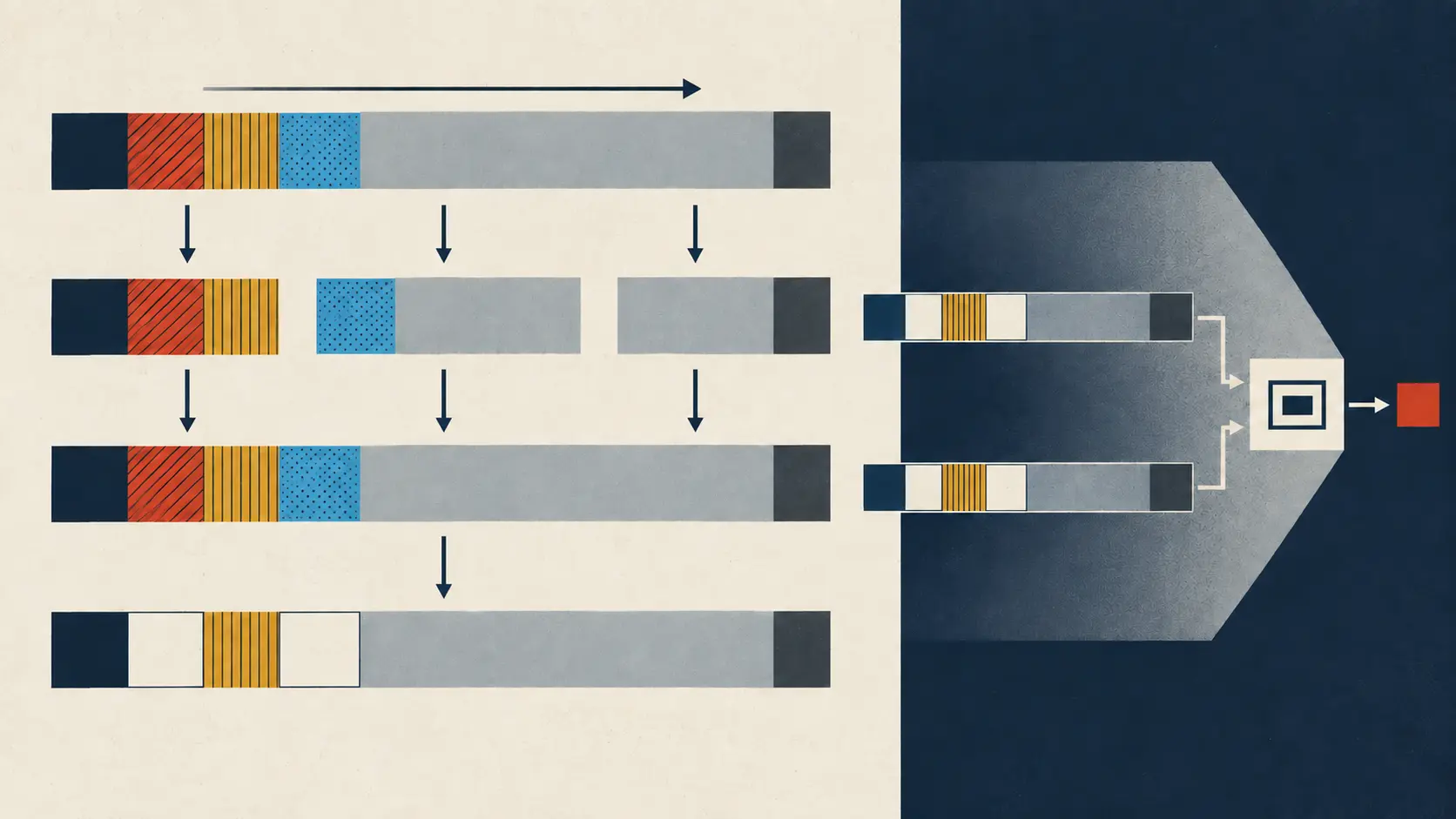
RFC 2402 did not ask sender and receiver to authenticate every IP-header bit exactly as it appeared in transit. They first prepared the same calculable view: protect what could remain stable, predict what would arrive deterministically, and replace unpredictable mutable contents…

CASE FILE
The Tree Contained a Hidden Key. It Did Not Contain Its Custody: RFC 9640
RFC 9640 gives network-management systems a disciplined vocabulary for cryptographic material. A YANG tree can distinguish a cleartext, hidden or encrypted key and can attach restrictive access defaults. It still cannot, by itself, prove where the key came from, who may use it…

IETF
The commit returned. The stale host may still be writing
RFC 9561 maps the pNFS SCSI layout onto NVMe identifiers, reservations and flush commands. The map is precise. The operational receipts that prove fencing, stable storage and the application's result remain separate.