
Topic
Registry Governance
Within the Topic facet, Registry Governance topic intelligence connects articles that share a specific subject, signal focus, or monitoring theme. The page gives readers a richer path through related reporting, source evidence, market actors, and infrastructure implications, with enough context to understand why the topic matters across company movements, governance decisions, regional exposure, and operational risk. Readers can compare recurring signals, affected organisations, public evidence, market context, service continuity, procurement, competition, compliance, and strategic planning questions behind the subject instead of stopping at a thin list of matching articles. It explains what the topic covers, which infrastructure actors or policies are involved, what evidence supports the coverage, and why the subject may matter for operators, customers, investors, and policy readers.

Number Resource Society
Bayan Telecommunications, AS6648 and the Boundary Between Network Records and Control
Bayan Telecommunications appears in a company directory, an Internet number registry, an interconnection directory and a routing-visibility service. Those records illuminate different parts of network identity, but they do not combine into proof that one company owns every…

Europe and Middle East National Telecom
Tele Columbus and German Broadband Infrastructure: What Site and Registry Identity Do Not Prove About Control
Tele Columbus sits at the intersection of consumer broadband, physical network operations and Internet coordination records. Understanding that intersection matters because the same company and brand names can appear on corporate pages, legal notices, buildings and network…

Europe and Middle East National Telecom
Telekom Srbija and Serbian Network Identity: What a Telecom Site Does Not Prove About Operational Control
A company name on a telecom-related page can be useful evidence, but it is rarely the whole answer. Reading Telekom Srbija’s network identity responsibly means separating a legal entity, a dated site relationship, a registry listing and an internet coordination record—and then…

Europe and Middle East National Telecom
Beltelecom and Belarusian Telecom Continuity: What Company Identity Does Not Prove About Network Control
Beltelecom and Belarusian Telecom Continuity: What Company Identity Does Not Prove About Network Control intelligence summary explains the development, the public evidence available to readers, the organisations involved, the regional context, market exposure, and the…

Europe and Middle East National Telecom
POST Luxembourg and National Connectivity: What Company Identity Does Not Prove About Network Control
POST Luxembourg sits at the intersection of legal identity, group organization, regulated network access and a major fixed-network technology transition. Those four dimensions matter to national connectivity, but they answer different questions—and none, by itself, proves…

Europe and Middle East National Telecom
Arqiva and UK Broadcast Infrastructure: What Site Identity Does Not Prove About Network Control
Arqiva's public record, its descriptions of transmission work and the named role of Emley Moor show how legal identity and operational continuity can be examined together without treating them as the same thing.

North America National Telecom
Bright House Networks, LLC: What a 2016 Acquisition and an ARIN Registry Record Do Not Prove About Current Network Control
A historical acquisition record and a later-visible registry identity can both be accurate while answering different questions. Reading those records together requires a strict boundary between corporate history, administrative continuity and evidence of who controls a network…

Europe and Middle East Cloud Services
Equinix (Netherlands) B.V. and AM3/AM4: Where Registry Identity Stops Short of Facility Control
Three public records describe a legal member name, a entity-maintained facility identity and an exchange colocation location in Amsterdam. Read together, they clarify where those identities meet, but they do not establish that Equinix (Netherlands) B.V. owns, operates or controls…

Europe and Middle East Cloud Services
Telehouse International Corporation of Europe Ltd’s Docklands Expansion: Why West Two Is an Operational-Control Test
Telehouse’s planned West Two expansion sits beside an existing Docklands facility and a visible interconnection ecosystem, but those facts occupy different evidence layers. The useful question is not whether the project sounds connected or resilient; it is which legal, facility…

Europe and Middle East Cloud Services
Orange Business Services SA's Hosting and CDN Boundary: What Its DSA Report Reveals About Operational Control
Orange Business Services SA's transparency report draws a useful line between hosting and caching responsibilities, internet-access reporting, and registry identity, showing why operational control must be verified service by service rather than inferred from a shared corporate…

Europe and Middle East National Telecom
2 Swisscom Broadcast Ltd’s Bantiger Site: Why the FM-to-DAB+ Shift Is an Operational Continuity Handoff
Switzerland’s FM transition is easy to compress into a date and a replacement technology. The evidence around Bantiger calls for a more careful reading. Broadcaster timing differs, the named site carries several functions, and the available records answer different questions…

Asia-Pacific National Telecom
Spark New Zealand's 3G Shutdown: Why Device Compatibility Became a Telecom Continuity Gate
Spark says its 3G network shut down on 31 March 2026. The practical consequence is not that every device automatically moved to a newer network, but that compatibility became a condition of continued use. Bands, voice support, antennas, modules, SIMs and testing now sit between a…

Asia-Pacific National Telecom
Chorus and New Zealand's Copper Exit: What Fibre Safeguards Reveal About Telecom Continuity
The important question in a copper-to-fibre transition is not whether fibre is newer. It is whether a working replacement is available to the person who is about to lose an existing service. New Zealand's safeguards make that distinction operational: copper withdrawal depends on…
Global Cloud Services
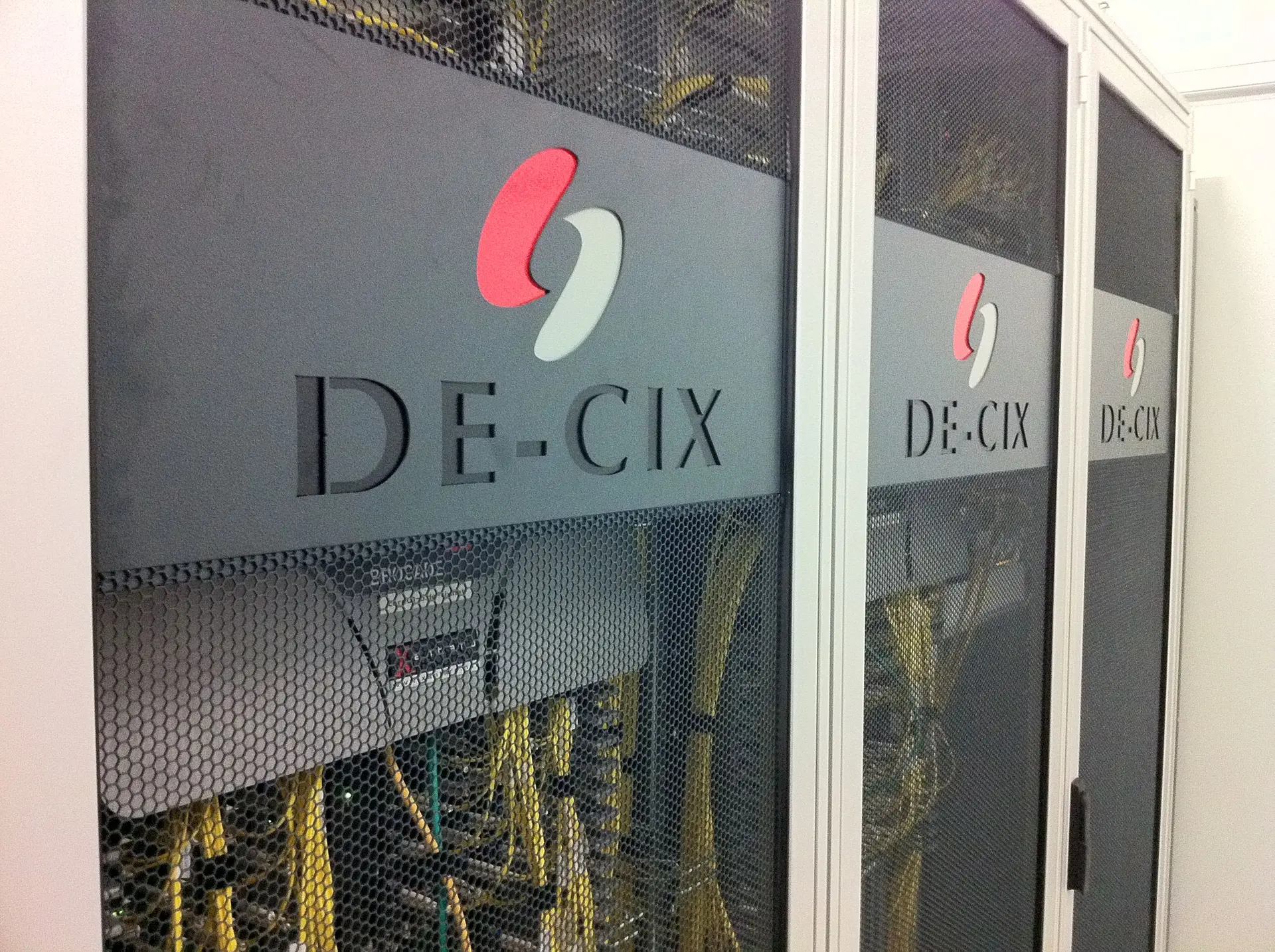
DE-CIX Barcelona: How a Multi-Site Internet Exchange Supports Route Continuity
For a business that depends on online services, “route continuity” is the ability to keep useful network paths available when a component, connection, or policy stops working as expected. It is tempting to treat a multi-site exchange as a finished resilience product. That…

Africa Institutional
ZARC 2025 DNS incident made .za registry resolution continuity an accountability test
In March 2025, a DNS disruption around .ZA commercial second-level domains showed why registry continuity is not a back-office detail. DNS is the internet lookup system that turns a domain name into reachable network directions. When that lookup layer degrades, users can see a…

Africa National Telecom Trends
Helios Towers raises 2026 guidance again
Helios Towers raised its tenancy, earnings, and cash-flow forecasts after record first-half additions across Africa and the Middle East.
Europe and Middle East National Telecom Trends
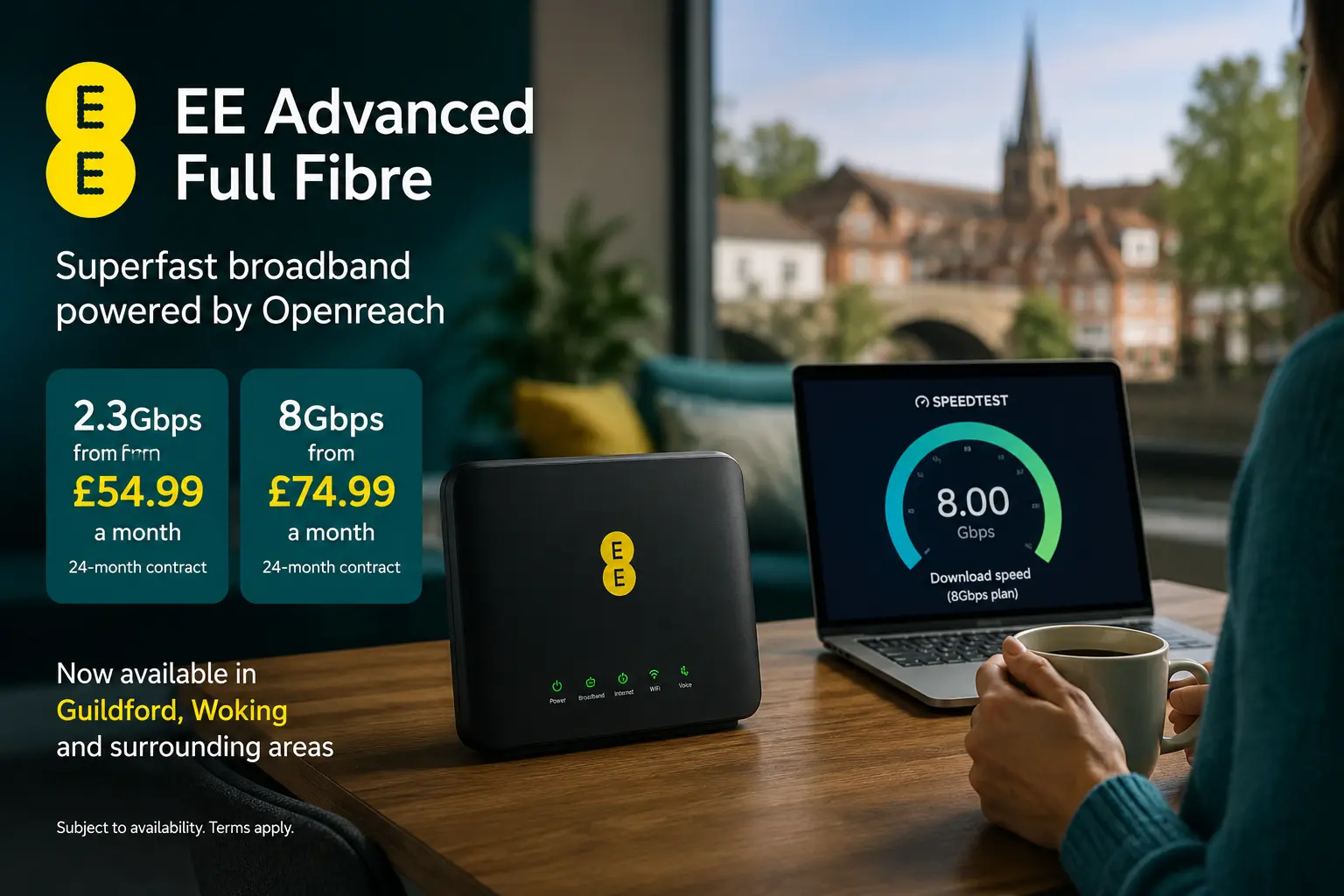
EE launches 8Gbps fibre in Guildford and Woking
EE has begun selling 2.3Gbps and 8Gbps broadband over Openreach’s XGS-PON network in selected Surrey postcodes.

CASE FILE
After the Failed CPE: How DotMusic Reached the .MUSIC Root
A failed community-priority score did not end DotMusic Limited’s application, and a later delegation did not erase that failure. The route from 10 points in 2016 to a live top-level domain in 2021 ran through separate institutions, separate legal instruments and separate…

CASE FILE
Who Could Challenge EBU’s .RADIO—and Who Could Enforce Its Rules
EBU’s community-priority victory did not itself award an operating right, and the losing applicants’ access to ICANN accountability procedures did not entitle them to a fresh evaluation. The history of .RADIO is instead a sequence of distinct institutional gates: an outsourced…

CASE FILE
The .SHOP Clock: Bidder Exit, a $41.5 Million Price and Control of ICANN’s Proceeds
The price attached to .SHOP was produced by a public rulebook and a largely private sequence of bidder instructions. That distinction matters. Nine applications were listed in the contention set, but deposits were submitted for only seven, creating seven eligible bidders in…