
Topic
Membership Accountability
Within the Topic facet, Membership Accountability topic intelligence connects articles that share a specific subject, signal focus, or monitoring theme. The page gives readers a richer path through related reporting, source evidence, market actors, and infrastructure implications, with enough context to understand why the topic matters across company movements, governance decisions, regional exposure, and operational risk. Readers can compare recurring signals, affected organisations, public evidence, market context, service continuity, procurement, competition, compliance, and strategic planning questions behind the subject instead of stopping at a thin list of matching articles. It explains what the topic covers, which infrastructure actors or policies are involved, what evidence supports the coverage, and why the subject may matter for operators, customers, investors, and policy readers.

Story
When IPv4 brokerage starts to govern around AFRINIC
IPv4 brokers reduce search, evidence and negotiation costs, but AFRINIC's registry-layer uncertainty shows how intermediation can become a private governance system unless authority, conflicts and audit trails are made legible.

Story
AFRINIC, national registries and the neutrality of the regional ledger
National registry relationships can lower AFRINIC members' administrative costs, but they also create new places where fees, validation, transfer authority and national policy can compromise regional ledger neutrality.
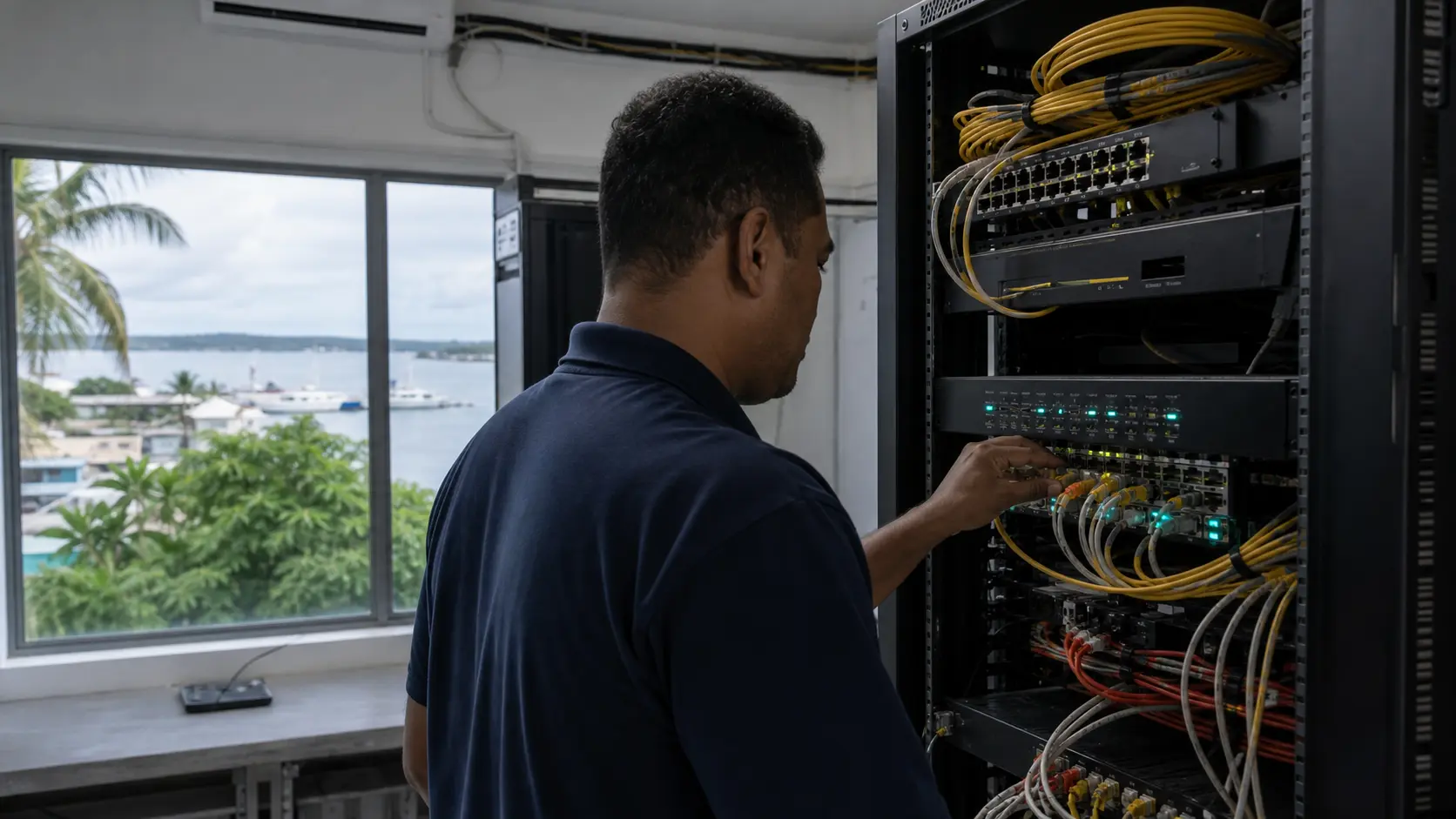
Global Regional ISP
VIX Turns Island Bandwidth Into Local Leverage
Vanuatu Internet Exchange is not a conventional growth company; its economic value is the avoided cost and avoided fragility of sending Vanuatu traffic offshore. The hard judgement is that VIX is an operating exchange and a strategic dependency for Vanuatu, but it remains a…

Europe and Middle East Regional ISP
Titan Networks and the German proof-of-infrastructure premium
Titan Networks and the German proof-of-infrastructure premium intelligence summary explains the development, the public evidence available to readers, the organisations involved, the regional context, market exposure, and the infrastructure consequences that may follow. The…

Asia-Pacific Regional ISP
Tornado Networks Shows Why Pakistan's Local Internet Market Runs on Trust as Much as Bandwidth
Tornado Networks is a small Bahawalnagar access provider whose commercial problem is larger than its network: in Pakistan's secondary-city internet market, customers are buying continuity, local accountability and a reachable technician, while the provider is trying to pay for…

Story
AFRINIC abuse-contact policy and findable accountability
AFRINIC abuse-contact policy and findable accountability intelligence summary explains the development, the public evidence available to readers, the organisations involved, the regional context, market exposure, and the infrastructure consequences that may follow. The Story…

Asia-Pacific National Telecom
SK Telecom Makes Security a Public Commitment
SK Telecom's first Information Security White Paper is more than a corporate disclosure. It shows how operators are increasingly treating cybersecurity transparency as a strategic capability as AI, cloud services and digital infrastructure expand.

Story
AFRINIC membership accountability and the limits of answerability
AFRINIC is examined through membership accountability as a registry-governance and institutional-economics problem for the Africa region.

Story
LACNIC's fee and reserve structure as an incentive bargain
LACNIC is examined through fees, reserves, and incentives as a registry-governance and institutional-economics problem for the Latin America and Caribbean region.

Story
What LACNIC transparency requires from the audit record
LACNIC is examined through auditability and transparency as a registry-governance and institutional-economics problem for the Latin America and Caribbean region.

Story
APNIC fees and reserves as levers of institutional behaviour
APNIC is examined through fees, reserves, and incentives as a registry-governance and institutional-economics problem for the Asia Pacific region.

Story
APNIC transparency and the auditable registry record
APNIC is examined through auditability and transparency as a registry-governance and institutional-economics problem for the Asia Pacific region.

Story
RIPE NCC's fee and reserve choices as incentive machinery
RIPE NCC is examined through fees, reserves, and incentives as a registry-governance and institutional-economics problem for the Europe and Middle East region.

Story
The audit trail behind RIPE NCC transparency
RIPE NCC is examined through auditability and transparency as a registry-governance and institutional-economics problem for the Europe and Middle East region.

Story
What AFRINIC can audit and what it can show
AFRINIC is examined through auditability and transparency as a registry-governance and institutional-economics problem for the Africa region.

Story
AFRINIC fees, reserves and incentive design
AFRINIC is examined through fees, reserves, and incentives as a registry-governance and institutional-economics problem for the Africa region.

Story
ARIN auditability and the work of transparency
ARIN is examined through auditability and transparency as a registry-governance and institutional-economics problem for the North America region.

Story
Fees, reserves and incentives in ARIN's institutional bargain
ARIN is examined through fees, reserves, and incentives as a registry-governance and institutional-economics problem for the North America region.

Europe and Middle East Cloud Services
Host-World OU: A Global-Sounding Name, but Evidence Points to a Small, Tightly Run Hosting Business
Host-World OU is worth studying not for its VPS sales, common in Europe, but for the gap between its 'global infrastructure' branding and the thin public evidence: RIPE NCC membership, few IP resources, and an asset-light sales shell. It resembles a small hosting reseller rather…

Africa Regional ISP
Abidjan, Peering, and the Price of Keeping Traffic at Home
The core question is not whether Côte d’Ivoire has an Internet exchange point in any formal sense. It does. CIVIX is a functioning national IXP in Abidjan, established in 2013, managed by the telecom regulator ARTCI, visible in major routing and peering directories, and carrying…