
Topic
Institutional Legitimacy
Within the Topic facet, Institutional Legitimacy topic intelligence connects articles that share a specific subject, signal focus, or monitoring theme. The page gives readers a richer path through related reporting, source evidence, market actors, and infrastructure implications, with enough context to understand why the topic matters across company movements, governance decisions, regional exposure, and operational risk. Readers can compare recurring signals, affected organisations, public evidence, market context, service continuity, procurement, competition, compliance, and strategic planning questions behind the subject instead of stopping at a thin list of matching articles. It explains what the topic covers, which infrastructure actors or policies are involved, what evidence supports the coverage, and why the subject may matter for operators, customers, investors, and policy readers.

Europe and Middle East Institutional
Adyen makes payment scale dependent on boring network control
Adyen is often described through the language of checkout conversion and global growth, but its more durable importance sits in a quieter place: the company sells merchants a controlled operating layer for acquiring, risk, settlement, local payment methods and platform financial…

Europe and Middle East Institutional
Zafaco turns broadband measurement into regulatory infrastructure
Zafaco looks like a specialist measurement company only until its work is read through the public broadband rules it supports. The economic unit is a regulator-grade account: testing software, measurement servers, data quality, reporting workflows and the credibility needed to…

Europe and Middle East Institutional
NLnet Labs sells no boxes but anchors the DNS software economy
NLnet Labs is not a hardware vendor, access provider, cloud platform or registry. Its market weight comes from something less visible and more structural: a small Dutch public-benefit foundation maintains open-source DNS and routing-security software that operators, registries…

Europe and Middle East Institutional
Punktum dk and the renewal trust behind a national domain
A Danish company renewing a .dk name is buying more than another year of DNS delegation. It is paying a small, regulated fee into a national trust service whose value depends on boring reliability: stable registrar channels, public accountability, DNSSEC, abuse handling, and a…

Europe and Middle East Institutional
SIX Group Services and the route-risk inside market infrastructure
SIX Group Services AG looks like a quiet support company inside the wider SIX group, yet public company records, regulated-market documents and routing evidence show why that quietness matters. Its value is best tested through the financial-market infrastructure connection: the…

Europe and Middle East Institutional
Enedis and the meter reading that has to fund grid patience
A meter reading looks like a single number on a bill. For Enedis, it is the point where France's distribution monopoly turns field labour, regulated capital, smart-meter software, outage communications and public tolerance for grid spending into a charge that nearly every…

Asia-Pacific Institutional
Toyota's software-service subscription has to earn trust after the sale
Toyota can make connected-car subscriptions feel ordinary only if the service still looks worth paying for after the free trial, the warranty handoff, and the first dealer visit. The economic test is not whether Toyota can attach software to millions of cars. It is whether…

Europe and Middle East Institutional
Avanza's brokerage account must make low fees feel safe
Avanza's low-fee brokerage account is valuable only if a Swedish saver believes the custody, app uptime, savings products, regulatory standing, customer support and platform resilience are strong enough to keep self-directed investments inside Avanza when markets are moving.

North America Institutional
Gilead's treatment course must outrun the patent clock
A Gilead course is sold as more than a bottle, vial or injection kit: it is a promise that a clinic, payer and patient can turn laboratory evidence into durable disease control before rebates, rival drugs and patent expiry take the margin away.

Europe and Middle East Institutional
Alior's digital account has to make a challenger bank feel safe
For a Polish customer moving salary, cards, savings or everyday payments into a digital-first bank, Alior Bank's account is not just a cheaper current account. It is a promise that a challenger institution can protect deposits, keep payments available, price the account honestly…

Europe and Middle East Institutional
Alinma's sharia account has to turn compliance into trust
A Saudi customer opening a sharia-compliant current account is not buying a slogan. They are buying daily access to salary deposits, cards, transfers, credit, savings returns, branch support, mobile reliability and an assurance system that makes the bank's religious promise…

Europe and Middle East Institutional
Saudi National Bank's account carries a national balance sheet
An ordinary Saudi National Bank current account looks like a no-fee retail product, but the useful product is larger: salary money, bill payment, card acceptance, branch reach, instant transfers, remittances, credit access, capital strength and a public-sector financial system…

Europe and Middle East Institutional
Ahli Bank's account has to make a smaller Omani lender feel safe
Ahli Bank's customer account is a test of trust in a smaller listed Omani bank: the product must make salary deposits, cards, branch service, digital lending and everyday payments feel safe enough for customers to stay even when larger local banks can advertise more scale.

Europe and Middle East Institutional
Bank Nizwa's home finance has to price patience as well as faith
A household choosing between an Islamic home-finance plan and a conventional mortgage is not only comparing a monthly payment. It is buying time, property access, Sharia assurance, servicing reliability and the bank's ability to wait through salary cycles, title checks, rate…

Europe and Middle East Institutional
Bank AlJazira's account has to make remittance trust repeatable
For a Saudi salary-transfer customer, Bank AlJazira is not tested by a branch sign or a broad promise of Islamic banking. It is tested by the account that receives income, the app that moves that income, the Fawri remittance path that sends part of it abroad, the fee table that…
Europe and Middle East Institutional
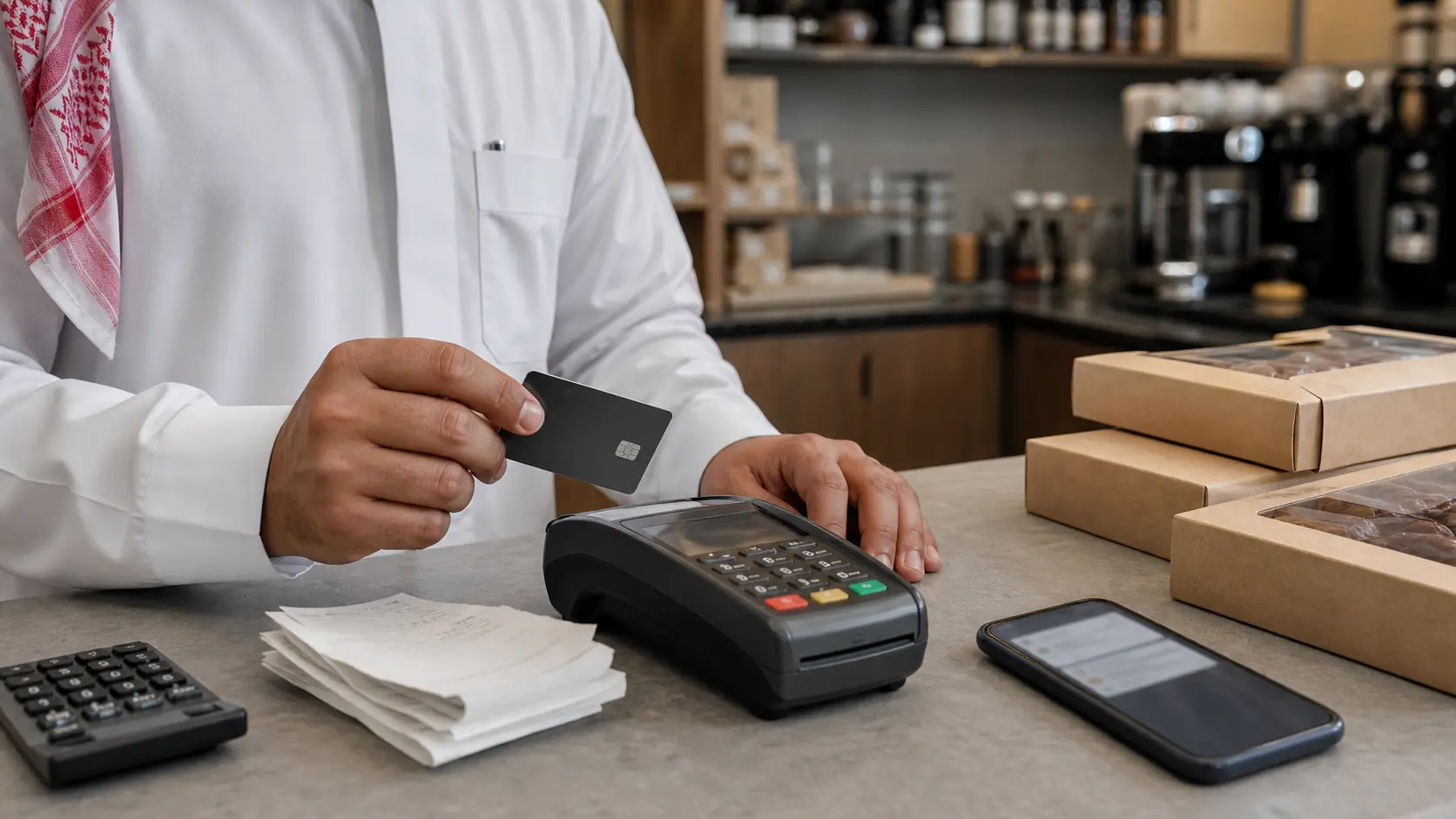
American Express Saudi Arabia has to make the acceptance fee local
A Saudi merchant does not need another abstract premium card promise. It needs to know whether American Express acceptance brings enough higher-value customers, settlement certainty, fraud control, rewards-funded demand and local payment integration to justify a separate merchant…

Europe and Middle East Institutional
Freja eID has to sell the avoided failure, not the login
A paid Freja identity check is a small transaction only if the relying party counts the screen in front of the user. Once fraud exposure, support work, regulatory access, onboarding abandonment and the cost of being wrong are counted, the product becomes a priced claim that a…

Europe and Middle East Institutional
Crosskey's core-banking file carries the risk of outsourcing
A regional bank does not outsource a processing file because a file is glamorous. It does it because the hidden costs of running accounts, payments, loans, compliance updates, customer data, interfaces and operational continuity can be heavier than the visible price of buying a…

Europe and Middle East Institutional
Saudi Tadawul sells the receipt behind a trade
A broker's exchange fee, an issuer's listing charge and a data buyer's feed subscription look modest beside the value of Saudi securities changing hands. Saudi Tadawul Group matters because those charges buy something harder to audit than a price screen: official trust that a…

Europe and Middle East Institutional
Tabadul turns a customs message into an operating toll
Tabadul is valuable if a digital trade message removes enough uncertainty from Saudi customs, port release, broker authorization, payments, inspections and audit records to justify becoming a recurring toll inside the logistics system. The public record supports that direction…