
Topic
Board-election Legitimacy
Within the Topic facet, Board-election Legitimacy topic intelligence connects articles that share a specific subject, signal focus, or monitoring theme. The page gives readers a richer path through related reporting, source evidence, market actors, and infrastructure implications, with enough context to understand why the topic matters across company movements, governance decisions, regional exposure, and operational risk. Readers can compare recurring signals, affected organisations, public evidence, market context, service continuity, procurement, competition, compliance, and strategic planning questions behind the subject instead of stopping at a thin list of matching articles. It explains what the topic covers, which infrastructure actors or policies are involved, what evidence supports the coverage, and why the subject may matter for operators, customers, investors, and policy readers.

Story
The Thread That Moved Off-List
A public policy thread can end without reaching a public conclusion. Entities begin calling one another, exchange private drafts, create a small chat or wait for a meeting corridor. When discussion returns, the text has changed and the people inside the private exchange…

Story
Mailing-List Volume Is Not Support
Public mailing lists are among the strongest accountability devices in Internet governance. They preserve reasons, allow participation beyond meetings and make chair decisions reviewable. They are also easy to misread. A long thread may be produced by a few persistent people…

Story
Rough Consensus by Microphone Order
An open microphone looks egalitarian: anyone in the room can join the queue, remote entities can send comments, and chairs can hear disagreement before judging consensus. Yet speaking order quietly structures the evidence. Early speakers establish vocabulary, repeat contributors…

Story
The Staff Impact Assessment as a Hidden Veto
Institutional expertise is indispensable to number-resource policy. Registry staff know which requests recur, which systems must change, where legal duties attach and how a seemingly modest sentence will alter daily administration. Yet an impact assessment can become a hidden…

Story
Who Writes the Problem Statement?
A number-resource policy proposal often appears to begin with a neutral description of a shared difficulty. In reality, the sentence that defines the problem allocates attention, identifies legitimate evidence and narrows the remedies that can later appear reasonable. The author…

Story
AFRINIC AFPUB-2019-V4-003-DRAFT04: A Proposal That Outlived Its Forum
AFRINIC's Resource Transfer Policy began as a 2019 attempt to define how IPv4 registrations could move across regional boundaries. By draft 4, the proposal had absorbed repeated revisions, compatibility questions from other registries, a disputed consensus determination and a…

Story
LACNIC's Last Call and the Silence Problem
LACNIC gives a proposal that has reached consensus a final public interval before Board ratification. The design is sensible: people who missed the main discussion can identify a neglected issue, while the wider community can test whether agreement survives the final text. The…
Story
ARIN's Advisory Council Between Petition and Board
ARIN's Advisory Council is called advisory, but the Policy Development Process gives it a more consequential position. It receives proposals, determines whether they become drafts, develops and revises language, judges readiness, abandons or advances work and recommends policy to…

Story
APNIC prop-050: A Case Study in How Consensus Changes Meaning
APNIC's prop-050 did not move from proposal to policy through one act of agreement. It crossed meetings, revisions, a majority that was not consensus, agreement on selected points, an eight-week comment period, Executive Council return, a new text, member-meeting support, another…

Story
The First RIPE Address Policy and the People in the Archive
The first European address rules are often remembered as the natural response of a technical community to scarcity and routing growth. The surviving record tells a more demanding story. A small, identifiable set of people translated global guidance into regional practice, while…

Story
Portable Registries Would Make Elections Less Existential
If operators could change the organisation maintaining their number-resource registration without changing the resources or routes themselves, board elections would still matter but would no longer concentrate every accountability question inside one provider.

Story
A Valid Vote Is Not a Regional Mandate
A regional registry election can lawfully authorise directors to govern a corporation without authorising them to speak for every network, institution or person in the region it serves.

Story
The Candidate Statement That Cannot Be Challenged
An official election page cannot borrow institutional authority for a candidate's claims while offering voters no durable way to test, correct or answer them.

Story
Campaign Finance in a System That Says It Has No Politics
Regional registry elections have no parties and rarely use the language of campaigns, but candidates still compete with money, travel, staff time, data and organisational sponsorship that voters deserve to see.
Story
The Spoiled Ballot as Institutional Evidence
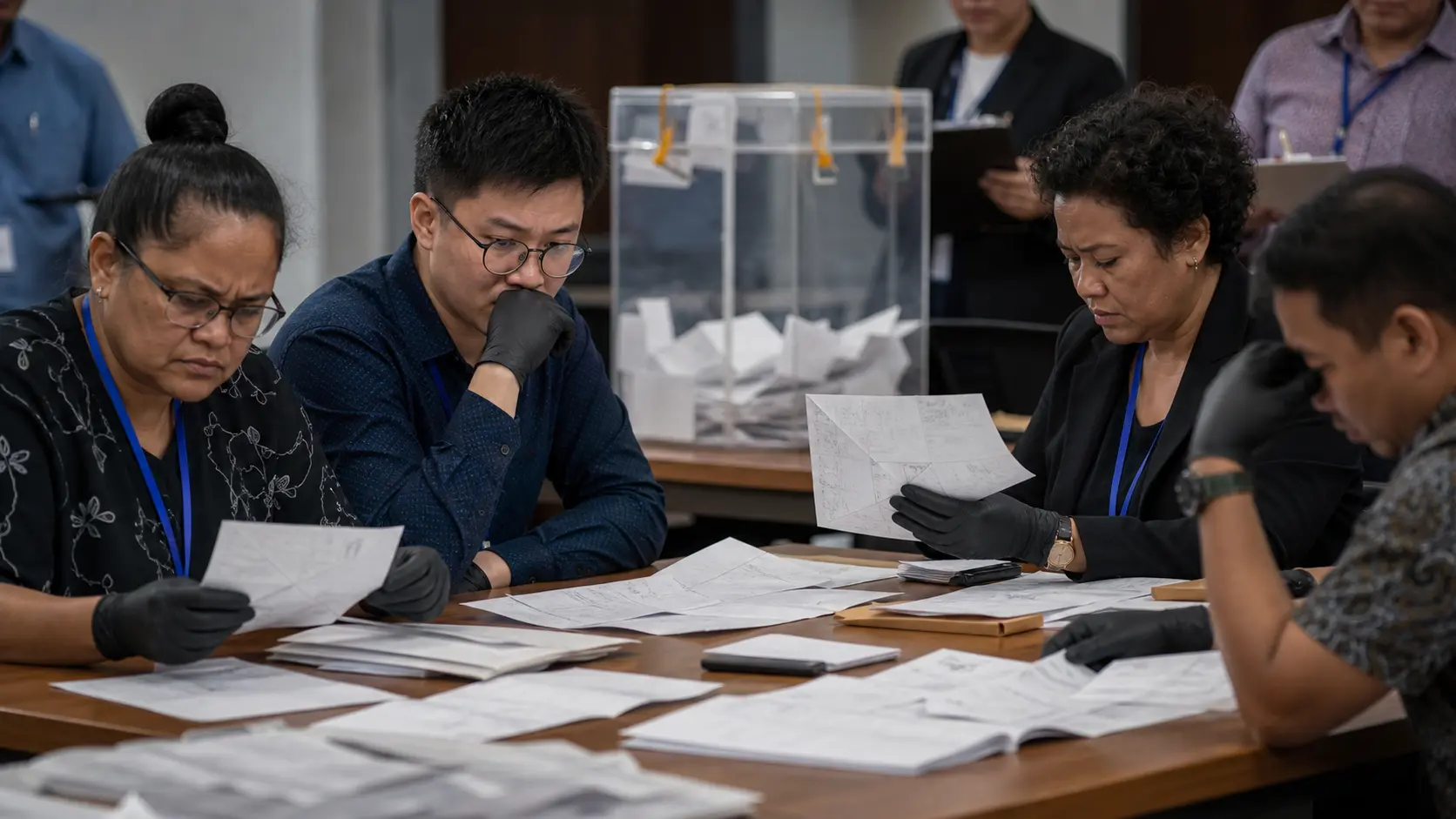
An invalid vote may be irrelevant to the winning margin and still be the most revealing fact in an election, because rejection patterns expose where instructions, access, timing and institutional assumptions fail.

Story
Tie-Breakers, Randomness and Chair Power
When a registry election or resolution ends in a tie, the secondary rule—not the original tally—allocates power. Repeat ballots, auditable random draws, automatic rejection and bounded chair discretion each shift authority differently, so the applicable mechanism must be fixed…

Story
Board Vacancies and the Power of Temporary Appointments
RIPE NCC directors are unpaid and periodically re-elected, yet office itself supplies visibility, information, travel, institutional roles and a record of decisions that challengers cannot reproduce. None of those advantages proves an unfair election; together they form a loop…

Afrinic SAGA
The Cost of Re-Running a Registry Election
AFRINIC's two 2025 board-election exercises expose the full price of a rerun: more than the second ballot's invoice, less than any excuse for certifying an unreliable result, and large enough to make proportional remedies a governance duty.

Story
Election Observers Without Remedial Power
Election observers are valuable precisely because they do not decide who wins, but their neutrality becomes decorative when no institution must preserve, assess and answer the evidence they report.

Afrinic SAGA
The Ballot That Left the Room
A disputed account of physical ballot materials moving beyond an election room raises a precise governance question: what does a break in custody prove, what does it leave uncertain, and which remedy can protect valid votes without minimising risk?