
Time Horizon
Structural
Within the Time Horizon facet, Structural time-horizon intelligence organises articles by the period over which a signal is expected to matter. The page helps readers distinguish immediate operational changes from longer-cycle governance, investment, standards, and infrastructure shifts that may unfold across quarters or years. It connects timing assumptions with public evidence, related actors, market context, customer exposure, policy pressure, and infrastructure planning so readers can judge whether a development is urgent, strategic, or still waiting on confirming evidence. The page also explains how time horizon changes the meaning of a signal, which organisations may be exposed, and which infrastructure decisions require short-term action or long-cycle monitoring.
History
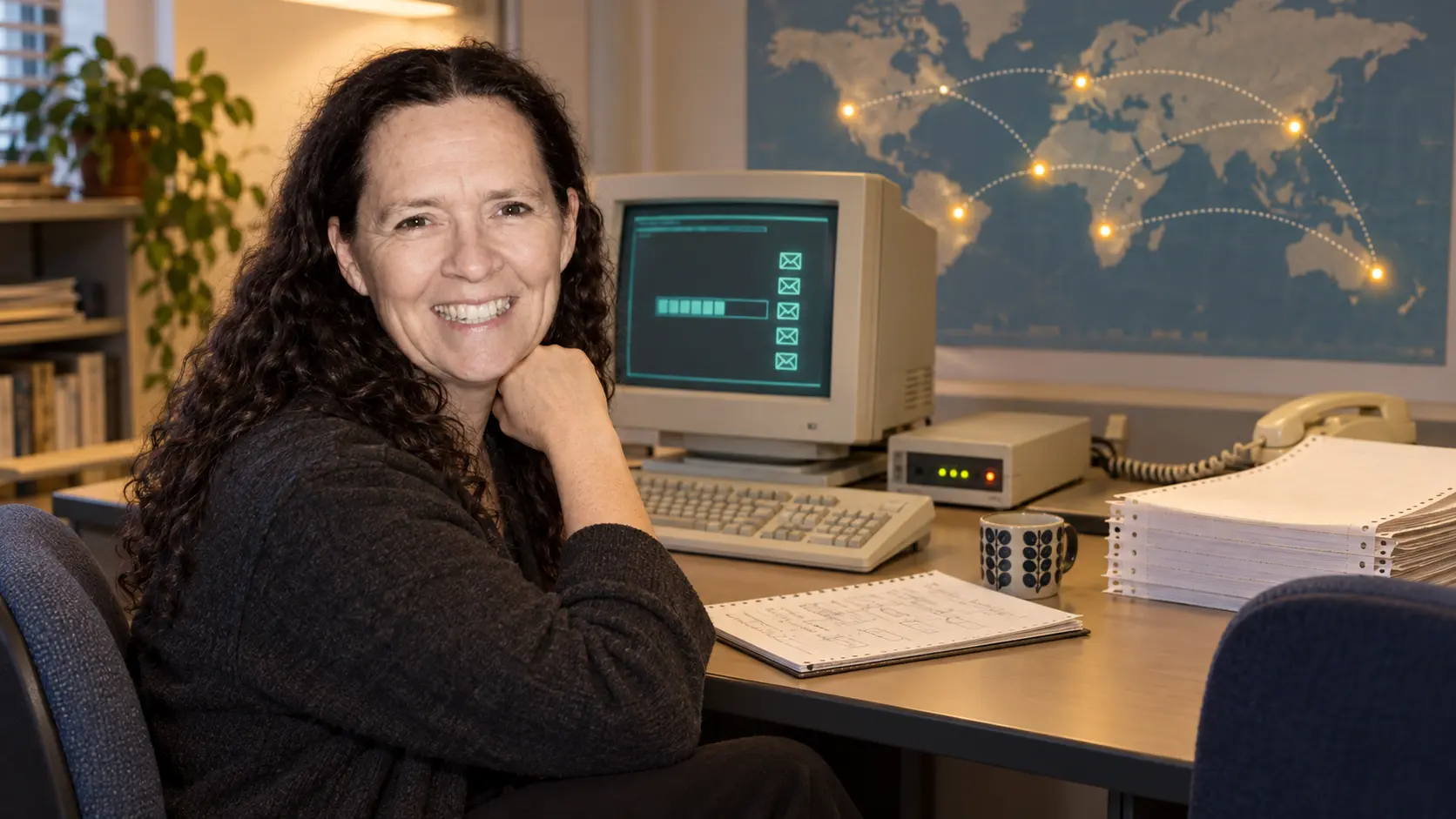
Karen Banks and the Gateway That Did Not Need to Stay Online
A message could wait on a local machine, travel during one brief telephone call and still reach an international public. Karen Banks’s work on GreenNet’s GnFido gateway shows why early access was a chain of queues, operators and partners—not a light that simply switched from…

History
Yvonne Marie Andrés and the Classroom That Had to Write Back
A school could own a computer, find a telephone line and deliver a message without yet creating a networked classroom. Yvonne Marie Andrés understood the missing test early: somewhere beyond the school, another class had to care enough to write back.

History
Gihan Dias and the Two Names Sri Lanka Added to the Root
The smallest-looking part of a national network can expose its largest unfinished business. For Sri Lanka, two names in the DNS root showed that connecting a country and letting it recognise itself online were separate engineering tasks.
History
Susan Estrada and the Network That Had to Account for Its Customers
An early Internet provider could prove that packets moved and still leave its customer unable to judge the service. Susan Estrada's work at CERFnet shows why commercial acceptance required another layer: reports, monitoring, support and a shared language for responsibility.

History
Laura Breeden and the Work Between a Connection and Adoption
An early federal evaluation found Internet projects that had acquired technology before asking what a community needed, leaving systems unused or badly underused. Laura Breeden's career explains why that failure belongs inside Internet history: a network becomes public…

History
Demi Getschko and the Country Code That Arrived Before Brazil Spoke TCP/IP
On 18 April 1989, `.br` entered the DNS root while Brazilian academic networks were still speaking BITNET, HEPnet and other protocols. Demi Getschko's part in that sequence reveals a neglected infrastructure skill: securing a durable name, accepting responsibility for it and…

History
Ginny Strazisar and the Gateway Code That Traveled Before the Packets Did
The celebrated packet path began with a less cinematic journey: an engineer arriving at a site where the machine for her software was not yet ready. Virginia “Ginny” Strazisar Travers helped turn internetworking from a protocol idea into installed boundary equipment at BBN…

History
Karen Sollins and the Delayed ACK That Made Every Packet Appear Twice
TFTP could deliver a file correctly and still damage the network carrying it. In the failure later called the Sorcerer’s Apprentice syndrome, one delayed acknowledgement could start a feedback loop in which every remaining data block and acknowledgement travelled twice. Karen…

History
Elise Gerich and the Backbone Shutdown That Needed a Dress Rehearsal
The NSFNET backbone did not disappear when someone threw a master switch. Its retirement was a year-long exercise in proving that exchange points, commercial providers, route servers, databases and regional networks could stand without the system they were replacing. Elise…

History
Mary Ann Horton and the Dial-Up Network That Had to Publish Its Own Map
Before an email address became a name, it could look like a set of directions. Every exclamation mark told a queued message which machine to visit next — and every omitted or stale hop could leave it stranded.

History
Jean Armour Polly and the Internet Connection That Still Needed a Librarian
In 1992, “going online” at a public library did not begin with a browser. It began with a desk computer, communications software, a modem, a telephone line — and somebody who could turn that fragile stack into a public service.

History
Nancy Hafkin and the Network Before the Connection
Long before an always-on Internet line became ordinary across Africa, Nancy Hafkin’s programmes had to solve a harder problem: how to make information, institutions and people form a network when the connection itself was intermittent.

ICANN
Anne-Marie Eklund Löwinder and the Key That Could Not Sign the Root
The physical key in Anne-Marie Eklund Löwinder’s custody helped open one compartment in a carefully divided ceremony. Its significance lay not in the power it gave her, but in the power the surrounding system withheld from everyone acting alone.

History
Steve Crocker and the Note That Stayed Provisional Long Enough to Build a Network
RFC 1 did not arrive after the network had proved itself. Steve Crocker dated it 7 April 1969, months before the first ARPANET node began service, and filled it with Host Software questions that still needed other sites to answer. Its authority lay not in pretending the design…

History
Butler Lampson and the Request That Had a Speaker Before It Had Permission
A request reaches a computer before any person does. It arrives on a wire, through a process, under a key or across a network connection. Butler Lampson and his colleagues made that apparently mundane arrival the start of a disciplined question: what, exactly, is entitled to…

History
Sandy Fraser and the Call That Had to Exist Before the Bytes Could Move
The quietest moment in a network can carry the most responsibility. Before Datakit moved a user's bytes, Sandy Fraser's design asked the network to recognize a call, install a path and remember what its short channel label meant.

History
Danny Cohen and the Byte-Order War the Network Could Not Win
Four bytes can describe one number and still tell two incompatible stories. Danny Cohen saw that the useful question was not which machine deserved to prevail, but what every machine had to promise at the boundary.

History
Dave Täht and the Result That Had to Be Reproducible
A failed run can be more valuable than a beautiful graph. Dave Täht’s work on network latency made that unsettling proposition practical: if the apparatus cannot expose why a result is invalid, the result is not yet evidence.

History
David Clark and the Reliability the Network Could Not Finish
A subsystem can be flawlessly honest about the work it completed and still be unable to answer the question its user actually asked. David Clark’s end-to-end reasoning begins in that gap.

IETF
Lixia Zhang and the Reservation That Expired Without a Refresh
A reservation sounds like something placed and possessed. In RSVP, it was something more disciplined: distributed state that had to keep earning the present tense.