
Time Horizon
Multi-year
Within the Time Horizon facet, Multi-year time-horizon intelligence organises articles by the period over which a signal is expected to matter. The page helps readers distinguish immediate operational changes from longer-cycle governance, investment, standards, and infrastructure shifts that may unfold across quarters or years. It connects timing assumptions with public evidence, related actors, market context, customer exposure, policy pressure, and infrastructure planning so readers can judge whether a development is urgent, strategic, or still waiting on confirming evidence. The page also explains how time horizon changes the meaning of a signal, which organisations may be exposed, and which infrastructure decisions require short-term action or long-cycle monitoring.

History
The Address Bounced. The Main List Might Not Contain It: RFC 1211
A failed address sounds like a simple list-maintenance fact: find the subscriber and remove the line. RFC 1211 documented the harder 1991 reality. The failing mailbox might not appear in the main list at all. One exploder entry could conceal another organisation’s membership…

History
The Server Said 250. The Account Might Not Exist: RFC 1204
In RFC 1204, a positive reply to a username was designed not to answer the obvious question. A message-posting server was advised to say `250` when the name was syntactically sound even if it did not recognise the account. The ambiguity protected the user database. Only the next…
History
A Paragraph Was Not One of the Standard’s Words: RFC 1197 and the Missing Application Profile
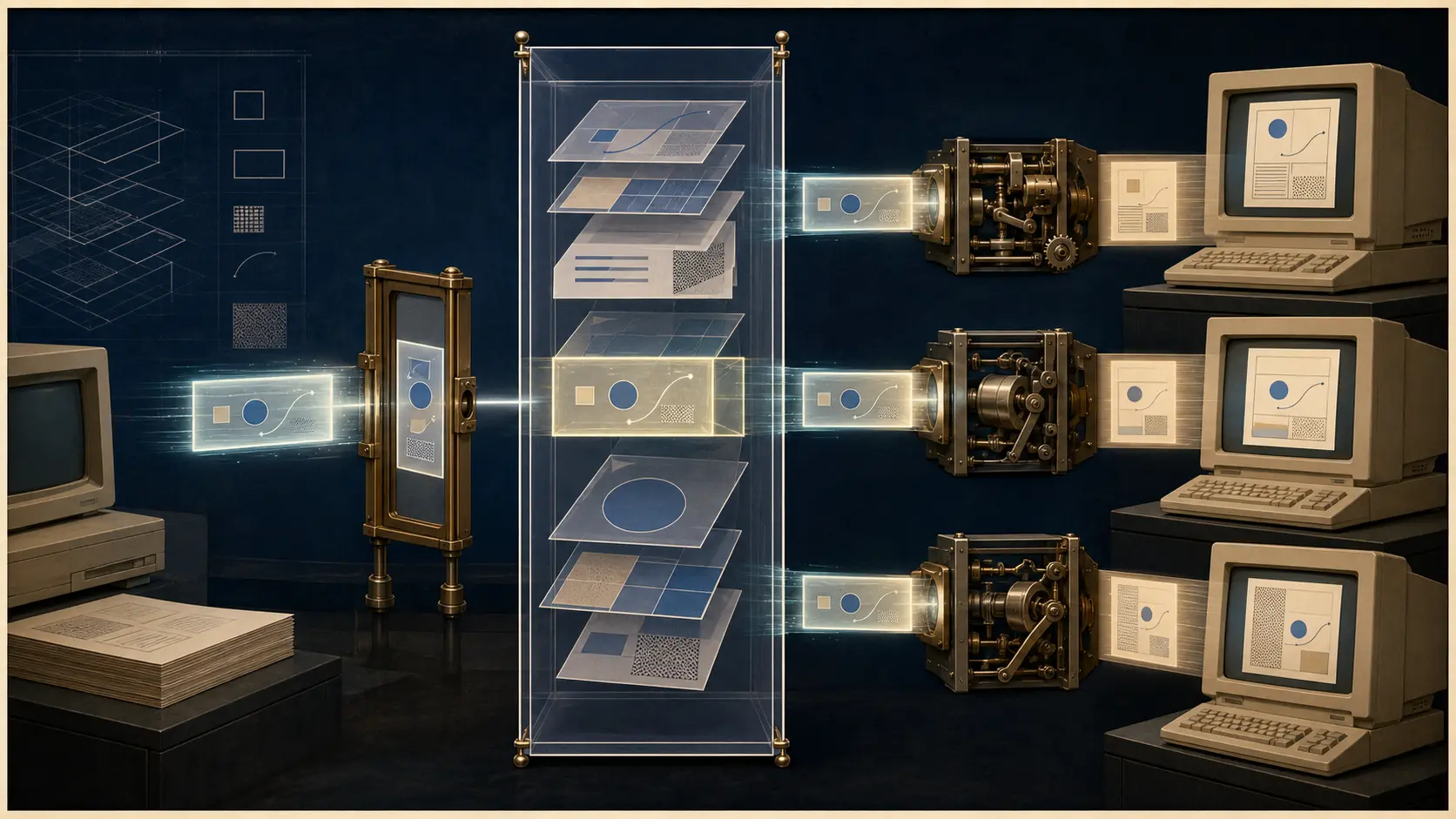
In 1990, a document could be perfectly legible to an international encoding standard and still lack a shared idea of a paragraph. RFC 1197 recorded why that was not a contradiction. Office Document Architecture supplied an abstract model; useful exchange required a narrower…

History
A Hop Approved the Identifier. The Target Had Not Accepted the Stream: RFC 1190
An ST-II router could answer a `CONNECT`, approve the proposed forwarding shorthand and reserve resources before the request reached its target application. That was useful progress, but it was not consent. RFC 1190 built a separate return journey for `ACCEPT`, and a multi-target…

History
The Hostname Was Valid. It Was Still a Bad Name: RFC 1178
In October 1989, RFC 1123 told host software to accept a hostname beginning with a digit. Ten months later, RFC 1178 told administrators not to choose one. The two instructions were not contradictory. One defined what compliant software had to parse; the other described what…

Asia-Pacific Institutional Trends
Birkenstock’s Australian Deal Has Three Price Ledgers
Birkenstock’s acquisition of its Australian distributor came with a €13.8 million seller payment, a €21.2 million receivable settlement and €35.0 million of accounting consideration. All three numbers are correct. They answer different questions—and the difference matters long…

North America Cloud Services Trends
Figure Closed Kiavi at About $590m; the $717m Included Sixth Street
Figure's closing filing narrows the buyer's cash perimeter without reconciling it. The company paid about $590 million for Kiavi's platform and DSCR loans, while the earlier $717 million headline also counted a separate Sixth Street-funded RTL asset leg.

History
The Requirement Was Firm. The Host Was Still Not Configured: RFC 1127
A capitalized MUST can settle an argument about software. It cannot reach into a machine room and choose a live value. In 1989, the Host Requirements effort made Internet interoperability more explicit by separating firm duties, reasoned recommendations and genuine options. RFC…

North America Institutional Trends
Regis’s Franchise Margin Rose to 17.3% and Fell to 40.8%
Regis did not report two franchise earnings results. It reported one numerator against two revenue perimeters. The wider denominator made fiscal 2026 look slightly better; the narrower one showed deterioration. Both readings are useful, provided the removed flows do not disappear…

North America Institutional Trends
Comstock's $450m Drilling Venture Implies $360m–$382.5m From Jones
Comstock announced a $1.65 billion asset deal and an approximately $450 million drilling venture on the same morning. They are not a $2.1 billion pool. One is a conditional purchase price; the other is a cost base whose outside funding is smaller than the headline.

History
A Catalog Was Not an Interoperability Verdict: RFC 1292’s X.500 Snapshot
An implementation catalog can lower the cost of asking a sensible question without answering the harder questions that follow it. RFC 1292 gathered descriptions of X.500 software in January 1992 and arranged them by availability, component type, transport, pilot connectivity…
History
The Line Was Complete. The Command Had Not Run: RFC 1116 and Telnet Linemode
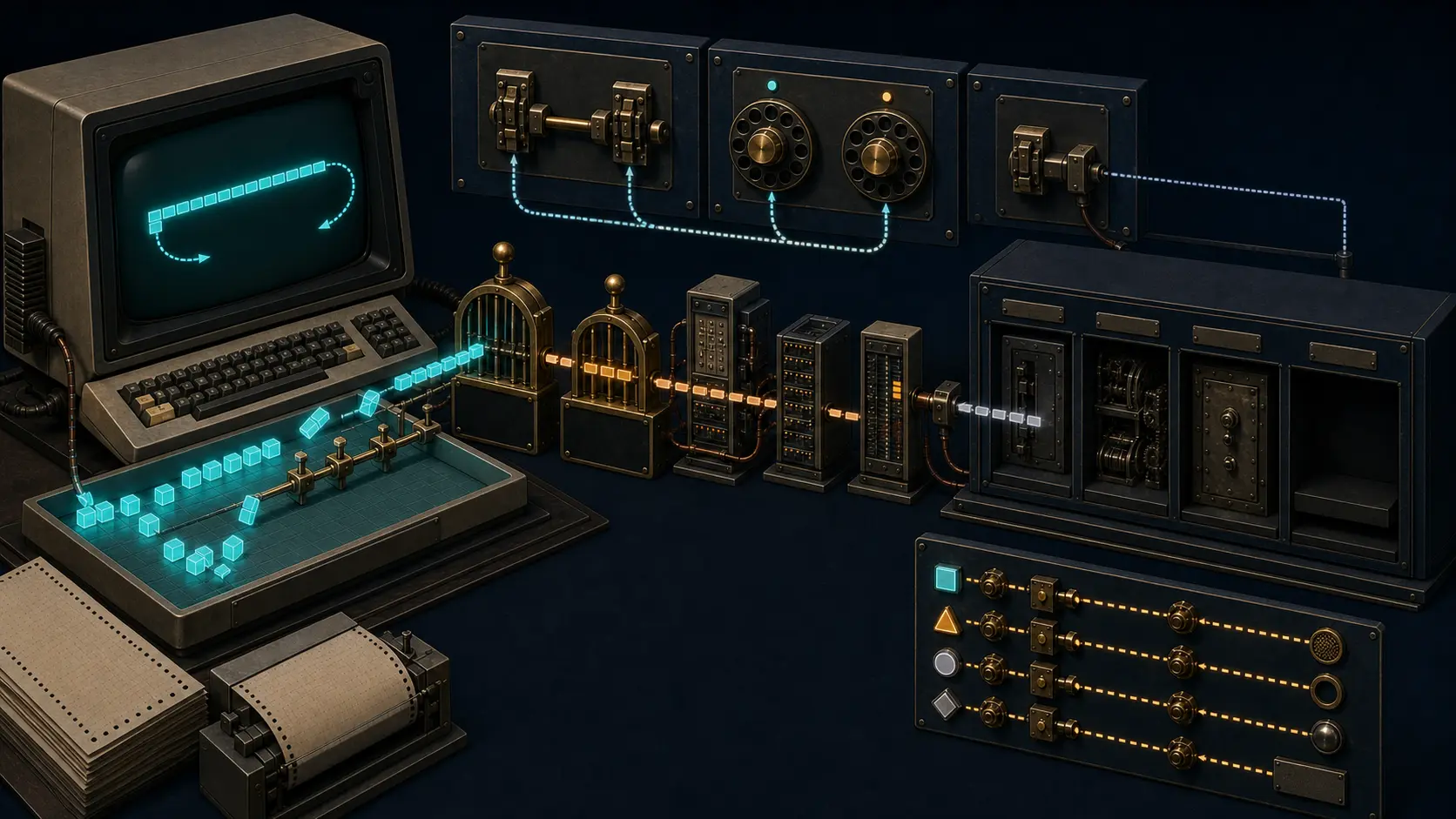
In character-at-a-time Telnet, a typist could wait for the network to see each key return. Linemode made the nearby terminal feel immediate: editing and echo could happen before the line crossed the path. That improvement also created a durable evidentiary trap. The completed…
History
It Worked at NASA. That Did Not Make It Safe for the Internet: RFC 1106 and RFC 1110
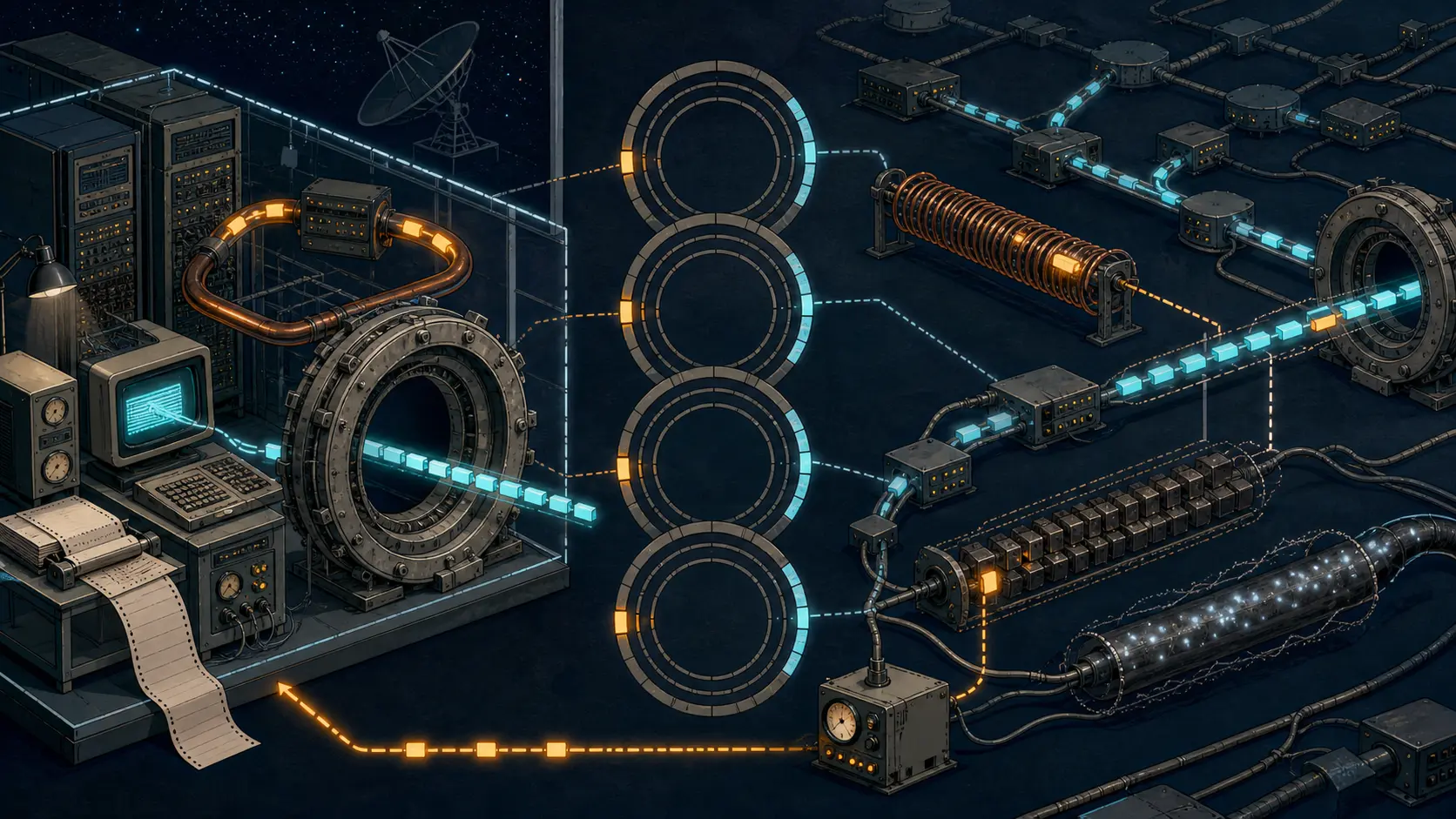
June 1989 produced an unusually honest sentence in protocol history: two experimental TCP extensions had been implemented and shown to work using NASA resources. Two months later, another RFC explained why one of them still could not be adopted for the general Internet. The test…

Global Datacenter Trends
Digital Realty’s Teraco Put Created a 6.957m-Share Gap Between FFO Denominators
Digital Realty reported two diluted share counts for the same quarter: 367.605 million for funds from operations and 360.648 million for Core FFO and adjusted funds from operations. The 6.957 million difference is a receipt for an ownership transition that had been modelled…

History
A Pointer Was Not the Information: RFC 1290 Had Not Made the Route Invisible
In 1991, the problem was not a lack of material on the network. RFC 1290 described the opposite: information and file repositories so abundant that browsing could consume a lifetime. The problem was how a person crossed from abundance to something usable. The document separated…

Global Institutional Trends
UPS Prices $9 Million of Retention in Class B, Settles in Class A
UPS has attached US$9 million of restricted stock units to two executives carrying its new global operating model. The divisor will be the 1 September Class B closing price, but vested units will deliver Class A shares with ten votes apiece. That difference matters because the…

History
Changing the Route Was Not the Same as Filtering the Packet: RFC 1104
In June 1989, RFC 1104 divided “policy routing” into mechanisms that were already easy to confuse. A network could change which reachability it disclosed, inspect a particular packet, assign scarce bandwidth or buffers, and record usage for later accounting. Each act could be…

History
A SHUT State Was Not an Off Node: RFC 1289 Kept the Existing Links
The word “shutdown” invites a clean story: an operator chooses a state, a node stops, and the work is over. RFC 1289 preserves a more demanding chronology. Its DECnet Phase IV MIB did not treat every admission restriction as an OFF node. `SHUT` allowed no new logical links, but…

North America Institutional Trends
GameStop Pays $358.4 Million to End Its Dilution Formula
GameStop has replaced the unfinished part of a 35-trading-day share formula with US$358.4 million of cash. The amendment fixes this note exchange at approximately 55.5 million shares and brings expected closing forward, but it does not erase those shares or the US$2.8 billion of…

History
The Memo Called It a Standard. The Record Did Not: RFC 1097
On 1 April 1989, a three-page RFC proposed a Telnet option for flashing messages too quickly for a user to notice. Its joke is easy to recognize. Its more durable lesson is quieter: the memo could call itself a standard, but it could not confer that standing on itself; a Telnet…