
Profile
Research
Research profile intelligence connects person, company, institution, and other entity coverage for readers comparing the subjects behind BTW.MEDIA reporting. The page helps compare public profiles, related events, evidence packs, role changes, operating footprints, governance exposure, organisational links, and market relevance while keeping organisation and people records distinct from ordinary news chronology. Readers can understand the subject behind the headline, the evidence supporting that profile, and the infrastructure or market relationships that make the profile relevant. They can see who or what the profile represents, which public sources support it, how it connects to companies, markets, governance bodies, or events, and what changes may deserve continued attention as the subject evolves.

History
The Priority Label Named a Policy. It Did Not Choose the Treatment: RFC 3487
RFC 3487 designed emergency SIP priority as a reference to local policy, not a remote control that could order every gateway, proxy and endpoint to perform the same act.

History
The Compression Marker Traveled Hop by Hop, Not End to End: RFC 3486
RFC 3486 gave SIP a tiny compression marker, but the marker governed one next action at one hop—not an invisible promise that the entire dialog would travel compressed.

IETF
The Batch Had a Label. The Counter Window Was Still Open: RFC 9571
Synonymous Flow Labels let an MPLS operator say which packets belong together. They do not say when every remote pipeline has finished counting them.

History
The First Message Borrowed a Dictionary That Could Never Change: RFC 3485
RFC 3485 solved a bootstrap problem by putting one exact dictionary at both ends before conversation began—and forbidding that dictionary from ever becoming a new edition.

IETF
The Exploratory Group Looked Like a Working Group. It Could Not Write the Protocol: RFC 5111
The closest visual resemblance in standards work can conceal the most important institutional difference. RFC 5111 gave an IETF Exploratory Group the familiar machinery of a Working Group so that unresolved admission questions could be answered in public. It withheld the…

History
The Report Went Silent. The Counter Did Not Stop: RFC 3483
RFC 3483 exposed a deceptively simple operational truth: stopping a report is not the same act as stopping the measurement that would have produced it.

Global Cloud Services
Brokerage Disguised as Infrastructure: What almazcloud.network's Footprint Means for AI-Era Compute Buyers
Brokerage Disguised as Infrastructure: What almazcloud.network's Footprint Means for AI-Era Compute Buyers intelligence summary explains the development, the public evidence available to readers, the organisations involved, the regional context, market exposure, and the…

IETF
The Algorithm Number Was Registered. The Validation Path Was Not: RFC 9558
A DNSSEC algorithm can receive a number, a wire format and a reproducible test vector while remaining absent from the resolver that decides whether a child zone has any supported authentication path at all.

IETF
The Protected Prefix Was Recovered. The Whole Media Packet Was Not: RFC 5109
A receiver rebuilt an RTP header and the most important opening bytes of a missing media packet. The repair counter turned green. Yet the less-protected tail was still absent, the decoder had not accepted the result, and the playout deadline had not moved. RFC 5109 is valuable…

IETF
The Workload Moved to the Edge. Decision Authority Did Not: RFC 9556
Putting computation beside a machine can shorten a path, preserve local data and keep a service alive through a broken uplink. It does not answer who may place the code, read the inputs, release an output or command the physical world.

History
The TCP Session Died. The Operation Ledger Had to Reconcile: RFC 3479
RFC 3479 made LDP fault recovery a problem of comparing two durable operation histories after the TCP transcript broke, not a promise that the missing interval had somehow vanished.
Global Cloud Services
The Dependency Layer Behind almazcloud.network: A Sponsoring LIR, a Ukrainian Transit Counterpart and No Delivery Trail
Every product the DIAMOND-branded operator behind almazcloud.network sells is priced in dollars; every measurable fact about its network is priced in dependencies. This report follows the dependency chain from the RIPE registry to the routing table and asks what a buyer can…

IETF
The Server Identifier Was Overridden. It Did Not Identify the Server
A DHCP dashboard can display option 54 as though it were the address—and therefore the identity—of the server that granted a lease. RFC 5107 breaks that shortcut deliberately: the value can be supplied by a relay so that future renewals return through the relay, while the actual…

History
The Labels Kept Forwarding on Borrowed Time: RFC 3478
RFC 3478 let MPLS forwarding survive an LDP restart, but only by treating the old meaning of every retained label as stale, timed and revocable.

IETF
The Home Kept the Signing Key. Publication Still Moved Outside: RFC 9526
A residential network can author and sign its own public DNS zone without serving a single public query. RFC 9526 turns that apparently paradoxical arrangement into an architecture—and exposes why a valid signature, a successful transfer and a visible answer are three different…

IETF
The Fast-Reconnect ID Found a Context. It Did Not Authenticate the Peer
RFC 5106 lets a returning EAP-IKEv2 peer present a pseudonymous Fast-Reconnect-ID. A server may resolve that string to yesterday’s security context in one lookup. The lookup is useful, but authentication still depends on today’s protected exchange, fresh nonces, new key material…

History
The Unnumbered Link Had Two Local Names: RFC 3477
RFC 3477 solved a naming problem without pretending that one endpoint's private number was a universal identity: one physical link could carry two equally valid local names.

Asia-Pacific Cloud Services
One ASN, Many Owners: How Thanh Trang's Address Space Rides on a Routing Hub It Does Not Control
One ASN, Many Owners: How Thanh Trang's Address Space Rides on a Routing Hub It Does Not Control intelligence summary explains the development, the public evidence available to readers, the organisations involved, the regional context, market exposure, and the infrastructure…
IETF
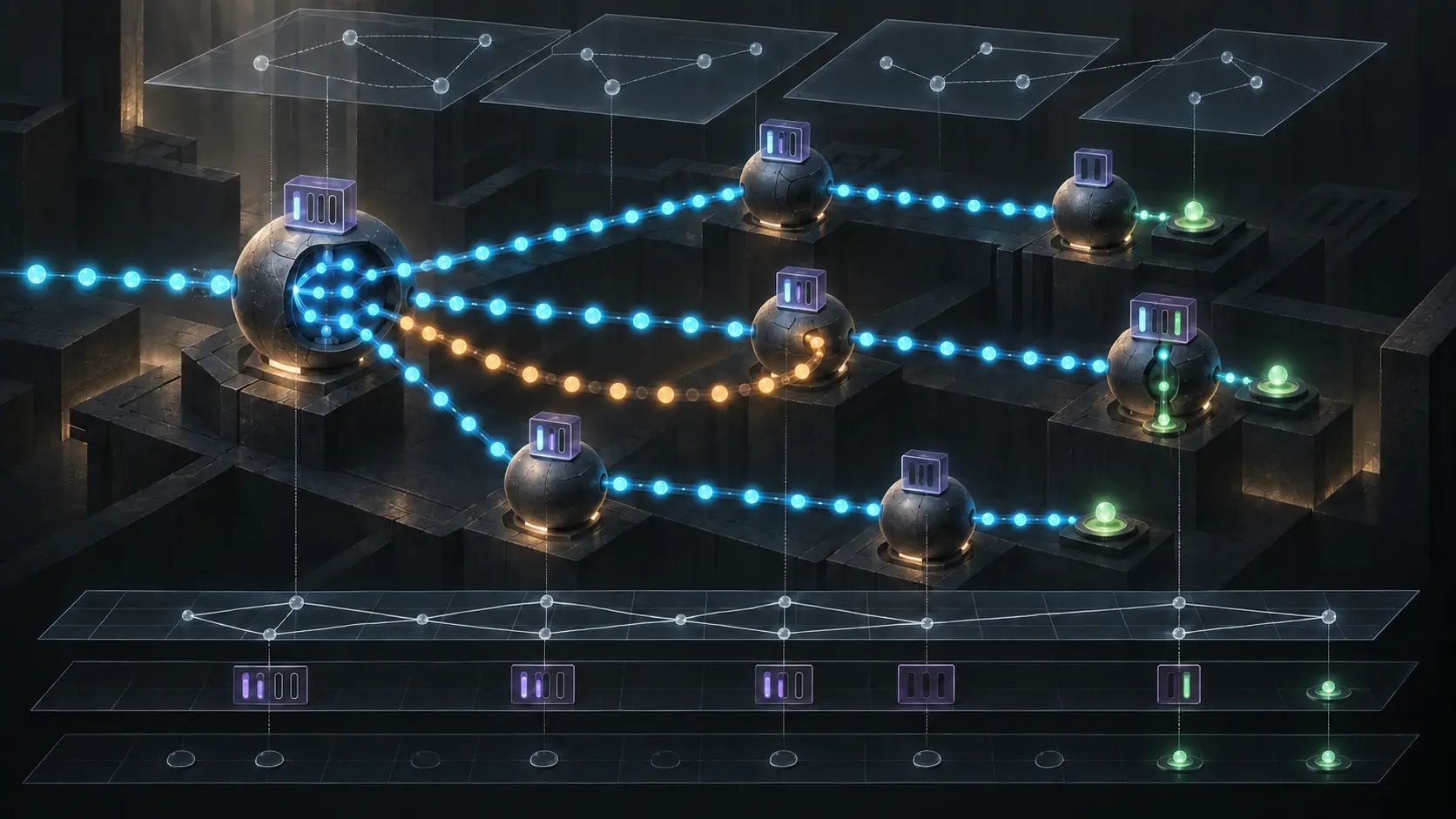
The Replication SID Found State. It Did Not Prove the Tree: RFC 9524
Every Replication-SID on the controller screen was green. Then one packet entered the network, became two, returned to an earlier replication node and became four. The labels were valid, the state lookups succeeded, and the tree was wrong. RFC 9524 explains why local forwarding…

History
RFC 3476 Reserved the Numbers, Not the Optical Service
The Optical Internetworking Forum needed its UNI requests to fit inside IETF protocols. RFC 3476 gave those requests public numbers, while its own error vocabulary showed how little a number could guarantee.