
Profile
Research
Research profile intelligence connects person, company, institution, and other entity coverage for readers comparing the subjects behind BTW.MEDIA reporting. The page helps compare public profiles, related events, evidence packs, role changes, operating footprints, governance exposure, organisational links, and market relevance while keeping organisation and people records distinct from ordinary news chronology. Readers can understand the subject behind the headline, the evidence supporting that profile, and the infrastructure or market relationships that make the profile relevant. They can see who or what the profile represents, which public sources support it, how it connects to companies, markets, governance bodies, or events, and what changes may deserve continued attention as the subject evolves.

CASE FILE
The Answer That Won the Race: Kaminsky's DNS Poisoning and the Entropy Behind Trust
The dangerous answer did not need a signature or a privileged route; it only had to resemble one outstanding question closely enough and arrive first. The 2008 DNS crisis turned that narrow acceptance rule into a renewable race—and showed why a patch can buy safety without…

CASE FILE
The Rule That Reached Every Edge Before Anyone Priced It: Cloudflare's 2019 WAF Outage
Cloudflare's distributor needed seconds to place one approved security rule around the world; the incident lasted because approval had established what the rule should catch, not how much computation every request could make it consume.

CASE FILE
The Page That Borrowed Another Customer's Memory: Cloudbleed and the Boundary of a Shared Edge
A malformed page triggered Cloudflare's parser, but the escaped bytes could belong to somebody else entirely; Cloudbleed showed that stopping a leak and recovering what had already crossed the boundary are different acts of control.

CASE FILE
The Certificate That Was Valid for the Wrong Job: Flame and the Authority Hidden in Purpose
The Flame malware did not need Microsoft's root private key. It found a licensing certificate path whose mathematics, issuance habits and inherited trust could be rearranged into software-signing authority.

CASE FILE
The Request That Vanished but Kept Working: What Rapid Reset Revealed About Cancellation
HTTP/2 let a client withdraw one request without closing the connection; Rapid Reset exposed the moment when that valid cancellation stopped being a courtesy and became an unlimited claim on somebody else’s queues.

CASE FILE
The Patch That Could Not Retire a Key: Debian's OpenSSL Entropy Failure and the Afterlife of Weak Credentials
The repaired library stopped minting predictable keys. It did not find the old ones, remove them from remote authorization files, revoke their certificates or persuade a single relying party to refuse them.
IETF
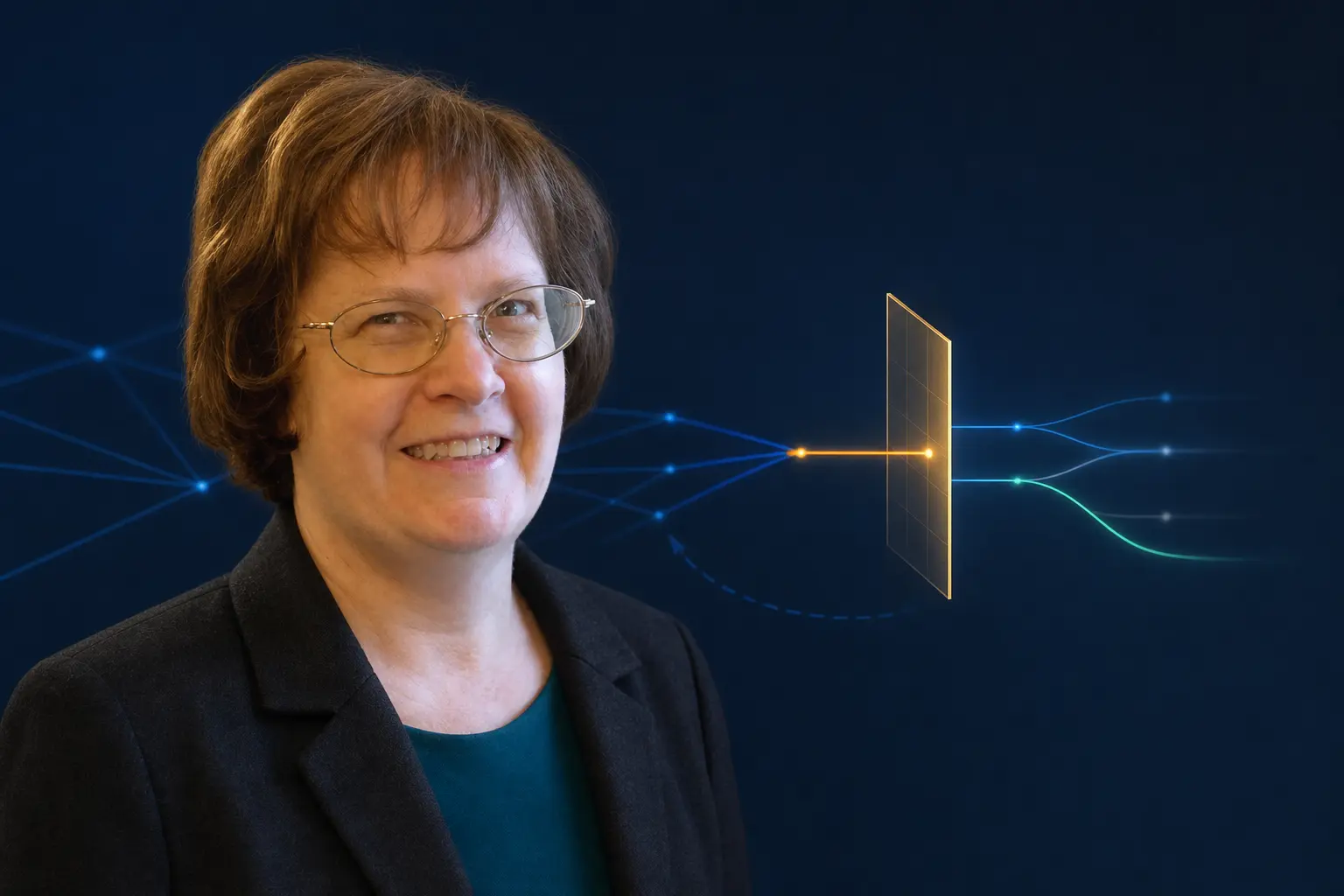
Susan Hares and the Route That Authorised the Filter
A reachability update tells a router where packets may go. A FlowSpec update can tell it which packets to slow, discard, remark or redirect. That change in consequence makes authority—not syntax—the hard part. Susan Hares's documented work on the revised FlowSpec standards helps…

CASE FILE
The Signature That Demanded Every Key: What KeyTrap Revealed About the Cost of Trust
KeyTrap turned a valid-looking DNSSEC workload into a claim on somebody else’s processor, exposing the point at which faithful verification must yield to a locally governed budget.

CASE FILE
The Root That Wasn't Sold: What Symantec's Exit Revealed About Transferable Trust
Symantec could sell its certificate-authority business, but it could not sell a command to keep trusting the old roots. That decision remained inside independently operated clients.

IETF
Bruno Decraene and the Discipline of Draining Before Shutdown
A planned BGP maintenance window is not a surprise failure. Yet an operator who closes the session first can make it behave like one: the old routes vanish, the network begins searching, and packets arrive while the replacement path is still becoming usable. The more disciplined…

CASE FILE
The Route That Borrowed a Name: What the MyEtherWallet Hijack Revealed About Layered Authority
A route accepted elsewhere let false DNS answers arrive locally, but the 2018 MyEtherWallet attack still had to cross a chain of independent technical vetoes.

Story
The Signed Outage: What Orange España Revealed About RPKI Write Authority
Orange España showed how a hostile but valid ROA can pass through validators and local policy, turning account access into staggered route loss.
History
The Core That Had to Stop Being the Core: EGP and the Invention of Autonomous Systems
The early Internet did not decentralize by pretending that every network agreed. It learned to survive disagreement. The Exterior Gateway Protocol drew a boundary around what one routing administration could keep private and what it had to tell its neighbours. That boundary made…

CASE FILE
A Verified RFC Erratum Corrects the Record Without Rewriting It
An RFC erratum can identify a real defect, supply corrected wording and be verified by the responsible parties. It still does not silently replace the published specification. That separation lets implementers learn from mistakes while preserving the text the community actually…

History
The Web CERN Chose Not to Own: How a Laboratory Designed Its Own Exit
The World Wide Web did not become universal merely because it was invented at a famous laboratory. It became portable across institutions because its common machinery was kept small, its specifications were public, its clients escaped one workstation, and CERN eventually removed…
History
The Network That Let Institutions Join Unequally: CSNET and the Architecture of Partial Access
CSNET widened the networked research community without pretending that every institution could afford or operate the same connection. By combining ARPANET access, full Internet service over commercial X.25, and dial-up PhoneNet mail, it showed that interoperability could begin…
History
Where the Network Stopped: The IMP, the Host, and the First Price of Shared Correctness
ARPANET’s Interface Message Processor made packet switching operational by putting substantial machinery into a dedicated subnet. It also made a harder problem visible: infrastructure can carry, check, meter and protect communication without possessing the knowledge required to…

History
Vint Cerf Before the Cutover: Why TCP/IP Needed a Network
The decisive work behind TCP/IP was not a single flash of invention. It was a decade of drawing, challenging and implementing boundaries: between networks and hosts, datagrams and reliable conversations, design authority and operational responsibility. Vint Cerf was a visible…

Story
AFRINIC’s remote-board clause can hear a quorum. It still cannot identify one
Draft Article 19.3 preserves remote Board meetings, but its test stops at a working audio channel. For an institution whose decisions can bind members, move money and restrict exit, that is not yet an evidence standard.

Global Cloud Services Trends
V-JEPA Predicted Video Features, Not a Finished World Model
Meta’s original V-JEPA release tested a focused idea: learn reusable video representations by predicting hidden features instead of rebuilding missing pixels. The February 2024 research showed a promising training direction, but its evidence remained bounded by checkpoints…