
Profile
Research
Research profile intelligence connects person, company, institution, and other entity coverage for readers comparing the subjects behind BTW.MEDIA reporting. The page helps compare public profiles, related events, evidence packs, role changes, operating footprints, governance exposure, organisational links, and market relevance while keeping organisation and people records distinct from ordinary news chronology. Readers can understand the subject behind the headline, the evidence supporting that profile, and the infrastructure or market relationships that make the profile relevant. They can see who or what the profile represents, which public sources support it, how it connects to companies, markets, governance bodies, or events, and what changes may deserve continued attention as the subject evolves.
History
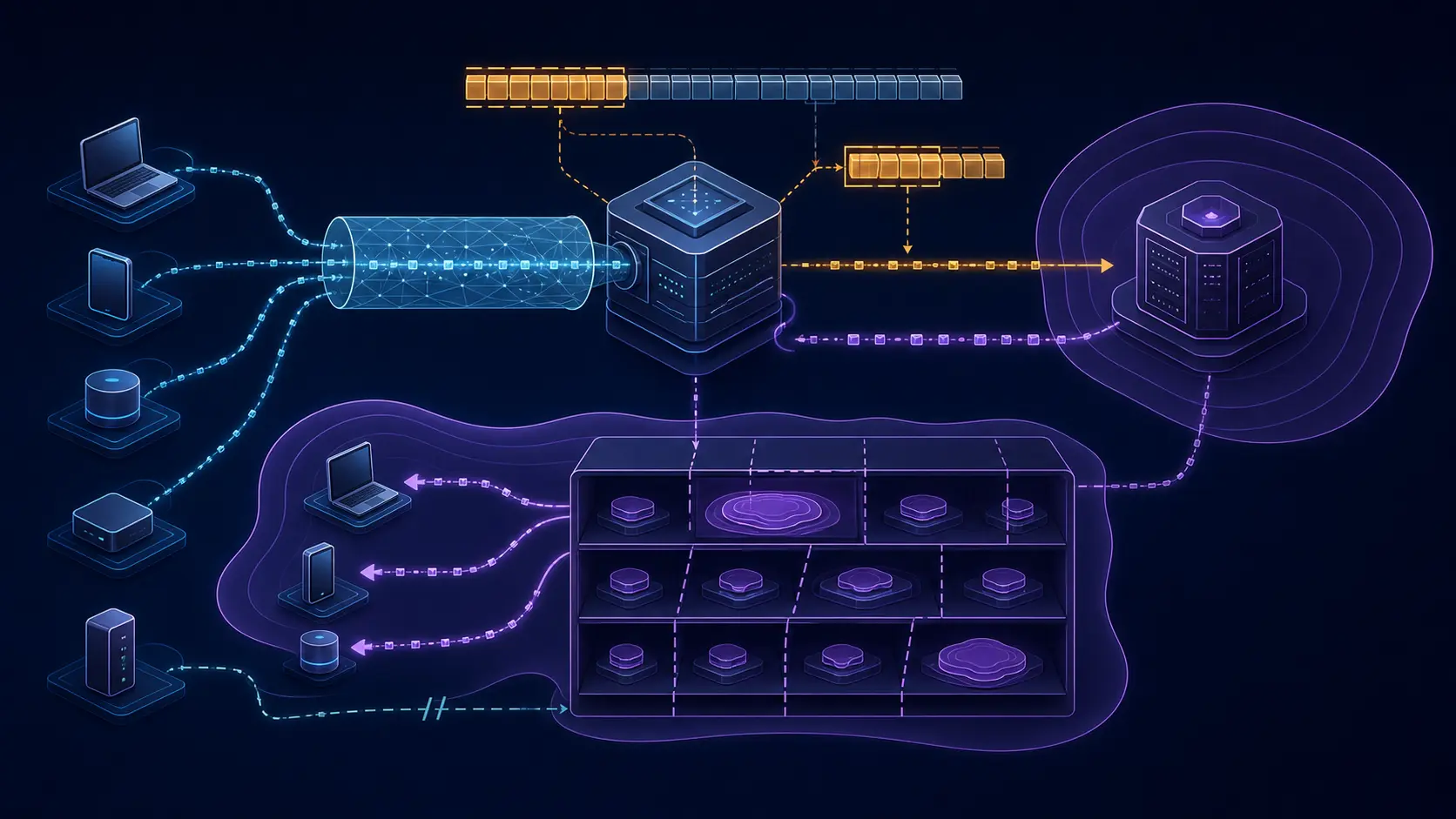
The Prefix the Resolver Sent on Someone Else’s Behalf: EDNS Client Subnet
A recursive resolver usually speaks to an authoritative server from its own address. EDNS Client Subnet changed the message: the resolver could send part of a client's network instead, asking the authority to tailor an answer for someone who had not made that upstream query. The…

CASE FILE
The signed chain skipped a delegation that still existed
NSEC3 Opt-Out allows a large parent zone to leave eligible insecure delegations out of its signed hash chain. That omission can be fully valid. It is also why the chain cannot serve as a complete delegation register: the proof authenticates a limited statement about a hash…

Story
A Private Registry Still Needs Public Limits
LACNIC is private infrastructure governance with public consequences: legitimacy depends on a bounded mandate, published rules, evidence, review and an operational record that affected networks can understand.

IETF
The Reset Had to Prove Itself: TCP's Challenge ACK Defense
A forged reset once needed only to land somewhere inside a moving receive window. RFC 5961 made destructive TCP control flags prove that they reflect the peer’s current state before one guessed sequence number can erase a long-lived connection.

Number Resource Society
An Unanswered Profile Needs a Reply-State Ledger
A public label saying that no answer has been recorded looks like a snapshot. In fact, it starts a clock: every bounce, partial reply, late response and correction can change what the label means.

IETF
BGP Maintenance Needs Two Different Meanings of Graceful
Two change tickets can both say “graceful” while asking the network to do opposite things. One must move traffic away before a link or router stops forwarding. The other must keep forwarding on existing entries while the BGP control plane restarts. Treating those operations as…

IETF
QNAME Minimisation Makes Each DNS Delegation See Only What It Needs
A root server does not need an entire host name to point a resolver toward the next delegation. QNAME minimisation turns that observation into a disclosure rule: reveal the name one boundary at a time, measure fallback, and never confuse less upstream exposure with privacy from…

ICANN
UA Day Built 17 Demonstrations. Production Readiness Needs a Return Visit
On one page of ICANN’s UA Day 2026 report, seventeen rows turn an institutional slogan into working entities. There is an internationalized domain from Kenya and a sample Arabic-script mailbox; another row carries Tifinagh, another Thai, another Telugu. These are not signatures…

IETF
The ACK Did Not Arrive: TCP's Retransmission Timer Discipline
A missing ACK does not tell a TCP sender whether data was lost, merely delayed, or acknowledged by a packet still in flight. RFC 6298 turns that ambiguous silence into a controlled decision: estimate, wait, retransmit once, then become progressively more cautious.

Story
A Court Order Is Not a Registry Runbook
A court can determine rights and impose duties. It does not thereby describe every safe registry, credential and routing step. LACNIC needs a disciplined bridge from legal command to operational execution.

ICANN
ICANN Qualified 56 Applicants for Support. What Has the Program Actually Lowered?
ICANN approved support for 56 prospective new-gTLD applicants. The result lowers defined entry costs, but it is not yet evidence of 56 applications, contracts or delegations.

CASE FILE
The files matched. The authority did not
An RPKI Signed Checklist can bind exact file bytes to a declared set of Internet Number Resources. That is a useful and unusually precise proof. It is also much narrower than the green result can appear: the entity does not identify a company, certify a document's truth, prove a…

IETF
The IETF's Online Onboarding Removes the Clock, Not the Language Boundary
The most consequential line in the IETF's new training brief is not about video length or hosting. It says the course must be fully self-paced and on demand, with no live facilitation, scheduled cohort or synchronous session. A newcomer will no longer need to be in the right room…

CASE FILE
Two validators agreed on the version. They did not agree on the routes
Two RPKI validators can report the same RRDP session and newest serial while retaining different repository histories. The disagreement becomes visible only if they remember what hash an already-seen delta carried before. RFC 9697 turns that memory into an operational control…

IETF
The IETF Liaison Role Conveys Consensus; It Cannot Create It
One IETF Datatracker card says `For action`. The same card now says `Action Taken`. Between those labels lies the part that matters: who was asked, who formed the answer, what authority supported it and what the reply actually said. In a 2026 exchange about quantum key…

IETF
The IETF Side-Meeting Queue Allocates Rooms, Not Priority
The smallest public side-meeting room advertised for IETF 126 held about fifteen people. Its larger counterpart held forty. A requester could select one hour, ninety minutes or two hours; if a block did not appear, the room was unavailable. Those are unusually concrete facts for…

ICANN
Before a Complaint Becomes a Board Case, What Can ICANN's Ombuds Office Actually Change?
ICANN's Ombuds Office can change the route, information and voluntary resolution around a fairness problem—but contact is not formal notice and does not create a binding remedy.

IETF
Ten Segments Before the Network Answers: TCP's Initial Window Bet
A new TCP sender once waited for the path to reveal itself three or four segments at a time. RFC 6928 permitted a first flight of ten. That shortened many small transfers, but it also concentrated more traffic in the only moment when the sender had almost no evidence about the…

Story
The Estate Cannot Route Itself
A liquidator can inventory equipment, contracts and claims. That does not make an Internet number delegation an ordinary asset that moves merely because a sale schedule says so. Insolvency creates two records that must meet: the court-supervised estate and LACNIC's…

IETF
One Cohort Match Does Not Clear IETF’s 2025 Survey
The IETF Administration LLC’s fifth annual community survey is a substantial public record: 52 pages of method, counts, question-level results and caveats drawn from 1,480 valid responses. Its most consequential weakness fits inside two passages. The report first accepts that…