
Profile
Research
Research profile intelligence connects person, company, institution, and other entity coverage for readers comparing the subjects behind BTW.MEDIA reporting. The page helps compare public profiles, related events, evidence packs, role changes, operating footprints, governance exposure, organisational links, and market relevance while keeping organisation and people records distinct from ordinary news chronology. Readers can understand the subject behind the headline, the evidence supporting that profile, and the infrastructure or market relationships that make the profile relevant. They can see who or what the profile represents, which public sources support it, how it connects to companies, markets, governance bodies, or events, and what changes may deserve continued attention as the subject evolves.

CASE FILE
The Network Changed Before the Decision Became Final: NETCONF Confirmed Commit and Rollback Authority
NETCONF can place a candidate configuration into active use while a timer still gives the server authority to restore the previous state. That provisional success is useful precisely because a protocol acknowledgement, a final datastore and a functioning network are different…

Story
RIPE NCC’s Twelve Arbiter Candidates Need a Rule for Six Places
Passing an eligibility test is not the same thing as winning an appointment. RIPE NCC’s 2026 call for arbiters was written as a nomination followed by member approval. Twelve volunteers then qualified for six available places. That changed the practical question from “may these…

CASE FILE
The Query Changed. The Cache Answered Anyway: No-Vary-Search and the Authority to Declare URL Equivalence
Two addresses can look different while an application treats them as the same page. No-Vary-Search lets an origin expose that knowledge to caches. The tempting story is fewer misses. The operational story is harder: one party declares which distinctions do not matter, another…

Story
ARIN Approved Its Leadership Procedure Only as a Guideline
The most important word in ARIN's April 2026 leadership motion was not *procedure*. It was *guideline*. Across three Board meetings, Trustees moved a proposed leadership-selection document away from formal prescription and toward a one-page aid for succession conversations. That…

CASE FILE
The Answer Was Not Ready. The Browser Could Still Move: HTTP 103 Early Hints and the Authority to Speculate
A server can reveal a likely stylesheet before it knows whether the request will end in a page, an error or a redirect. HTTP 103 gives that provisional clue a place on the wire. The clue can save time, but it cannot become the answer: the client still decides whether to spend…

Story
APNIC’s Nine-Year EC Limit Is a Threshold, Not a Ceiling
APNIC’s new Executive Council rule is usually summarized as three terms or nine years. The adopted text is more exact—and more consequential. For future entrants it counts consecutive terms; for Council members in office on 1 January 2027 it counts years already served at a…

CASE FILE
The Token Was Bound to a Key. The Action Was Still Unauthorized: DPoP and the Authority of a Sender Constraint
DPoP can stop a copied OAuth token from becoming a portable credential. It cannot decide whether the key holder is the right client, whether the token still carries the right audience and scope, or whether today's resource state permits the requested effect.

CASE FILE
The Error Returned as a New Question: DNS Report-Channel and the Authority of Feedback
An authoritative server can announce where it wants to hear about failures it cannot see. It cannot make a resolver diagnose, report or believe anything. DNS Error Reporting turns one local validation failure into a second DNS query, then leaves transport, caching and human…

CASE FILE
The Signature Verified. The Command Was Still Unauthorized: HTTP Message Signatures and the Authority of Covered Components
RFC 9421 can prove that selected parts of an HTTP message survived in a defined semantic form. It cannot decide whether the signer was entitled to issue the command, whether an omitted field changed its meaning, or whether a valid request has already been used.

Story
APNIC Renamed an Election as an Appointment. The Selector Did Not Change.
APNIC's 2026 By-law amendment replaced one verb: the Executive Council would no longer “elect” the Director General but “appoint” that officer. Read alone, the change sounds like a transfer of power. APNIC's own supporting paper says the opposite. The selector was already the…

CASE FILE
The Packet Hid Its Exact Length. The Pattern Still Spoke: EDNS Padding and the Limits of DNS Privacy
An encrypted DNS message can conceal its names and answers while leaving a surprisingly useful silhouette. EDNS Padding changes that silhouette by adding bytes. The difficult question is not whether the packet became larger, but whether client, server, transport and path made…

Number Resource Society
Who can change the Dunnes RIPE record—and what that power does not prove
The authority behind a public internet-resource record is neither unlimited nor merely clerical. In the Dunnes case, protected RIPE Database entities are governed through maintainer authentication, `mnt-by` references and controlled member procedures. Those mechanisms can…

CASE FILE
The Record Bound the Options. The Client Still Chose the Connection: DNS SVCB, HTTPS and Service Authority
A domain owner can authenticate a list of preferred endpoints, protocols and connection parameters before the first application exchange. That does not make the first preference a command, turn a routing target into the origin, or prove which path a real client can securely…

CASE FILE
The Counter Hit Its Ceiling. The Filename Opened a New Epoch: RPKI Manifests and Recovery Authority
A correctly signed RPKI manifest can become unusable because a relying party remembers an impossible predecessor. RFC 9981 gives the issuer a narrow way out: change the manifest filename, start a new comparison epoch and preserve every other freshness, location and integrity…

CASE FILE
The Feed Was Valid. The Answer Was Local: DNS Response Policy Zones and the Authority to Rewrite Resolution
An authenticated threat feed can tell a resolver what a publisher recommends. It cannot decide which users lose a name, whether the answer should disappear or be replaced, or who owns the damage when a correct transfer produces the wrong operational result.

CASE FILE
The Digest Matched. The Zone Was Still Wrong: ZONEMD and the Limits of Cryptographic Integrity
A whole-zone checksum can expose truncation, corruption and substitution. It can also authenticate a mistake with perfect precision. The decision for infrastructure leaders is not whether to trust cryptography, but how narrowly to interpret what it has proved.

CASE FILE
The Signal Was Signed. The Delegation Was Not Yet Secure: CDS/CDNSKEY and the Authority to Publish DS
A child zone can publish a perfectly signed request for a new DNSSEC secure entry point and still lack the one chain that would validate it. CDS/CDNSKEY makes parent coordination machine-readable; it does not collapse operational control, registrant authority, parent admission…

CASE FILE
The Catalog Was Valid. The Deletion Was Not: DNS Catalog Zones and the Authority to Provision
An authenticated DNS transfer can deliver a perfectly formed catalog whose operational consequence is to remove every zone from a secondary fleet. The transport may be trustworthy and the syntax impeccable while the decision encoded inside it is still wrong. DNS Catalog Zones…

Leaders
What Mohamed Awang-Lah controlled at MY.NeuTrans—and what he did not
Dr Mohamed Awang-Lah made a consequential structural choice after JARING: he founded a company designed to supply passive network infrastructure to operators without also competing for their retail customers. The public record supports that decision, its implementation and the…
CASE FILE
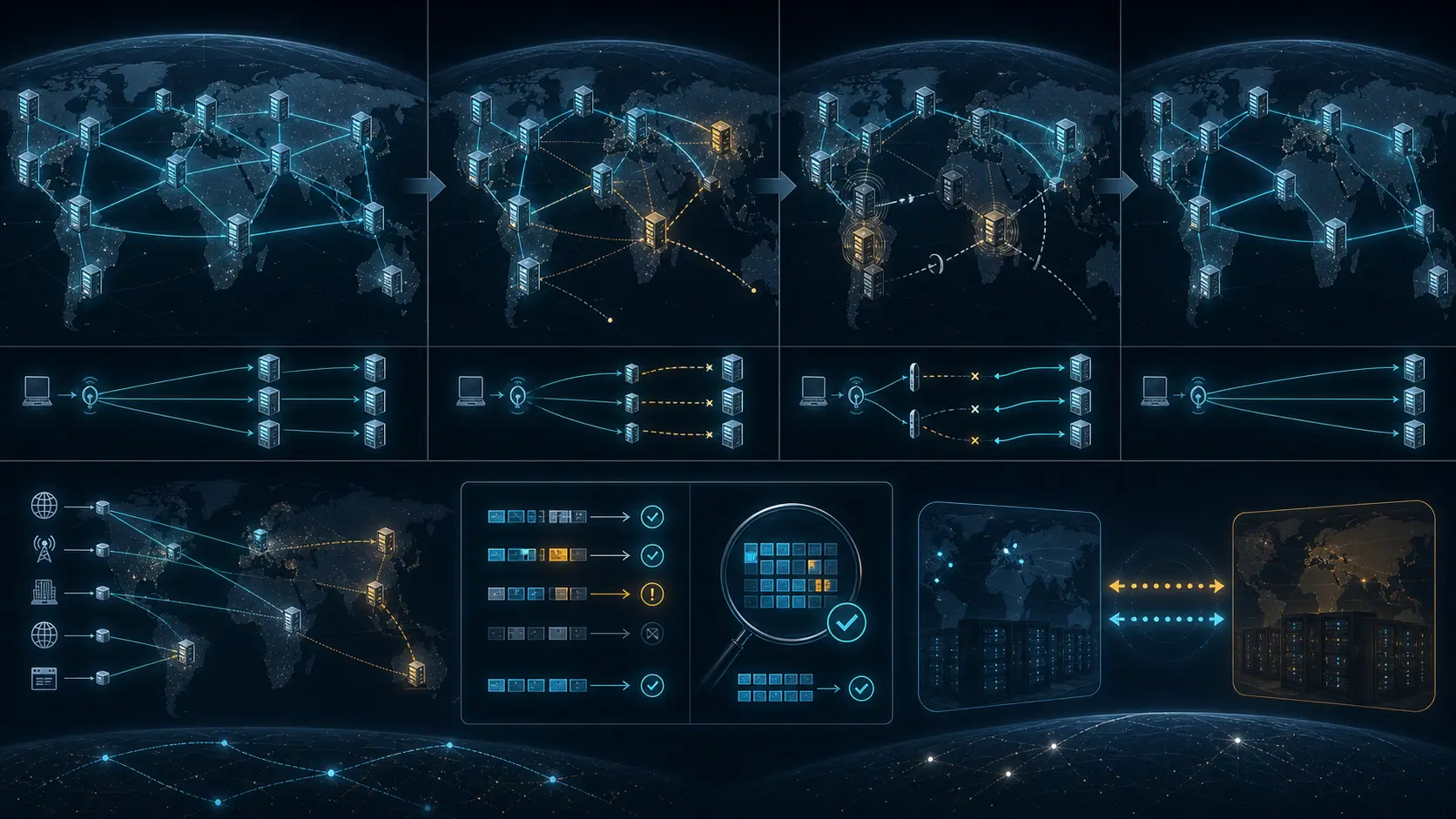
The F-Root outage that showed why redundancy is not the same as readiness
A January 2020 DNS incident exposed a narrow but consequential weakness in distributed infrastructure: many nodes can exist, yet recovery can still depend on whether separate organisations can detect a semantic fault, agree on its cause and exercise emergency routing authority…