
Profile
Analysis
Analysis profile intelligence connects person, company, institution, and other entity coverage for readers comparing the subjects behind BTW.MEDIA reporting. The page helps compare public profiles, related events, evidence packs, role changes, operating footprints, governance exposure, organisational links, and market relevance while keeping organisation and people records distinct from ordinary news chronology. Readers can understand the subject behind the headline, the evidence supporting that profile, and the infrastructure or market relationships that make the profile relevant. They can see who or what the profile represents, which public sources support it, how it connects to companies, markets, governance bodies, or events, and what changes may deserve continued attention as the subject evolves.

Europe and Middle East Regional ISP Trends
BSH's single-operator model makes dependency evidence part of the SLA
BSH offers distributed organisations a commercially simple proposition: aggregate communications services into one contract and give the customer one point of responsibility. That can reduce the cost of coordinating a fault. It does not, by itself, show whether the underlying…

History
The Instruction That Had to Survive the Split
One IPv4 datagram entered a router with two options. Loose Source and Record Route, type 131, had its high bit set. Record Route, type 7, did not. When the router cut the datagram into three fragments, the zero-offset fragment kept both options; the other two kept only the…

History
The Rename That Had Not Happened Yet: How FTP Put a File Between RNFR and RNTO
FTP could answer a rename request with a positive code while leaving the file exactly where it was. The first command, `RNFR`, named the source and produced an intermediate state; only the immediately following `RNTO` supplied the destination and could complete the action. The…

Story
LACNIC and the economics of legitimacy after scandal
A balance-sheet test for how a regional Internet registry could restore trust after a verified governance failure without risking continuity.

History
The Byte the Wire Refused to Define
The server accepted `TYPE L 36`. The next nine octets on the data connection carried not nine file units but two. FTP had standardized the carrier at eight bits while leaving the sender free to declare a 36-bit logical byte and the receiver free to choose an invertible local…

History
The Login That Survived a Filesystem Switch: How FTP SMNT Separated Identity from Namespace
An FTP user could authenticate once, set transfer parameters, then ask the server to exchange the file-system structure beneath the session. The command was called `SMNT`, for Structure Mount. Its sparse specification preserved a surprisingly modern distinction: a principal may…

History
The Message That Tried to Arrive Before the Mailbox: How SMTP Abandoned Terminal Delivery
Early SMTP could ask for more than mail. One command demanded that the text appear on a user's live terminal, another treated the terminal and mailbox as alternatives, and a third attempted both. Those verbs made a fleeting human state—logged in and willing to be interrupted—part…

History
The Green Light That Was Not Yours: How NNTP Separated Group Policy from Posting Permission
A news server marks one group `y`, the old shorthand for posting permitted, and still refuses the person at the keyboard. Another group carries `n`, yet a specially privileged client may pass. NNTP did not contradict itself. It made the catalogue describe the group's ordinary…

History
The Correct Password That Still Needed an Account
The password had done its job. The FTP server did not reject it, yet it did not say the user was logged in. It returned `332` and waited for `ACCT`—a third piece of access-control information whose authority belonged neither to the user name nor to the secret that followed it.

Story
LACNIC and the economics of IANA recognition and franchise risk
IANA recognition is not a commercial franchise, yet it creates a similarly scarce institutional position: one regional registry becomes the globally accepted gateway between an upstream numbering system and a defined community.

Europe and Middle East Regional ISP Trends
A mapped pole is not a broadband route until access is cleared
A fibre planner can draw a convincing line through a village in minutes. The line follows existing poles, avoids an expensive trench and turns a difficult build into a short spreadsheet. Then a field team reaches the first pole and asks the question the map did not answer: can…

IETF
Brian Carpenter and the Boundary That Needed Proof
A network diagram can draw a clean perimeter around a campus, cloud overlay or industrial system. A packet cannot rely on the ink. Brian Carpenter and Bing Liu's RFC 8799 asks what must replace that intuition when a protocol has meaning only inside: verifiable membership…

History
The Number Two Peers Never Negotiated
The client placed 1,460 in its SYN. The server returned 1,200 in the SYN-ACK. Neither side yielded, because the numbers were not competing offers. Each endpoint was describing the largest TCP data segment it could receive. What either side would actually send remained a separate…

History
The Post That Had to Keep Its Name: How NNTP Bounded a Lost Final Reply
The article is already inside the server when the connection breaks. Perhaps the server said `240`; the posting client never heard it. On the next connection, absence from the reading view proves little, because moderation may still be under way. NNTP's answer to that uncertainty…

History
The Command Authentication Could Not Resume: How NNTP Made the Client Ask Again
An NNTP client asks for a restricted newsgroup and receives `480`. It authenticates successfully, yet the requested group does not open. The command must be sent a second time. That small repetition preserved a consequential boundary: proving an identity could change the…

History
The Acknowledgement That Retired a Memory
The sender still had data to send, but its peer had stopped sending data back. One ordinary packet now had an extra job: carry an acknowledgement of the peer's acknowledgements. In DCCP, that small addition could let the receiver release an old history. It did not recover a…

JPNOG
The RPKI Trial That Asked How to Fail Safely
Japan’s 2023 ROV exercise treated recovery as part of the security control, not as an apology after the control went wrong.

History
The Birth Record That Could Outlive the Group: How ACTIVE.TIMES Separated Provenance from Availability
One list says a newsgroup can be selected now but remembers nothing about its beginning. Another preserves a group's local creation record after that group has disappeared from the selectable catalogue. NNTP made both answers valid on the same server. The apparent contradiction…

History
The Write That Returned Before It Was Safe
The server had returned success, yet the client was not free to discard the bytes. They might exist only in memory that the next restart would erase. NFS version 3 made that interval explicit, then attached a narrow piece of evidence to it: a write verifier that could tell the…
APRICOT
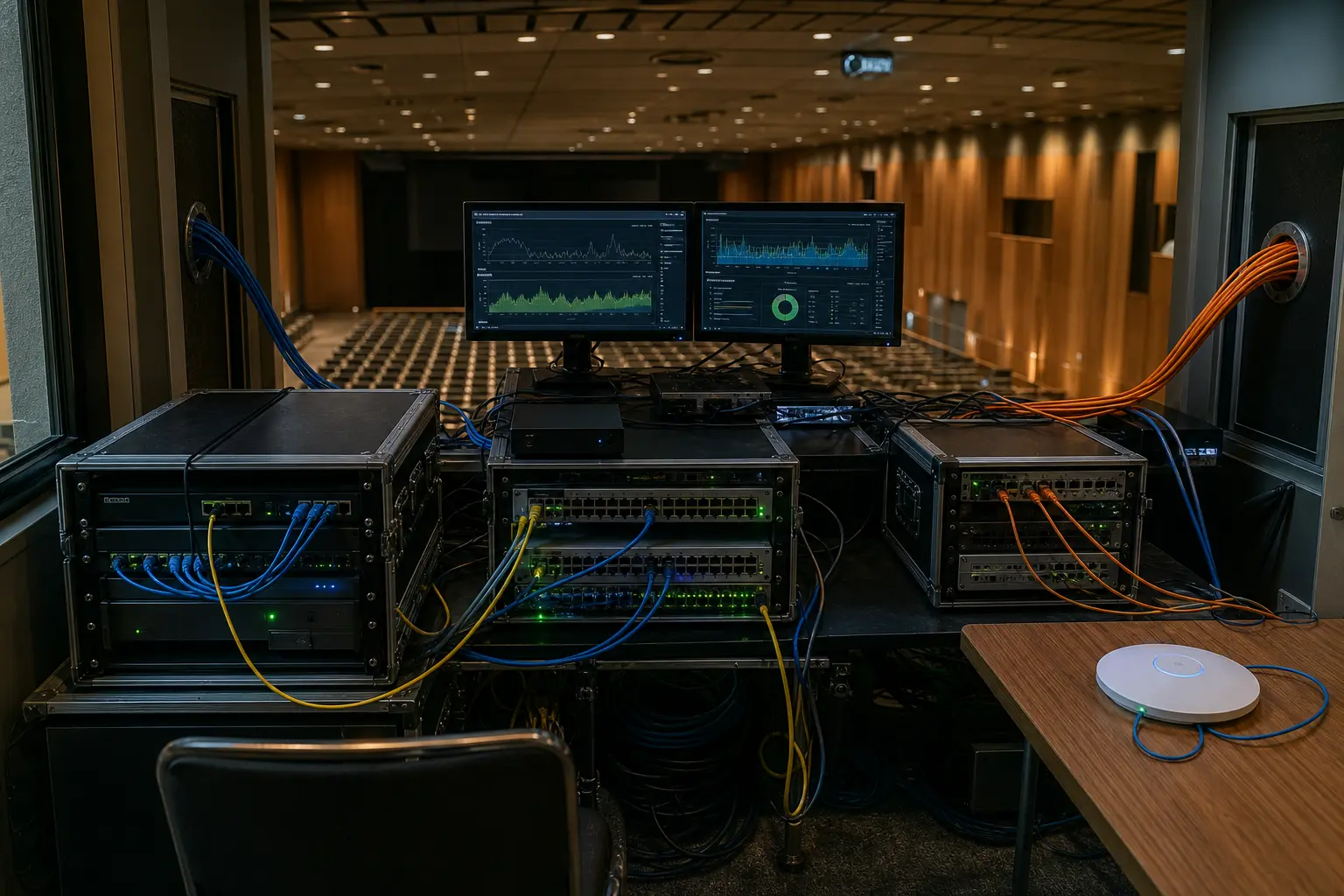
The Conference Network Is APRICOT’s Strongest Constitution
APRICOT’s temporary production network is a more testable statement of institutional values than a conference slogan. Its designs, routes, client measurements and failures show what the summit attempts to operate—without proving universal compliance or regional adoption.