
Impact
HIGH
Within the Impact facet, HIGH impact intelligence highlights articles where the expected effect level, operational exposure, or decision relevance is comparable. Readers can use the page to separate routine market updates from higher-consequence governance, infrastructure, security, and investment signals that may affect planning, procurement, policy, or customer exposure. The page connects the consequence band to public evidence, related organisations, regional context, operating dependencies, service continuity, competition, investment timing, compliance, and customer risk. It helps readers decide which developments deserve deeper monitoring, which actors are most exposed, and how a signal may affect operations or market planning.

Story
LACNIC's Statutes and the Boundary Between Association and Infrastructure
LACNIC's members can govern a Uruguayan civil association, but high-impact consequences for registry records and routing services require a separate, reviewable bridge from association decision to holder agreement, policy and technical act.

Story
ARIN's Mission Statement Is Not a Delegation Instrument
ARIN's mission can direct a corporation, but duties owed by a resource holder must be traced through law, governing documents, an applicable agreement and the terms that authorize the particular consequence.

Story
APNIC's Objects Clause Under the Australian Associations Regime
APNIC's entities describe the purposes of a proprietary company and its special committee; they do not convert a service body into public jurisdiction over every regional resource holder.

Story
Read the Verbs: What RIPE NCC's Articles Permit and What They Do Not
RIPE NCC's constitutional language authorises corporate organs; service sanctions require the agreement, procedures and remedies that actually carry the operative verbs.

History
Five Regional Monopolies Were Not the Only Possible Design
Unique Internet number-resource state had to be protected. The question is whether that requirement also required registration service, membership, policy, certification, reverse DNS, education and disputes to remain permanently bundled inside one recognised provider for each…

Story
The Transitional Pool: How AFRINIC Inherited Records It Did Not Create
AFRINIC's 2005 transition made one regional registry operationally responsible for African number-resource records that had been assembled under APNIC, ARIN and RIPE NCC. That continuity was necessary, but it did not make every inherited entry self-proving evidence of original…

Story
AFRINIC’s 2005 Recognition Record and Its Narrow Original Task
AFRINIC was recognised through a sequence of provisional approval, transition evidence, applicant assertions, an administrative assessment and final Board resolutions. That record established a regional registry service role for Africa; it did not silently become a broad charter…

Story
AFRINIC’s Mauritius Choice: Neutral Venue or Legal Single Point of Failure?
AFRINIC’s founding design separated the places where work was done from the place where corporate authority lived. Mauritius supplied the legal person, while South Africa, Egypt and Ghana carried other operating roles; the later question is what that distribution protected, and…

Story
Africa’s Long Wait for Its Own Registry
AFRINIC’s long formation was not an empty delay between an African registry idea and final recognition. It was an eight-year accumulation of training, predecessor service relationships, legal design, staff learning and divided authority that made continuity safer while leaving…

Story
Recognition in 2002: What ICANN Actually Approved About LACNIC
The 2001-2002 recognition record gave LACNIC a bounded place inside ICANN, IANA and ASO coordination; it did not convert that coordination decision into a statute, a territorial franchise, sovereign immunity, or general title over members' commercial resources.

Story
The Caribbean Edge of LACNIC’s Map
LACNIC gives covered Caribbean operators access to common regional institutions, but the fixed record cannot show whether that access becomes influence without country-coded member, voter, speaker and policy-outcome data.

Story
LACNIC’s Spanish-Portuguese Bargain
LACNIC's multilingual policy surface lowers the cost of entering regional debate, but legal authority, consensus judgment and final ratification still sit in stages that translation alone cannot equalize.

Story
Uruguay’s Legal Shelter for a Continental Registry
Montevideo gave LACNIC more than an address: it supplied a legal person, a set of organs, assets and an accountability forum. The harder question is where that shelter ends when a regional registry decision affects networks far beyond Uruguay.

Story
LACNIC Before Recognition: Building a Registry Through Regional Diplomacy
LACNIC's founding record shows a coalition strong enough to build a regional registry before recognition, but not a public denominator proving that every affected operator authorised its interim board.
Story
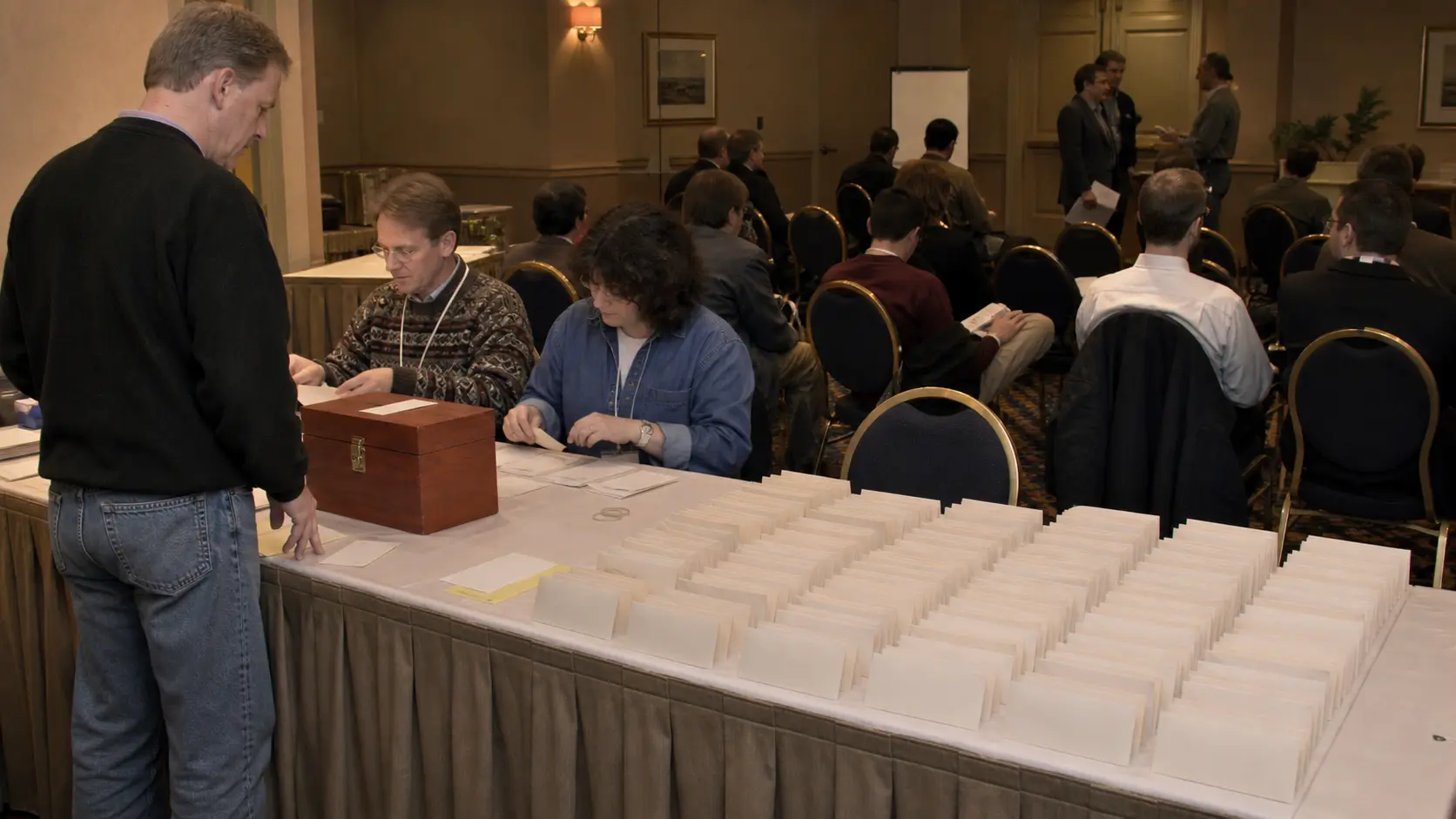
ARIN’s First Election and the Voters Who Never Appeared
ARIN's democratic opening began after founder appointment and Board selection, but the surviving record still leaves the first electorate, turnout, candidate field and nonparticipation denominator outside public view.

Story
Canada, the Caribbean and a Registry Designed in the United States
ARIN's regional compact asks Canadian and Caribbean resource holders to share one corporate governance channel with a much larger United States base; the measurable issue is not whether geography proves capture, but where service access stops and institutional influence begins.

Story
The Legacy RSA: Contractual Consent or Administrative Ultimatum?
ARIN's Legacy RSA was not a simple choice between freedom and coercion; it was a service-by-service bargain across registry dependence, transfer recognition, routing-security value and an unsigned outside option.

Story
Virginia Corporate Law and the Reach of ARIN’s Registry Decisions
ARIN’s legal home gives members real corporate remedies without turning registry effects into Virginia public law.

Story
ARIN After InterNIC: A Nonprofit Born from a Federal Exit
ARIN began with continuity: people, systems and records moved before authority was fully explained.

Story
The NIR Bargain APNIC Never Fully Resolved
Local registry service can lower access costs while moving governance power into another layer.