
Primary Domain
Internet Infrastructure Institution
Within the Primary Domain facet, Internet Infrastructure Institution intelligence groups reporting by primary domain so readers can follow a focused area of internet infrastructure, governance, connectivity markets, or digital capital. The page brings together related articles, public evidence, institutions, companies, people, regional exposure, operating dependencies, and market context that may otherwise sit across separate category pages. It explains the domain, the likely actor class, the market or governance context, and the source material readers should use when comparing signals. Operators, analysts, and governance readers can see how the same domain appears across events, profiles, market shifts, public-source evidence, regional dependencies, and longer-cycle infrastructure decisions over time.

Leaders
Gergana Petrova’s Travel Budget Missed Its Flight and Funded Two Research Teams
When RIPE meetings went online, the academic travel line lost its itinerary. Gergana Petrova's account of what followed is unusually concrete: 22 applications, two €24,000 awards, and a calendar that had to sprint. One funded project later put the bias of RIPE's own measurement…

Leaders
Mirjam Kühne Found an IPv4 Block the Routers Still Thought Was Illegal
An address block can be ready for use and still find the road blocked. In 2012, 128.0.0.0/16 had that problem: old filters treated it like a forbidden guest. Mirjam Kühne and RIPE NCC colleagues turned the mismatch into measurements, operator emails and another round of…

Leaders
Robert Kisteleki Put a RIPE Atlas Anchor in a VM. The Rack Survived.
Internet measurement likes a view from everywhere. Hardware, less so: someone has to buy it, ship it, rack it and keep it alive. Robert Kisteleki tried a quieter entrance for RIPE Atlas in 2018. His team put anchors in virtual machines, measured them against a nearby metal…

Leaders
Nathalie Trenaman Made the Routers Sit a Browser Test
At RIPE 78, the meeting network was set to drop invalid RPKI routes. The room wanted proof. Nathalie Trenaman and three colleagues answered with two web pages and a deceptively simple exam: one route should work, the other should fail. The browser became an unusually nosy auditor…

Leaders
Philip Smith Gave the Routing Table a Weekly Weigh-In. It Kept Snacking.
The Internet has no head teacher to make every network tidy its routes. Philip Smith helped keep a more persuasive instrument on the desk: a report that showed operators what their announcements added to everyone else's workload. The uncomfortable part of the story is that the…

Leaders
Geoff Huston Asked the National Clock for ID
A country can buy a superb reference clock, then send its time across the Internet in a packet that anyone on the path can impersonate. Geoff Huston found the awkward gap between the polished clock and the unsigned delivery note. His question is wonderfully practical: when the…

Leaders
Hisham Ibrahim Looked Under the Sovereignty Plan. Both Backups Shared a Plug.
Picture two suppliers on a procurement slide and one cloud region beneath them. The slide says resilience; the wiring tells a different story. Hisham Ibrahim's RIPE Labs essays put that wiring at the centre of digital sovereignty: find the shared failure points, then ask whether…

Leaders
Leo Vegoda Asked RIPE's Phone Book to Check Its Messages
A contact field can look impeccable while nobody reads the inbox. Vegoda pushed the RIPE Database to let network operators publish a channel they actually use. The smallest troublemaker in that plan was a `#` inside a Signal address.

Leaders
Gergana Petrova Counted Three RIPE 92 Hubs. Sofia Needed Lunch First.
Edinburgh's meeting clock ran two hours behind Sofia's stomach. The fix was sandwiches, a Bulgarian-language programme and a room full of operators. Petrova's account of three RIPE 92 hubs shows how much work sits between a webcast and a useful gathering.

Leaders
Mirjam Kühne Wrote the Meeting Rule: Staff Can Speak. Then They Show Their Badge.
RIPE asks its own secretariat for expertise and sometimes tells that secretariat what to do. Kühne helped write a rule for the awkward moment when the expert at the table also works for the institution receiving the advice.

Leaders
Vesna Manojlovic Asked Atlas to Go Public. Thirteen Replies Kept the Off Switch.
A volunteer Internet probe can report on the world while revealing something about its host. Manojlovic's 2013 plan put that trade on the table. The replies changed the setting everyone would see first.

Story
6,637 IPs Called APNIC’s RDP Decoy 25.6 Million Times. It’s Getting Awkward.
From 21 to 27 September, APNIC’s OpenCanary decoy recorded 25.6 million RDP connection attempts from 6,637 distinct source IPs. VNC drew 4.2 million attempts from 3,179 IPs. The report counts connections, not successful logins; that distinction is the whole story.

Leaders
Robert Kisteleki Paid a Probe One Credit. A Traceroute Costs Thirty.
RIPE Atlas has a tiny internal economy. Its volunteer probes earn points for showing up and producing results; researchers spend them to ask the network questions. Kisteleki put the second paycheck in writing.

Leaders
Ondřej Caletka Dropped the Bad Route. The Good Route Never Arrived.
An ASPA field test at RIPE 92 turned one engineer’s neat filter into an awkward question: what happens when your only upstream sends the path you must discard?

Leaders
Tobias Fiebig Found the Most Expensive Words in a NOC: “Only I Know”
At RIPE 93, he and Franziska Lichtblau followed a brilliant operator from the right call to the lonely pager. The bill arrives when nobody else can change the system.

Story
APNIC’s Statistics Clock Is Ticking Again. The Archive Still Owes 92 Hours.
APNIC has restarted its hourly WHOIS and RDAP reports. The latest file is current; the October archive still skips 92 consecutive hours, and the notice promising repairs has no closeout.

Leaders
Massimiliano Stucchi Put a RIPE 93 Slot on the Ten-Minute Clock
The programme chair had two headaches: synthetic-looking slides and the Friday morning schedule. One full presentation slot became a run of lightning talks.

Leaders
Wolfgang Tremmel Heard “Layer 3 Exchange” and Asked Who Gets the Keys
At RIPE 93, a proposed upgrade to Internet exchanges drew an old operator’s question: when the exchange starts routing, who is allowed to steer?
Leaders
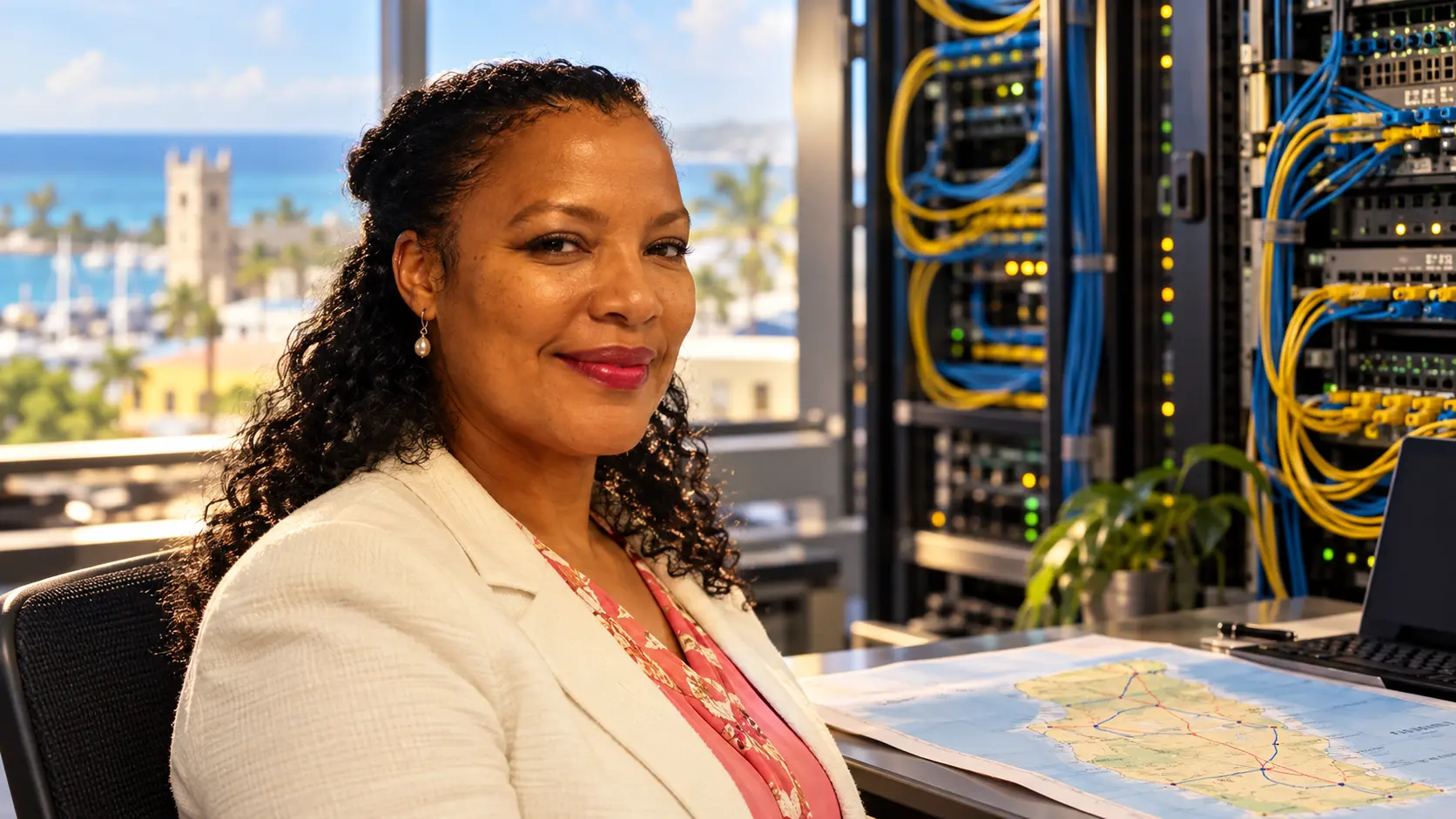
Alicia Trotman Lost by 16 Votes. ARIN Kept the Next Chair Ready.
The Barbados regulator missed an elected seat in 2017. A Council vacancy turned sixth place into an invitation, and the following ballot gave her a full term.

Leaders
Lu Heng Asked Five Registries for One Front Door
His ARIN 58 request came with a familiar operator’s invoice: five sets of software to perform routine work across five RIRs.