
Content Type
Research
Within the Content Type facet, Research intelligence gathers BTW.MEDIA articles that share the same editorial format, helping readers compare briefings, profiles, risk notes, market analysis, and event coverage without mixing different kinds of evidence. The page explains how this content type frames internet infrastructure events, company movements, governance decisions, operational signals, and public evidence across the site. Readers can compare which actors or infrastructure systems appear most often, how source quality changes interpretation, and whether the material is a durable profile, a time-sensitive event, a strategic market signal, or a governance development. The result is a useful search page for operators, investors, customers, analysts, and policy stakeholders who need to understand the consequence, timing, and evidence behind similar article formats.

Global Institutional
What Allianz Technology Actually Ships: The Software Execution Record Behind the AI Ambition
Allianz Technology SE is the captive IT and software arm of the Allianz insurance group, and its public identity has been shaped by two very different kinds of records: the infrastructure programme — data centres, wide-area networking, cloud regions — and the software estate that…

Leaders
Brian Behlendorf and the Test a Public Release Could Not Perform
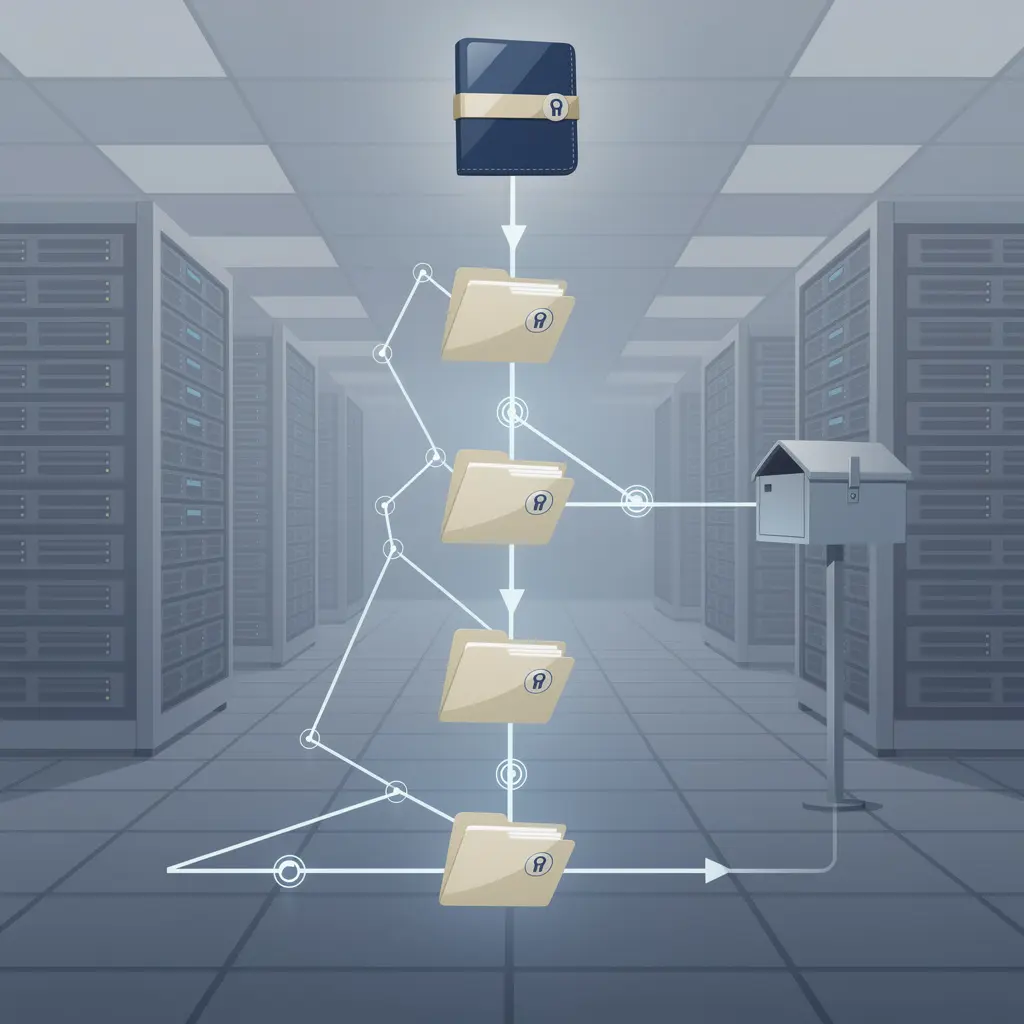
Apache’s first release was built from fixes that webmasters had already made for themselves. Brian Behlendorf helped give those separate patches a place to meet; the servers that adopted the result still had to make their own decision.
Europe and Middle East Institutional
The Machinery That Never Rings for Abuse: Inside the RIPE NCC's Escalation Layer
The RIPE NCC possesses a complete, published, time-tested apparatus for escalating a dispute to a binding outcome: an arbiters panel appointed by its Executive Board, a twelve-week ruling clock, a published archive of rulings, and a 30/60/90-day termination ladder ending in the…

History
The Fourth Packet Was Certain to Drop. That Still Wasn’t the Result.
In 1998, a small TCP simulation put an awkward objection on the table: if a modem-facing router can hold only three packets, a four-packet opening flight must lose one. The experiment accepted that loss as certain, then asked a harder question—what happened to the connection when…

IETF
The Number Was Free Until Another Draft Chose It
Two NFSv4 extensions can compile, pass isolated tests and still be mutually unintelligible. If each author selects the next operation number visible in a private working copy, both can put different XDR arms behind the same integer. The collision appears only when the work meets.…

Europe and Middle East Institutional
Allianz Technology's Infrastructure Arc: What Was Migrated, What Remains a Promise
Allianz Technology, the global IT service provider for the Allianz insurance group, has spent more than a decade consolidating data centers, rebuilding wide-area networking and, most recently, standing up enterprise AI infrastructure. Reading the public record closely, the…

Europe and Middle East Institutional
What Would Prove the Repair Is Durable? The Svea Abuse Roles After the Finansinspektionen Sanction
Nearly four years after Svea Ekonomi AB merged into Svea Bank AB on 3 January 2022, and roughly nine months after Sweden's financial supervisor fined the survivor bank SEK 170 million for anti-money-laundering failures, the abuse-contact surface the Svea group presents in the…

IETF
The Source Announcement Survived. Its Attributes Did Not
A multicast source can remain visible after a compatibility conversion has removed the facts that made its announcement useful. Revision 08 of the PIM flooding enhancements preserves group, source and holdtime when GSI becomes legacy GSH, but deliberately drops every…

Leaders
Martin J. Dürst and the Boundary Inside a Unicode URL
A link can look like one string to its reader and become several different things to software. Martin J. Dürst’s work on Internationalized Resource Identifiers helped make that handoff explicit: a Unicode host name, a DNS label, a URI path and a server-side resource key do not…

CASE FILE
The Sensor Stream Went Quiet. The Sensor Had Not Promised to Stay Safe
A conditional CoAP observation can save power and bandwidth by reporting only selected changes. That silence is designed, not self-explanatory. Between the physical resource and the operator sit sampling, condition evaluation, notification timing, delivery and application…

Europe and Middle East Cloud Services
NovaCloud-Hosting, re-checked against the record: what first-hand page reads confirm about the announced-service gap
NovaCloud-Hosting, re-checked against the record: what first-hand page reads confirm about the announced-service gap intelligence summary explains the development, the public evidence available to readers, the organisations involved, the regional context, market exposure, and the…

CASE FILE
The ACL Read Back Clean. The Access Decision Had Not Yet Happened
NFSv4.2 can carry a POSIX Draft ACL without forcing it through a lossy translation. That closes an important representation gap. It does not turn a successful `SETATTR`, a matching `GETATTR`, or a familiar `getfacl` display into proof that a later user was allowed to open the…

CASE FILE
The License Said Active. The Device Could Still Say No
An entitlement inventory can show that a licence exists, belongs to the organisation, points at a router and permits a feature. That is valuable coordination. It is not yet proof that the device accepted the right, the feature is running within its limits, or the network service…
Number Resource Society
The Tool That Never Promised to Be Right: What RIPEstat's Abuse Contact Finder Actually Returns
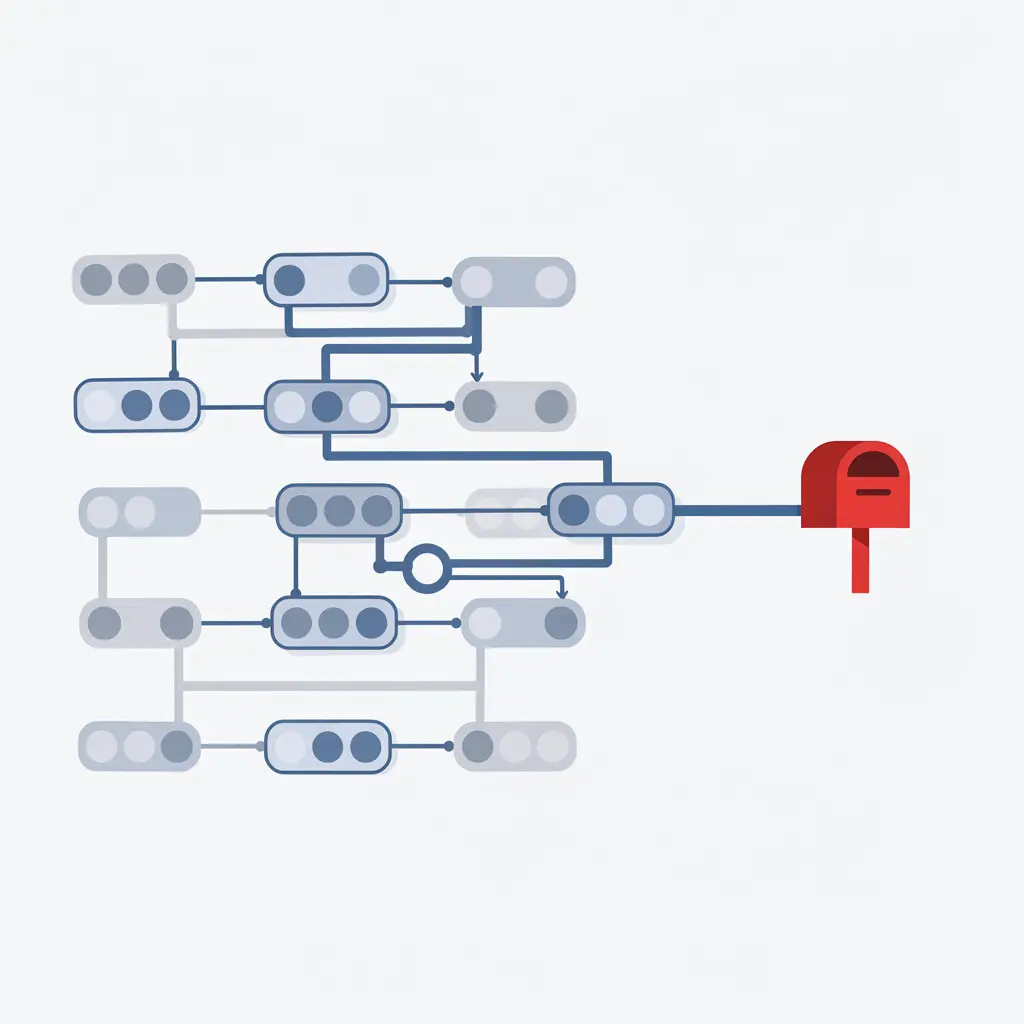
The Tool That Never Promised to Be Right: What RIPEstat's Abuse Contact Finder Actually Returns intelligence summary explains the development, the public evidence available to readers, the organisations involved, the regional context, market exposure, and the infrastructure…

Story
The Corroboration Ledger: What the Public Record Can — and Cannot — Confirm About almazcloud.network
The Corroboration Ledger: What the Public Record Can — and Cannot — Confirm About almazcloud.network intelligence summary explains the development, the public evidence available to readers, the organisations involved, the regional context, market exposure, and the infrastructure…

Leaders
The Probe Has a Host: Matthew Luckie and the Boundary of Internet Measurement
CAIDA’s Ark environment makes experiments easier to compose from named measurement tools, and makes those tools easier to describe to the institutions that host the vantage points. Matthew Luckie’s work on Scamper and the integrated programming environment shows how that boundary…

CASE FILE
The Signature Passed. The Workload Was Still Not Authorized
A cryptographic check can say who formed a workload request and which parts survived transit. It cannot decide whether that workload may perform the operation. Revision 07 of the WIMSE HTTP-signature draft makes this boundary unusually visible—especially when a replay reaches a…

Global Cloud Services
The Delivery Ledger: What Oracle Has Actually Commissioned for OpenAI — and What Remains Conditional
In the quarter ended August 31, 2026, Oracle told investors it had delivered 850 megawatts of additional datacenter capacity, spent $28.5 billion of capital in three months, and pushed its remaining performance obligations to $664 billion. Behind those headline numbers sits a…

IETF
Jeffrey Haas and the Question No RFC Answers: How Do You Prove a Failure-Detection Repair Actually Holds?
When a network fails to notice that it has failed, the damage is quiet but enormous. Bidirectional Forwarding Detection — BFD — exists so that routers learn within milliseconds that a neighbor has gone silent, instead of waiting out a BGP hold timer that can run for ninety…

CASE FILE
The Child Still Answered. The Parent Had Already Moved the Delegation
A DNS server can answer authoritatively from the old home of a zone after the parent has assigned that zone elsewhere. Revision 14 of the delegation-revalidation draft turns that paradox into an operating rule: child-side credibility must never be allowed to renew parent-side…