
Content Type
Research
Within the Content Type facet, Research intelligence gathers BTW.MEDIA articles that share the same editorial format, helping readers compare briefings, profiles, risk notes, market analysis, and event coverage without mixing different kinds of evidence. The page explains how this content type frames internet infrastructure events, company movements, governance decisions, operational signals, and public evidence across the site. Readers can compare which actors or infrastructure systems appear most often, how source quality changes interpretation, and whether the material is a durable profile, a time-sensitive event, a strategic market signal, or a governance development. The result is a useful search page for operators, investors, customers, analysts, and policy stakeholders who need to understand the consequence, timing, and evidence behind similar article formats.

AFNOG
AfNOG’s Two-Day Tutorial Preference Leaves One-Day Consideration Undefined
AfNOG’s 2007 call preferred two full days for tutorials and said one-day requests might be considered.

Leaders
Patrick Aisenberg and the Operating Discipline Behind the Cloud Transition
Calling a hosting business a cloud provider is easy. Rebuilding the operating model so that customers can see, trust and govern what happens behind the label is much harder. Patrick Aisenberg’s public record at Linkbynet is useful because it captures that distinction…

History
The Number That Told TCP Where Data Began: Data Offset
TCP's header can grow when options are present, so the first application byte cannot live at one fixed position. A four-bit field solves the ambiguity: Data Offset counts the complete header in 32-bit words. Options may end early and padding may remain, but the encoded…

AFNOG
AfNOG’s Parallel Invitation for Suggestions Makes Next-Step Discretion Visible
AfNOG’s 2007 call listed a detailed proposal package, then welcomed suggestions and expressions of interest even without all the requested information.

History
The Header That Was Never Sent: Why TCP Checksums IP Addresses
TCP validates more than the bytes in its own segment. Before calculating or checking the mandatory checksum, each endpoint conceptually places selected IP fields in front of the TCP header: the source and destination addresses, protocol identity and TCP length. This pseudo-header…
Leaders
Jason Speers and the Hidden Handoffs Inside a Digital-First ISP
Babbl presents home internet as something that should be easier to buy and easier to manage: no contract, self-installation and support that does not begin with a call-centre queue. Founder Jason Speers’ public record shows why that simplicity is an operating design rather than…

AFNOG
AfNOG’s Contradictory 2007 Deadline Turns Calendar Accuracy Into a Governance Control
AfNOG’s archived 2007 call published a proposal deadline after the event while placing notification and programme publication months before that deadline.

History
The Two Flags That Took Up Space: Why TCP Counts SYN and FIN
TCP numbers bytes, yet two control events also advance its sequence space. SYN stands before the first data octet and FIN stands after the last, giving connection opening and closing the same acknowledgment and retransmission protection as the stream without turning either flag…

Story
RIPE NCC Counted 1,799 Registry Checks. Its Public Target Has No Cohort Ledger
Seven RIPE NCC member updates report 1,799 Assisted Registry Checks completed from January through July 2026. That is nearly three-quarters of the annual 2,400-check commitment. It is a clear production count. It is not yet a coverage account: the public series does not say how…

AFNOG
AfNOG’s Speaker-Cost Rule Separates Programme Access From Travel Support
AfNOG’s 2007 call waived registration for presenters and instructors but expected them to fund their own travel because organisational funds were limited.

History
The Push That Was Never a Message Boundary: TCP's PSH Flag
An application asks TCP to push a buffer because waiting for later data could stall the exchange. TCP marks the last segment it creates from that buffer with PSH. Yet the mark does not turn that segment into a message: the sender's write, the packets on the wire, the receiver's…
AFNOG
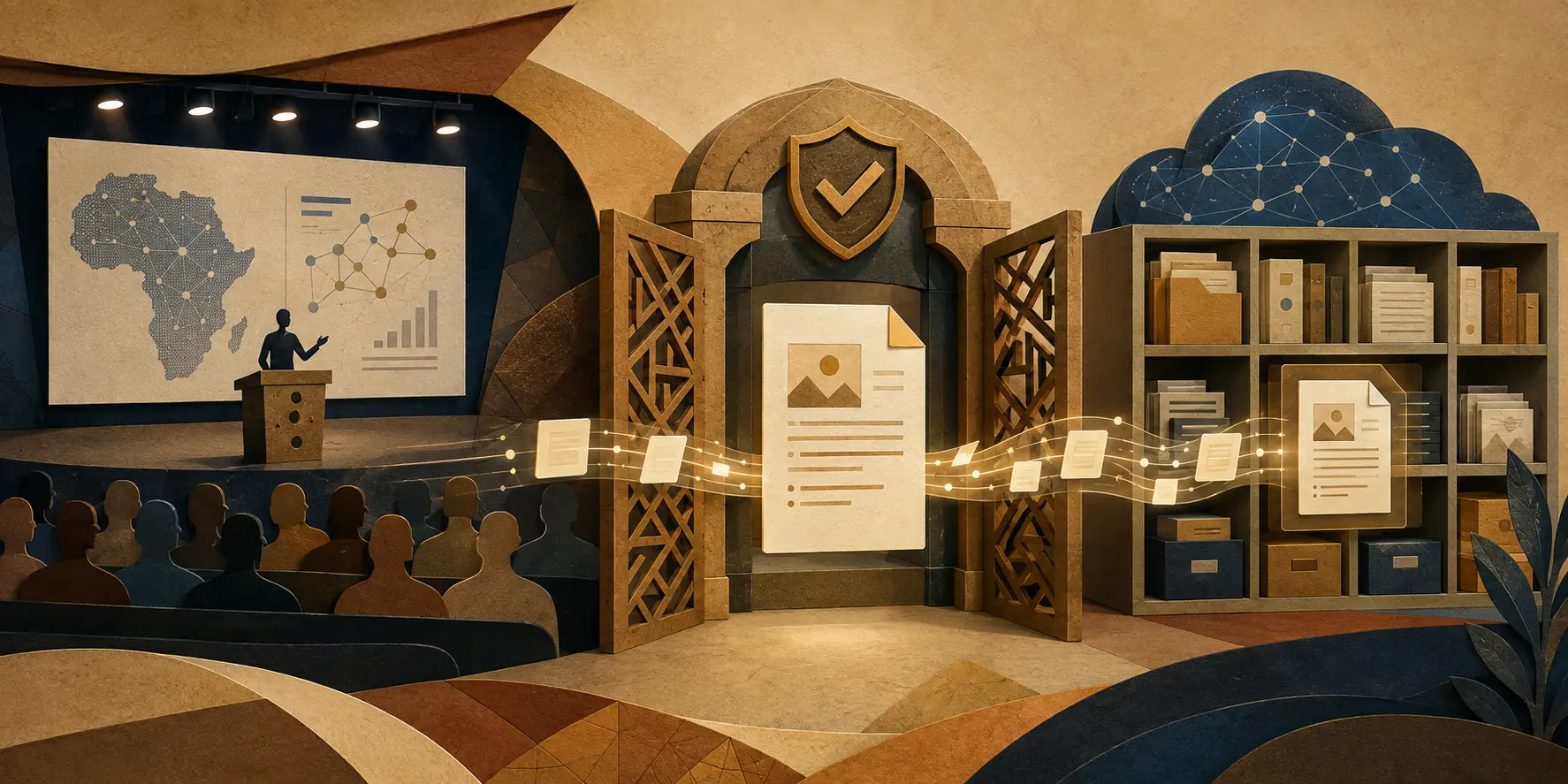
AfNOG’s Reproduction-Permission Rule Turns a Talk Into a Commons Asset
AfNOG’s 2007 call asked contributors not only for a proposal, but also for permission to reproduce and publish the resulting presentation.

History
The Connection One Side Forgot: TCP's Half-Open Reset
A TCP connection can look alive from one endpoint and already be gone from the other. The classic specifications called that split a half-open connection. Their recovery examples turn the next packet into a test of shared memory: sequence expectations collide, a reset makes the…

Global Institutional Trends
Who controls the clock when ISC software has a vulnerability?
Internet Systems Consortium’s authority over supported BIND and Kea releases is real, but it is not the authority of a regulator or a universal command centre. It is stewardship power: the ability to concentrate information, coordinate disclosure, produce an official remediation…
AFNOG
AfNOG’s Repeat-Attendance Rule Turns Training History Into Access Authority
AfNOG’s 2005 workshop notice made prior training, subsequent use, available space and financial support part of a single access decision.

History
When Both Sides Knocked at Once: TCP's Simultaneous Open
The standard picture of TCP begins with a client knocking and a server listening. The protocol itself has never required that casting. Its original 1981 specification described what happens when two endpoints knock at once: their SYN segments cross, each side becomes both…
AFNOG
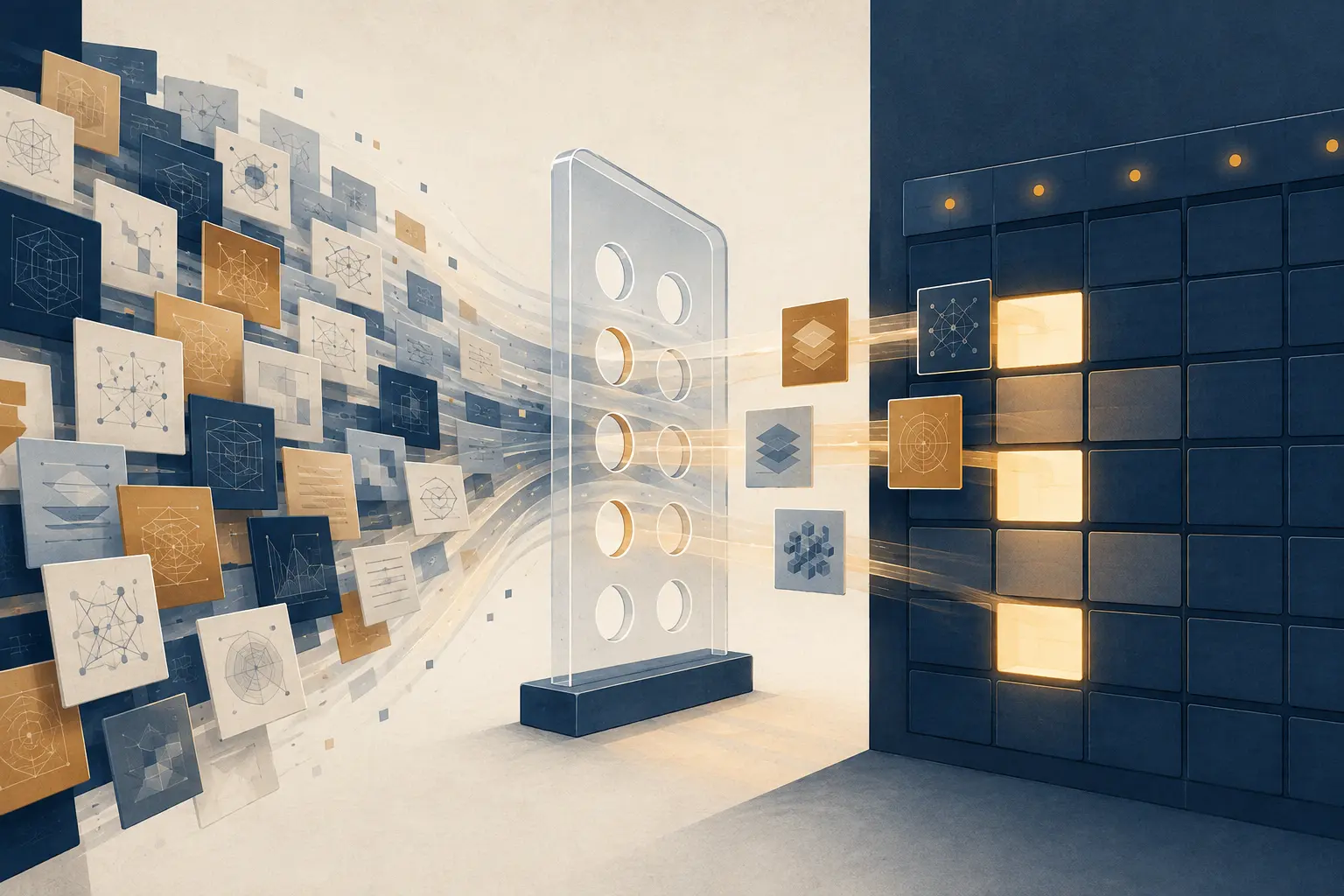
AIS’s Shortlist Rule Turns Agenda Time Into Editorial Authority
The AIS 2025 presentation call invited a wide technical community, then made clear that limited programme time would place only shortlisted abstracts on the agenda.
History
The Host That Had to Wait Before Speaking: TCP's Quiet Time After Restart
A restarted machine may look clean precisely because it has forgotten too much. TCP's original quiet-time rule addressed that paradox: if a host lost the sequence numbers used before a crash, it was told to emit nothing for one maximum segment lifetime. Silence was not a repair…

Story
The New RIR Draft Says Enforceability Does Not Wait for the Procedure
Article 1.3 of the new RIR Governance Document draft says a missing common implementation procedure does not stop the document from being enforced. The next clause, added in Version 3, says a decision must still follow the procedure relevant to the entity making it, including any…

AFNOG
AfNOG’s Host-Selection Rules Turn Infrastructure Capacity Into Convening Power
An archived Africa Internet Summit hosting call shows that choosing a host is both an operational-risk decision and a distribution of institutional attention.