
Content Type
Analysis
Within the Content Type facet, Analysis intelligence gathers BTW.MEDIA articles that share the same editorial format, helping readers compare briefings, profiles, risk notes, market analysis, and event coverage without mixing different kinds of evidence. The page explains how this content type frames internet infrastructure events, company movements, governance decisions, operational signals, and public evidence across the site. Readers can compare which actors or infrastructure systems appear most often, how source quality changes interpretation, and whether the material is a durable profile, a time-sensitive event, a strategic market signal, or a governance development. The result is a useful search page for operators, investors, customers, analysts, and policy stakeholders who need to understand the consequence, timing, and evidence behind similar article formats.

History
The Server That Counted Before It Answered: Why HTTP Needed 429
A request can be valid, authorized and still arrive after its allotted share has gone. HTTP 429 made that refusal legible while leaving the decisive questions—who is counted, across what scope and at whose cost—with the server that owns the capacity.

History
The Silence That Licensed an Address: What IPv6 DAD Could Prove
IPv6 DAD based an important decision on a negative observation: no rival appeared during a bounded local probe. The protocol had to say exactly how far that silence could reach.

History
The Write That Had to Name Its Past: Why HTTP Needed 428
A write request can be perfectly formed and still be too ignorant to trust. HTTP 428 gave an origin a precise way to demand the missing fact: which version of this resource did the writer actually see?

History
The Name That Chose a Service: How DNS SRV Found Servers
A domain once led clients toward one address and a remembered port. DNS SRV made service location an explicit, bounded choice among hosts.

History
The Request That Had to Wait for Proof: Why HTTP Needed 425
TLS 1.3 let returning clients send requests before a new handshake finished. HTTP 425 made replayable early data wait without changing the request itself.

History
The Alias That Could Not Move Authority: DNS DNAME
DNAME redirects descendant lookups by replacing one suffix. The owner, zone apex and NS delegation stay put even when many queries follow the new subtree.

History
The Save That Left the Page Intact: HTTP 204
HTTP 204 says an action finished without replacing its active view. Status marks completion, while headers carry post-action identity without response content.

History
The Connection That Was Not Authority: Why HTTP Needed 421
HTTP learned to save time by letting several named origins share one authenticated connection. Status 421 preserved the limit of that bargain: a channel can be reachable, secured and reusable in principle without being the connection context through which a particular origin is…

History
The Copy That Arrived as a Difference: HTTP 226
HTTP 226 lets a changed representation travel as instructions for a cached base. Base, delta message and reconstructed result retain separate identities.

History
The Alias That Did Not Need a Second Walk: HTTP 208
WebDAV could expose one collection through two paths. HTTP 208 keeps the second path visible while omitting descendants already reported through the first.

History
The Preference Allowed to Lose: How Happy Eyeballs Races Paths
A valid IPv6 answer can still lead nowhere. Happy Eyeballs lets IPv6 start first, then allows observed reachability to win before the user pays a long timeout.

History
The Connection Beyond Its Address: Why QUIC Uses Connection IDs
Addresses and UDP ports can change while work remains. A QUIC Connection ID preserves continuity, but path validation and fresh identifiers bound trust.

History
The Name Created by a Question: How DNS Wildcards Stay Bounded
A DNS wildcard can synthesize a name never stored in the zone. Exact nodes, empty non-terminals and delegation still decide when that default may answer.

History
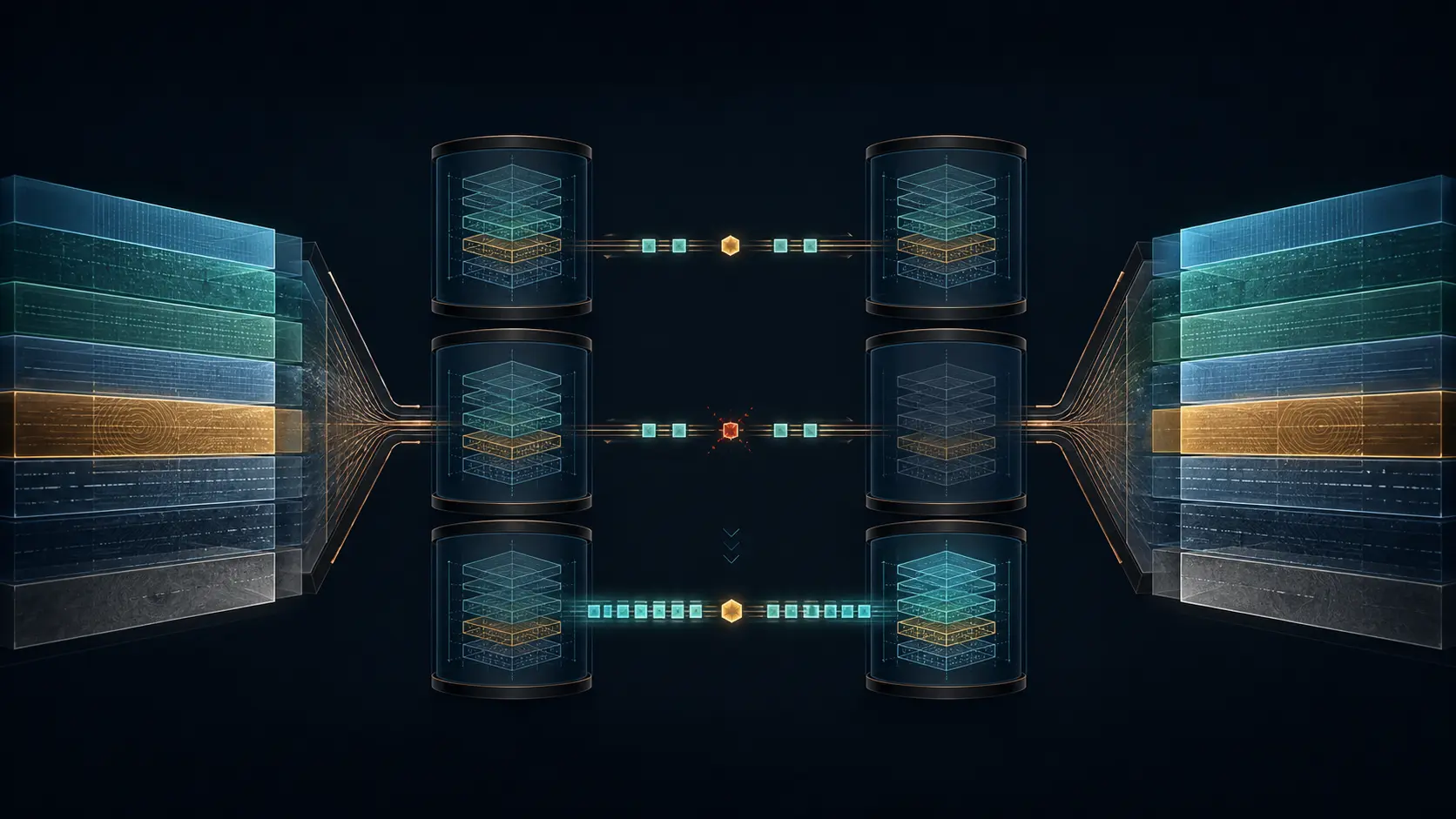
The Name the Connection Could Not Carry: Why HTTP Needed Host
TCP reached an address and HTTP named a path, but a shared server still lacked the site name the user chose. HTTP/1.1 made that authority explicit in `Host`.
History
The Header That Disappeared Between Packets
RFC 1144 made a 40-byte TCP/IP header nearly vanish on slow serial links by letting adjacent endpoints remember shared state and send only changes.

History
The Line That Looked Like the End in SMTP
SMTP ended unknown-length mail with a one-period line. Dot stuffing made that sentinel reversible; CHUNKING later moved the boundary to exact octet counts.

History
Permission Was Not Acceptance: Why HTTP Added 100 Continue
HTTP 100 Continue let a server reject from headers before a large body crossed the network, while keeping interim permission separate from final acceptance.

History
The Silence That Wasn't a Failure: Why TCP Keepalive Stayed Optional
An established TCP connection can say nothing for hours and still be correct. Keepalive was the attempt to question that silence without pretending to understand it: send a probe likely to provoke an ACK, collect bounded evidence, and leave the application responsible for…

History
Who Opened TCP's Window Too Soon? The Cost of Immediate Permission
An early TCP receiver could publish every byte of newly freed capacity, and a sender could consume each offer at once. That openness looked exact and cooperative. Repeated quickly, it made the connection spend most of its effort on tiny packets. The historical repair assigned…
Global Institutional
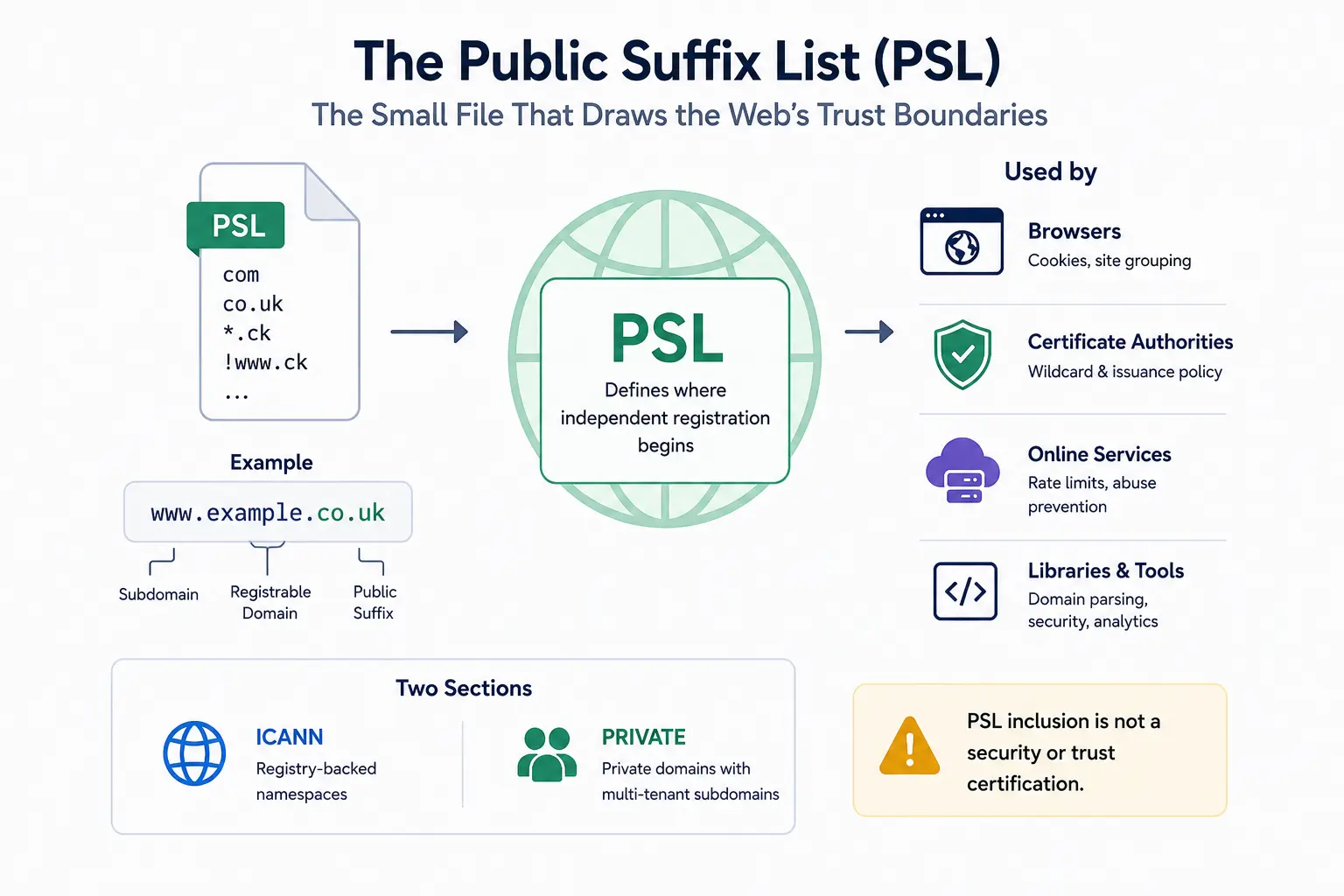
Public Suffix List: The File That Draws Web Trust Boundaries
DNS can show that shop.example.co.uk sits beneath co.uk; it cannot tell a browser where independent registration begins. The Public Suffix List supplies that missing policy map. A volunteer-maintained text file now informs cookies, site grouping, certificates and service limits…