
Content Type
Analysis
Within the Content Type facet, Analysis intelligence gathers BTW.MEDIA articles that share the same editorial format, helping readers compare briefings, profiles, risk notes, market analysis, and event coverage without mixing different kinds of evidence. The page explains how this content type frames internet infrastructure events, company movements, governance decisions, operational signals, and public evidence across the site. Readers can compare which actors or infrastructure systems appear most often, how source quality changes interpretation, and whether the material is a durable profile, a time-sensitive event, a strategic market signal, or a governance development. The result is a useful search page for operators, investors, customers, analysts, and policy stakeholders who need to understand the consequence, timing, and evidence behind similar article formats.

History
The Birth Record That Could Outlive the Group: How ACTIVE.TIMES Separated Provenance from Availability
One list says a newsgroup can be selected now but remembers nothing about its beginning. Another preserves a group's local creation record after that group has disappeared from the selectable catalogue. NNTP made both answers valid on the same server. The apparent contradiction…

History
The Write That Returned Before It Was Safe
The server had returned success, yet the client was not free to discard the bytes. They might exist only in memory that the next restart would erase. NFS version 3 made that interval explicit, then attached a narrow piece of evidence to it: a write verifier that could tell the…
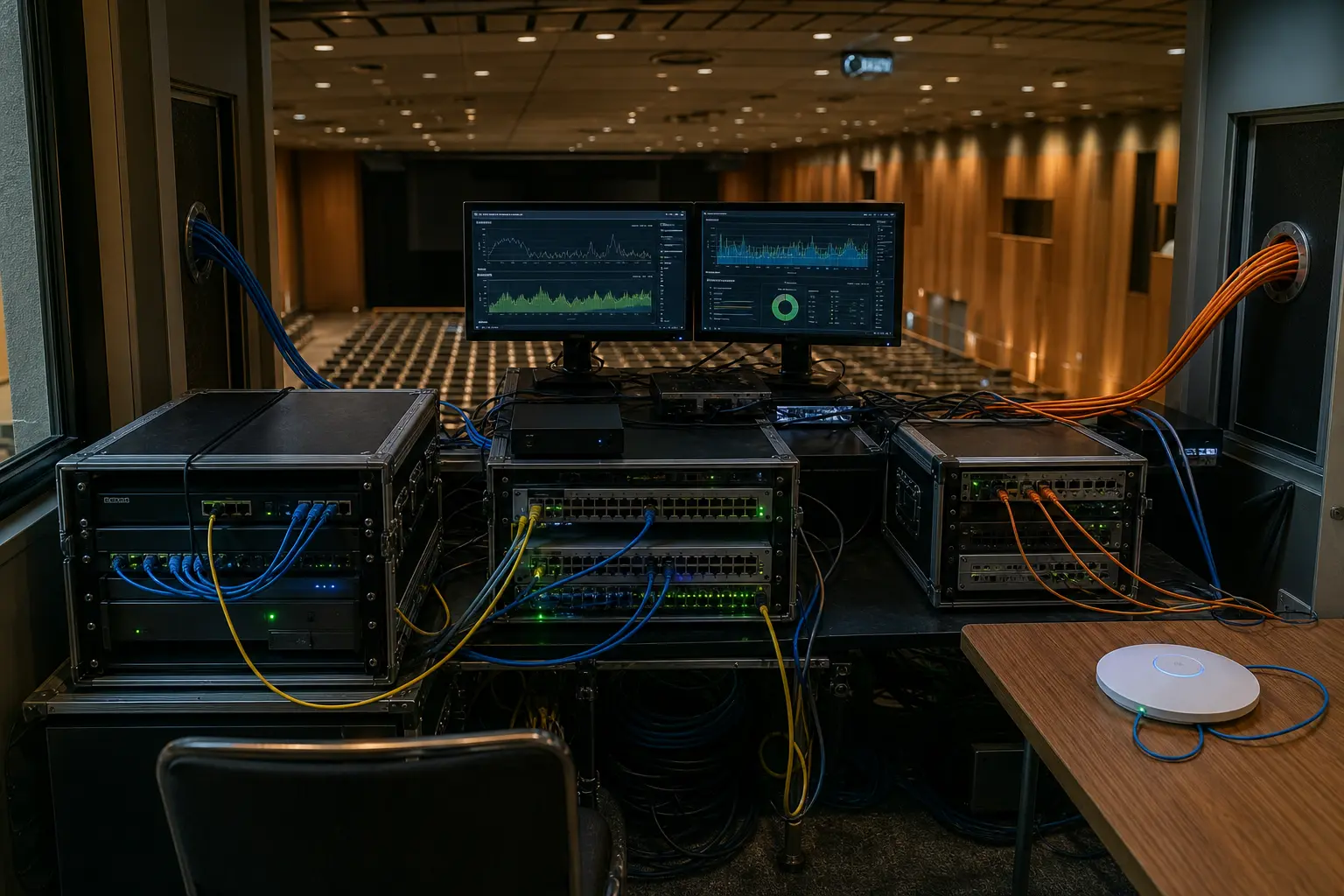
APRICOT
The Conference Network Is APRICOT’s Strongest Constitution
APRICOT’s temporary production network is a more testable statement of institutional values than a conference slogan. Its designs, routes, client measurements and failures show what the summit attempts to operate—without proving universal compliance or regional adoption.

History
The Layer That Had to Come Last: How NNTP Compression Turned Order into Security
Two clients want the same three things: an encrypted channel, an authenticated account and fewer bytes on the wire. One asks for compression first. The server replies `206`, and two doors close: this connection can no longer begin TLS or accept `AUTHINFO`. The other client…

History
The Reservation That Might Reserve Nothing
Before sending a file, an FTP client could announce how much storage it expected to need. The server might answer `202`, a positive completion, while setting aside no space at all: advance allocation was superfluous on that system. The exchange let unlike machines keep working…

NANOG
The Legal Container Behind an Operators' Community
NANOG’s move from Merit stewardship to an independent corporation made contracts, archives and money easier to assign. It did not make one association the owner of North American networks or their collective political voice.

History
The Blank Field That Had to Be Earned: How NNTP Overview Made Absence Trustworthy
A newsreader receives a tab-separated summary of hundreds of articles. In one row, two tabs touch. Does that blank mean the article lacked a header, or only that the server never indexed it? NNTP could make bulk browsing fast only by answering that question. Its overview format…

History
The Timestamp Saved Before the Search: How NEWNEWS Chose Duplicates Over Missing Articles
A news reader asks a server what arrived since its last visit. The obvious bookkeeping move is to save the time when the answer comes back. It is also the dangerous one. An article can arrive while the server is searching: too late for the current result, yet earlier than the…

History
The Relay That Added Context by Cutting Off the Message
A nearly full syslog packet arrived without a recognizable timestamp. To make the record usable, the relay had to prepend its own local time and, if it could, the name by which it knew the sending device. The envelope did not grow with the explanation. At 1,024 bytes, the new…

History
The Secure Channel That Had to Forget the Conversation: How NNTP STARTTLS Reset the Session
A news client has already inspected a server's capabilities, selected a newsgroup and positioned an article. Then it asks for TLS. The TCP connection stays open, but the protocol refuses to carry those earlier conclusions into the protected phase. The group selection disappears…

History
The Stream That Started Over Without Closing the Association
A counter could return to zero while its old data remained in the network. SCTP stream reconfiguration made that contradiction a controlled transition: the stream could acquire a new sequence epoch only after a named TSN boundary had accounted for the old one. The association and…

History
The Link That Stayed Up After Rejecting a Protocol
The refusal arrived over a link that had already succeeded. Its two endpoints could frame PPP packets and keep LCP open; they simply did not share support for everything one endpoint tried to place inside. Protocol-Reject turned that mismatch into a bounded instruction: name the…

History
The Article the Server Declined Before It Saw the Body: How IHAVE Separated an Offer from Acceptance
One news server offers three identifiers to a peer. The peer answers that it already has the first, cannot decide about the second just now, and wants the third. Only then does the third article cross the wire. Even that transfer does not settle the matter: after inspecting the…

History
The Address That Grew Old Before It Died
A control room can stop assigning new work to a console without pulling power from the job already running there. IPv6 gave an autoconfigured address the same kind of staged retirement. One clock ended its claim on future communication; another ended the address itself. The gap…

History
The Acknowledgment That Arrived Before the Answer
The phone can still be ringing when a network announcement begins. To a listener, the moments run together. To SIP, they are separate claims: a provisional message was received, media parameters may have been negotiated, early audio may be flowing, and the invitation still has no…

History
The List That Described an Entire Hierarchy but Could Not Force It to Match: How checkgroups Separated Reconciliation from Ownership
Two news servers can receive the same newer, authenticated list of every group in a hierarchy and still end with different catalogues. One removes an old local entry that the list omits. The other keeps it as an explicit exception. The list is complete, scoped and ordered; the…

Europe and Middle East Regional ISP Trends
A broadband switch is complete only when both bills agree
The new router is online. Video calls work. The old provider’s next bill still treats the previous line as active after the switch date.

History
The Error That Could Explain Itself Without Changing the Answer
Two DNS replies can carry the same `SERVFAIL` result and demand opposite repairs. One may mean that no authoritative server could be reached. The other may mean that a validating resolver received data it was required to distrust. For decades, the wire result hid that difference.…

History
The Group That Existed in a Message but Not on Every Server: How newgroup Separated Namespace Declaration from Local Adoption
A Netnews control article could carry a proposed group name across the network, yet the name became usable only where a serving agent chose to adopt it. The gap between declaration and local state was not a flaw around the protocol. It was the authority boundary that made a…

History
The Header That Opened the Gate but Could Not Authenticate Its Approver: How Approved Separated Moderation from Authorship
One Usenet article could carry its author's identity and somebody else's authority to publish it. The `Approved` header made that second role portable across the network, but it did not prove the person behind the mailbox name. Moderation worked only when an injecting agent…