
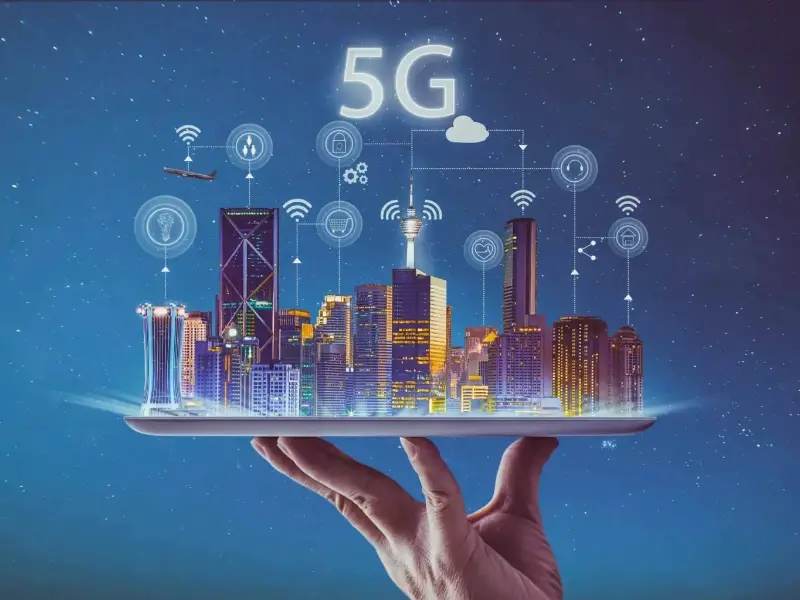
- The advent of 5G introduces ultra-reliable low latency communication (URLLC) and massive machine type communications (mMTC), revolutionising industries with real-time interactions and seamless connectivity for billions of IoT devices.
- 5G’s network slicing capability allows operators to tailor virtual networks to specific use cases, ensuring optimised performance and resource allocation for diverse applications such as ultra-fast broadband, low-latency connections, and high-reliability networks.
- Leveraging artificial intelligence (AI), 5G networks optimise performance through advanced algorithms, predicting and mitigating network congestion while improving user experience and reducing operational costs.
The evolution from 3G to 4G was revolutionary, but the transition to 5G is nothing short of a quantum leap. As we delve deeper into the era of 5G, the landscape of network solutions is undergoing a seismic shift. From smart cities to autonomous vehicles, from augmented reality to telemedicine, 5G is poised to revolutionise every aspect of our lives. Let’s explore five advanced solutions that 5G brings to the table.
Ultra-reliable low latency communication (URLLC)
One of the most significant advancements with 5G is URLLC, which promises ultra-low latency and ultra-high reliability. This means mission-critical applications such as autonomous vehicles, remote surgery, and industrial automation can operate seamlessly with minimal delay. URLLC opens up possibilities for real-time interactions that were previously unimaginable, heralding a new era of innovation across various industries.
Massive machine type communications (mMTC)
With the proliferation of IoT devices, 5G introduces mMTC to efficiently connect and manage a massive number of devices simultaneously. From smart homes to smart cities, mMTC enables seamless communication between billions of interconnected devices, paving the way for a more connected and automated future. This capability fuels the growth of smart infrastructure, environmental monitoring, and predictive maintenance systems, enhancing efficiency and sustainability.
Also read: Why is 5G needed for autonomous vehicles?
Network slicing
5G introduces the concept of network slicing, allowing operators to partition a single physical network into multiple virtual networks optimised for specific use cases. This customisation enables tailored services with distinct performance characteristics, catering to diverse requirements across industries. Whether it’s ultra-fast broadband for consumers, low-latency connections for gamers, or high-reliability networks for industrial applications, network slicing ensures optimised performance and resource allocation for each service.
Edge computing
As data volumes soar and latency requirements shrink, edge computing emerges as a game-changer in the 5G landscape. By moving computational tasks closer to the source of data generation, edge computing reduces latency and bandwidth usage, enhancing the responsiveness of applications. This is particularly crucial for latency-sensitive applications like augmented reality, real-time analytics, and autonomous vehicles, where split-second decisions can make all the difference.
Also read: How does 5G technology enhance the Internet of things (IoT)?
AI-powered network optimisation
Leveraging the power of artificial intelligence (AI), 5G networks employ advanced algorithms to optimise performance, predict network congestion, and proactively resolve issues. Through machine learning and predictive analytics, operators can anticipate and mitigate potential bottlenecks, ensuring smooth and uninterrupted connectivity. AI-driven network optimisation not only enhances user experience but also improves network efficiency, reducing operational costs and maximising resource utilisation.
5G advanced network solutions represent a paradigm shift in the way we connect, communicate, and innovate. With URLLC, mMTC, network slicing, edge computing, and AI-powered optimisation, 5G unleashes a world of possibilities, driving unprecedented levels of speed, reliability, and efficiency. As we embrace the transformative power of 5G, we embark on a journey towards a hyper-connected future where technology transcends boundaries and reshapes the fabric of society.