Summary
- The duct is shared. The invoice is not simple.
- Article 3 sets an access right, a cost-and-return test and a short path to a binding dispute decision.
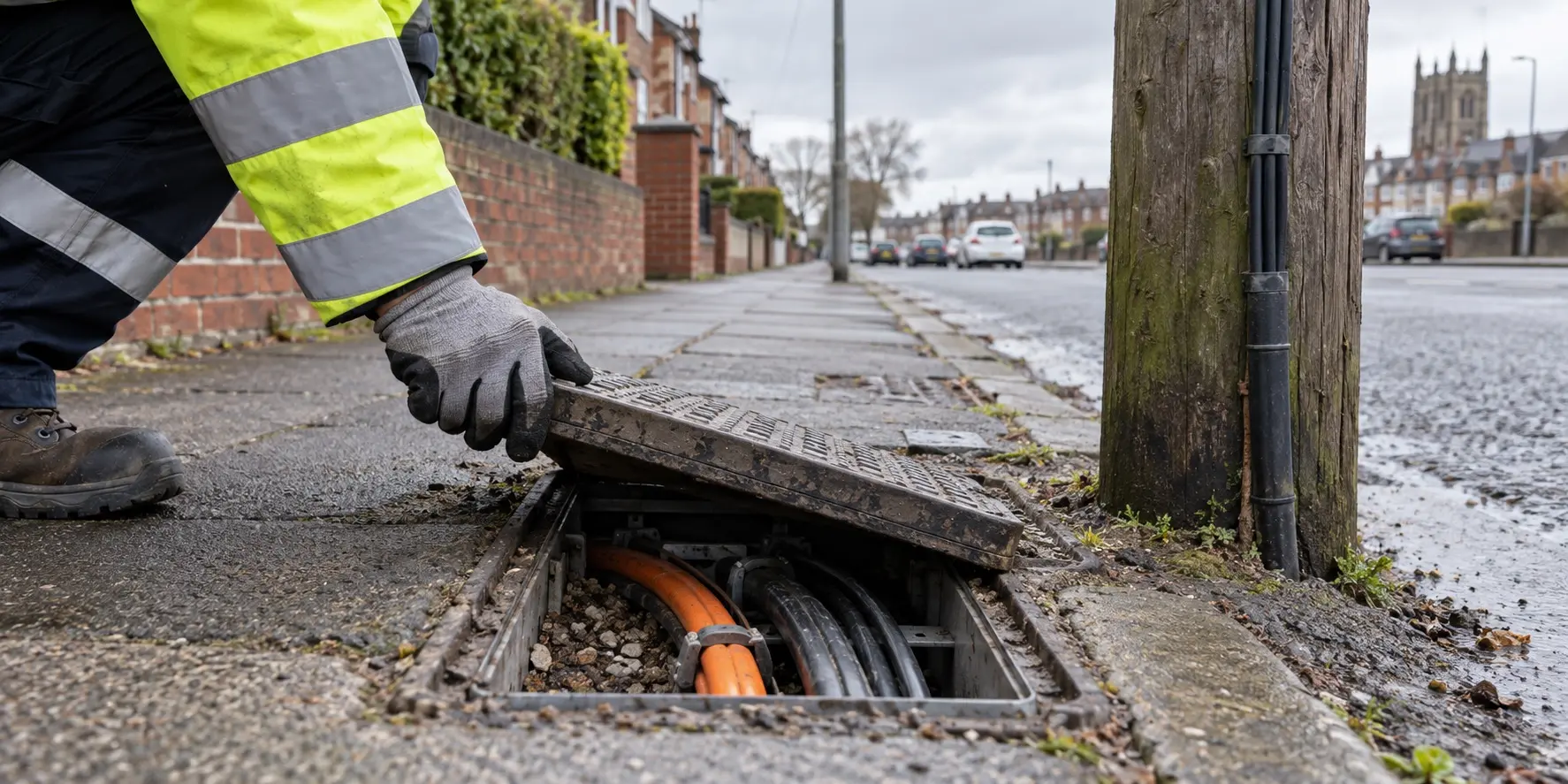
A fibre crew can spend a morning digging past a perfectly usable duct, then spend the afternoon explaining why nobody can use it. Europe’s Gigabit Infrastructure Act tries to stop that routine. It gives an operator a legal route to ask for existing physical infrastructure—ducts, poles, buildings and other assets—when it wants to deploy a very high-capacity network.
The rule is broader than telecom hardware. Network operators and public bodies that own or control physical infrastructure must meet every reasonable written access request on fair and reasonable terms, price included. Public bodies also have to treat requesters without discrimination. A request must identify the infrastructure and give a time frame. That turns “let us in” into a record a regulator can examine.
The owner’s cost ledger stays on the table. Article 3 tells access providers to account for their chance to recover the costs of providing access, extra maintenance and adaptation, the effect on their business plan, and the investments already tied to the asset. The calculation also reaches the project’s risk, a fair return, asset depreciation, the business case when the investment was made, downstream competition and any co-investment offer already made. A wholesale-only infrastructure provider has a distinct business model to price around.
That is where the cheerful slogan “share the duct” meets the less cheerful spreadsheet. The regulation does not publish a single EU price formula. It names the factors that make a price fair, and leaves those factors to be tested against the actual asset and deal.
Owners can refuse access for listed reasons: the asset is technically unsuitable; available space is exhausted; safety, national security, public health or network integrity is at stake; sharing risks serious interference with another service; or the same operator already offers a viable passive wholesale access product suitable for the VHCN on fair terms. In certain rural or remote areas, the Act provides a narrow route for a publicly owned or controlled wholesale-only network operator to offer that alternative. A future-space claim needs evidence, such as a public investment plan or a consistently applied capacity reserve.
“We might need it someday” is a weak file note.
The calendar now has teeth. A party can take a refusal or a failed price negotiation to the national dispute body after one month without agreement. The body must issue a binding decision within four months of the dispute request, subject to duly justified exceptional extensions. Once terms are agreed, access must be provided within a reasonable period, capped at one month except in justified exceptional circumstances.
The law fully applies from 12 May 2026. The European Commission’s consultation on Article 3 received 74 contributions, and the Commission published a supporting study. BEREC’s 2026 work programme lists its contribution to Commission guidance on Article 3 as “TBD” for both deliverable and timing, depending on Commission needs. The statute gives negotiators a map of relevant costs; a common method for weighing them is the missing piece.
Sources
Member Briefing
Deeper Profile Context
Sign in with the right membership level to unlock the full briefing and source notes.
Only for Strategic Circle
Strategic Circle
Open to all readers. Unlock profile briefings after joining and signing in.
Join Strategic CircleOnly for Leadership Alliance
Leadership Alliance
For qualified IP-asset owners and management; sign in to unlock alliance briefings.
Join Leadership Alliance