
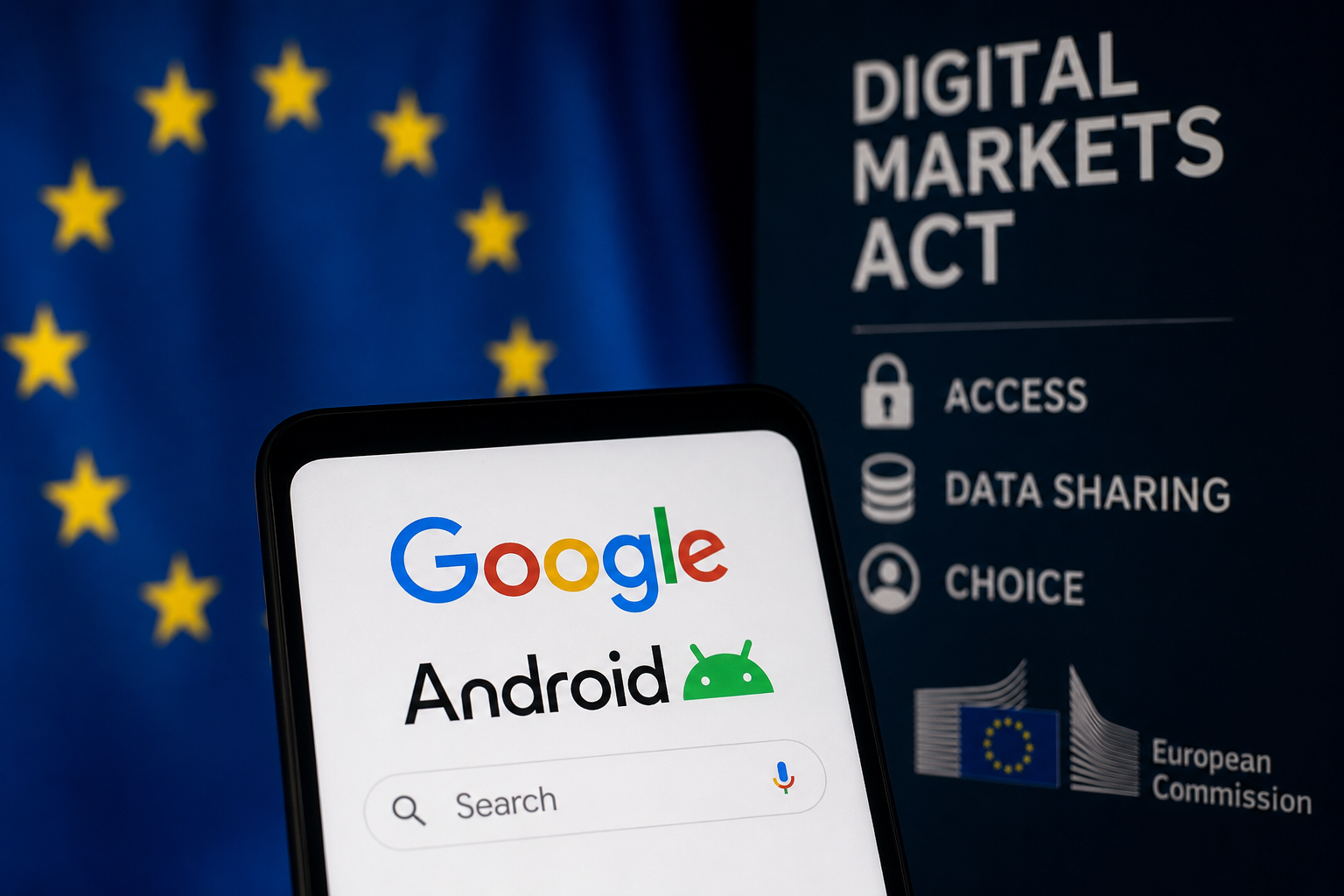
•Google must give rival AI services access to 11 Android functions and share anonymised Search data with eligible providers
•The rulings open defined routes to Android and Search for rivals, but integration and user take-up remain up to them
The fact
The European Commission adopted two binding decisions under the Digital Markets Act on 16 July. One requires Google to give rival AI assistants access to 11 Android functions on terms comparable with those available to Gemini. These include voice activation, device context, actions across apps and on-device models. Most of the changes must be included in Android 18 by 1 August 2027.
The second decision requires Google to provide eligible search engines, including AI chatbots with search functions, with anonymised ranking, query, click and view data. The data may be used only to develop and improve search services, and Google does not have to share its algorithms. Google must finalise the dataset by November 2026 and set out its pricing offer by January 2027. The company warned that the measures could weaken privacy and security. The Commission said Android access would require user consent, while only eligible providers would receive anonymised Search data and would be subject to independent audits.
The assessment
The two decisions target different barriers at different stages. Android access changes will affect how third-party assistants behave on devices once users choose them, but most changes arrive only in Android 18 by August 2027. The Search data route opens sooner, with the dataset finalised by November 2026 and pricing set by January 2027.
For BTW readers, the rules change who controls access, not who delivers the service. Google will still operate Android and Search, while rivals remain responsible for integration, service performance and user take-up. The decisions remove one barrier to entry, but they do not determine which services will work or gain users.
What to watch
Google must finalise the Search dataset by November 2026 and publish its pricing offer by January 2027. Applications from eligible providers will reveal whether rivals intend to use it. The first live search services using the data, followed by Android assistants using the covered functions after August 2027, will show whether the required integrations can be released to users.