
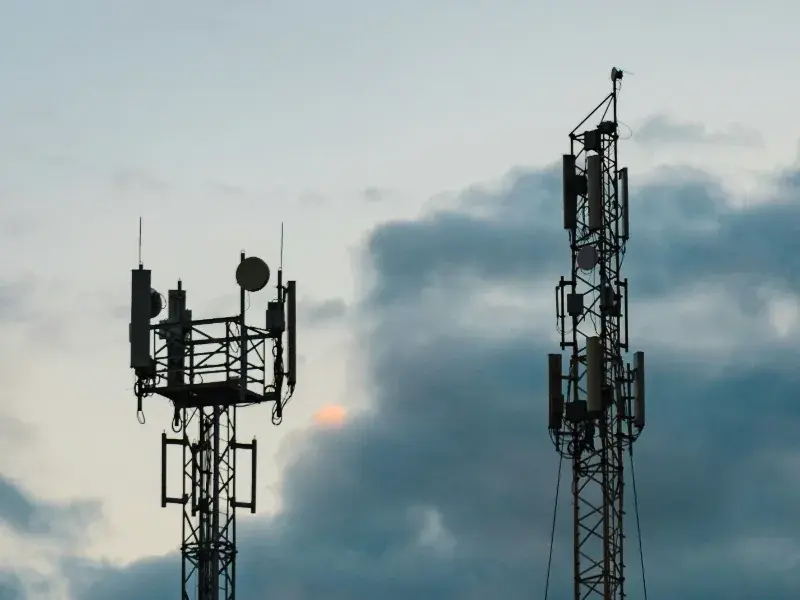
Institution Profiling / Internet infrastructure institution

Ericsson drives innovation in telecommunications technology

Ericsson drives innovation in telecommunications technology is tracked as a internet infrastructure institution within the internet infrastructure ecosystem.

Ericsson drives innovation in telecommunications technology

Evidence Pack

Primary-source references used for classification and impact scoring.

CategoryInstitution Type

Ericsson drives innovation in telecommunications technology is tracked as a internet infrastructure institution within the internet infrastructure ecosystem.

RegionEurope and Middle East

Europe and Middle East is where the public evidence is anchored.

Signal FocusInternet infrastructure institution

Ericsson drives innovation in telecommunications technology has public-source relevance to network operations, governance, dependency mapping, or market structure.

Content TypeProfile

Profile built from source-backed evidence and current monitoring signals.

Primary DomainTechnology

Technology is the operating lens for this file.

TopicInternet infrastructure institution

Ericsson drives innovation in telecommunications technology is profiled by BTW Media because public-source evidence links it to internet infrastructure, governance, operational dependencies, or market visibility.

ImpactMedium

The signal alters planning assumptions but usually requires secondary implementation before full effect.

Confidence?Confidence Grade · doctrine v2 §8 / SOP §2
0.90–1.00AHigh — direct sources
0.75–0.89A/BStrong
0.55–0.74B/CMedium
0.35–0.54C/DWeak–medium
0.10–0.34DWeak signal
0.00–0.09DInternal monitoring
C · 0.82

Mixed-source

Ericsson drives innovation in telecommunications technology is profiled by BTW Media because public-source evidence links it to internet infrastructure, governance, operational dependencies, or market visibility.

  • Ericsson, founded in 1876 and headquartered in Stockholm, Sweden, is a global leader in telecommunications and networking technology.
  • With a rich history spanning over 145 years, Ericsson specializes in providing innovative solutions that enable seamless connectivity and communication across the globe.

Core business areas

Ericsson operates in several key areas:

  1. Networks: Ericsson provides network solutions like 5G, 4G LTE, and fixed broadband. Their advanced radio systems and base stations ensure high-speed, reliable connectivity for consumers and businesses.
  2. Digital Services: The company offers digital services to enhance telecom operators’ efficiency. These include cloud infrastructure and IT solutions that optimize network performance.
  3. Managed Services: With extensive experience, Ericsson manages network operations for operators. This allows them to focus on their core business while ensuring optimal performance.
  4. Emerging Technologies: Ericsson leads in IoT, artificial intelligence (AI), and machine learning. Their IoT solutions connect devices and drive digital transformation in sectors like automotive and healthcare.

Also read: Ericsson launches Cognitive Labs to drive telecom AI innovation
Also read:
Ericsson ends 2024 with strong Q4 performance

Sustainability commitment

Ericsson is dedicated to sustainability and corporate responsibility. They aim to minimize environmental impact through energy-efficient solutions. Their initiatives focus on reducing carbon emissions and promoting circular economy principles. With a goal to achieve net-zero emissions by 2040, Ericsson contributes to a sustainable future.

As a pioneer in telecommunications, Ericsson drives innovation and technology. They are well-positioned to shape the future of connectivity while enabling seamless communication and fostering digital transformation globally.

Core Entity Brief

  • Entity: Ericsson drives innovation in telecommunications technology
  • Subject Type: Internet infrastructure institution
  • Region: Europe and Middle East
  • Classification: Institution Type

Service Surface / Control Surface

  • Public records support monitoring of governance, service, and infrastructure control surfaces.

Governance and Policy Surface

  • Public-source signals support medium-impact monitoring for infrastructure visibility and dependency analysis.
  • Operational criticality: Medium
  • Time horizon: Quarter (30-120d)

Decision Trigger Matrix

  • Monitoring focuses on verified service continuity, governance changes, and relationship signals.
NowMedium priority

Current state favours active tracking due to infrastructure relevance.

QuarterMedium policy sensitivity

Public-source signals support medium-impact monitoring for infrastructure visibility and dependency analysis.

YearQuarter (30-120d) continuity dependency

Long-cycle infrastructure decisions likely to remain path-dependent.

Member Unlock

Restricted Profile Intelligence

Login is required to unlock full profile briefings and deep-dive sections.

Only for Strategy Circle

Strategic Circle Access

Open to all readers. Unlock profile briefings after joining and logging in.

Join Strategic Circle

Only for Leadership Alliance

Leadership Alliance Access

For owners and management of IP-holding companies. Login required to unlock.

Join Leadership Alliance
← BackAll Companies