
Summary
- Comarch's official pages support a broad enterprise-software and cloud-services profile, including cloud infrastructure, IBM Power workloads, hosting, backup, EDI, e-invoicing, MDM and telecom-related systems.
- The strongest article question is not whether Comarch has products. It is whether the customer can govern the data models, integrations, service levels, privacy responsibilities and exit paths behind those products.
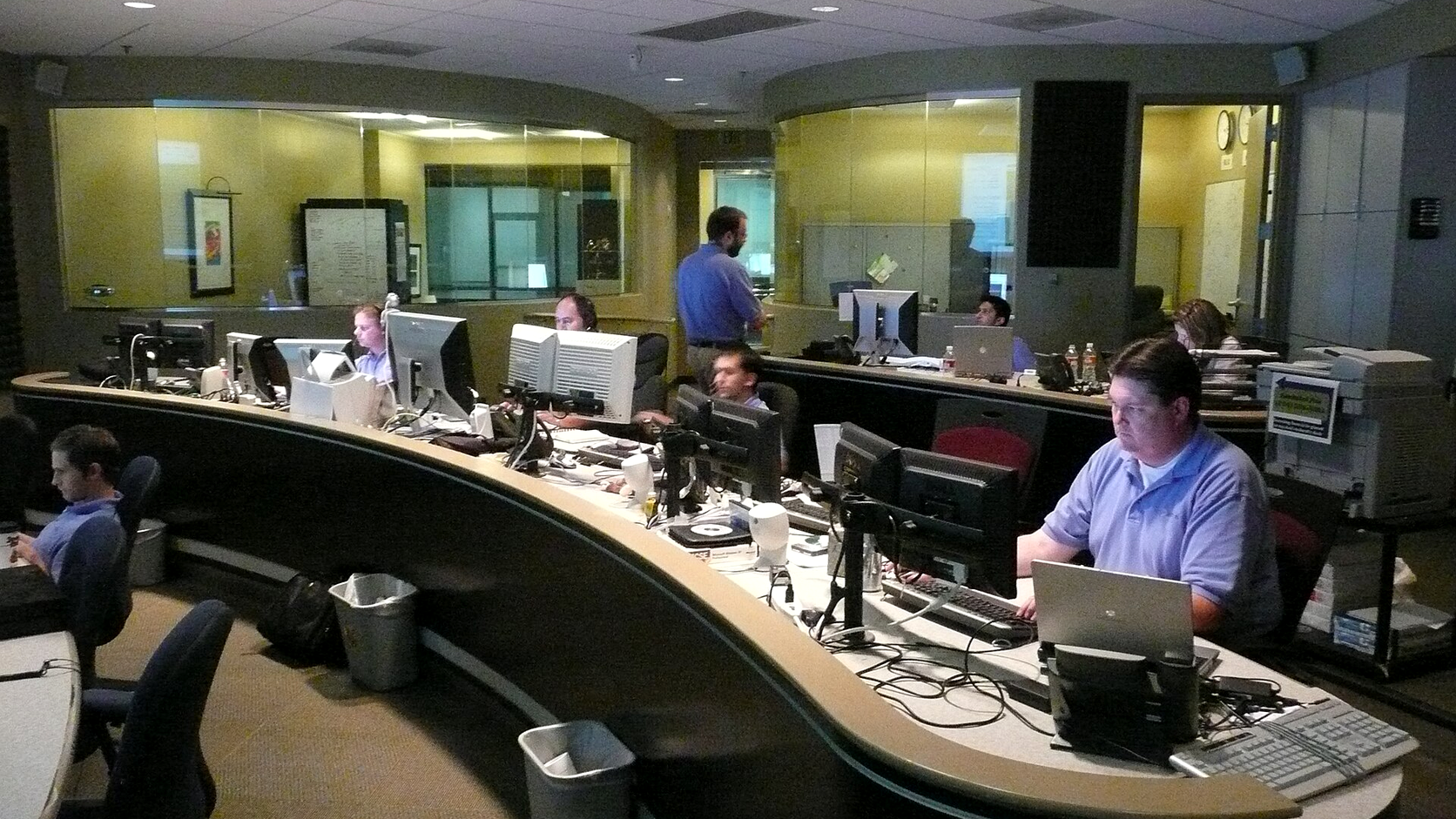
- RIPE membership and a realistic operations-room image are context only; neither proves Comarch cloud capacity, routing performance, customer traffic or product reliability.
Directory Context
The public BTW directory page for Comarch S.A. identifies the target entity for this article. The boundary matters because production records include related Comarch-family names. This piece treats Comarch S.A. as the subject and does not merge it with Comarch AG, COMARCH SAS, Comarch Inc, ComarchFR or COMARCH-AS without a source that supports the specific claim.
That discipline is not clerical. A multi-country software group can sell through subsidiaries, product lines and regional operating units. If an article treats every Comarch-named record as the same operational actor, it can turn a valid portfolio observation into a false deployment claim.
Product Breadth Is The Starting Point
Comarch's official homepage at https://www.comarch.com/ and company page at https://www.comarch.com/company/ present the company as a global software house and IT products provider. The navigation itself is revealing: banking, insurance, telecom, loyalty, data, e-invoicing, cloud, marketing, healthcare and critical-network products sit beside customer and company material. The first risk is therefore selection bias. A reader can see many products, but the public pages do not show which modules are dominant, which are bundled, which are legacy, and which carry the largest operational burden.
The cloud product page at https://www.comarch.com/cloud/ makes the breadth more concrete. It groups cloud infrastructure and cloud applications, naming products such as Comarch Infraspace Cloud, IBM Power Cloud, Comarch Hosting and IBARD backup, while also listing application families such as EDI, e-invoicing, MDM, factoring, medical cloud and loyalty systems. This supports an enterprise-software automation thesis, but it also means the buyer's real work is fragmented across workload migration, application data, identity, reporting, support and contractual boundaries.
Cloud Operations Are A Shared System
The cloud-services page at https://www.comarch.com/trade-and-services/ict/cloud-services/ frames Comarch Cloud Services around migration from on-premises data centers, private cloud hosting, daily maintenance, IBM i and AIX support, multi-cloud, hybrid cloud, private cloud and public cloud. Those are operational categories, not just product categories. They change who owns backups, network access, patching, monitoring, incident triage, data transfer and rollback.
The same page says Comarch Cloud has six cloud regions and pay-as-you-go models. It also presents a no-vendor-lock-in position based on open-source solutions or known standards. Those statements matter, but they are still supplier statements. A buyer would need to test the exit path: database formats, interfaces, IAM dependencies, automation scripts, monitoring exports, custom workflows, support response and the practical cost of running the same workload somewhere else.
Documentation Is A Control Surface
The documentation page at https://www.comarch.com/trade-and-services/ict/documentation/ links terms, support-level and functional-scope material for Infraspace Cloud and PowerCloud. That is a useful sign because cloud promises become operational only when they are tied to scope, support and responsibility. Yet the existence of documentation is not the same as a low-risk deployment. The documents tell buyers where to look for definitions; they do not remove the need to map each workload to recovery time, data jurisdiction, performance assumptions and escalation.
For Theo March's beat, this is where software reliability separates from software capability. A platform can list IBM Power, private cloud and managed services while still leaving the customer with application-owner work: classifying systems, scheduling downtime, cleaning data, proving backups, testing failover, deciding who can approve changes, and keeping vendor management current after the migration.
Privacy And Governance Are Product Requirements
The personal-data page at https://www.comarch.com/personal-data/ and code-of-conduct page at https://www.comarch.com/company/code-of-conduct/ are not performance evidence, but they help define the governance surface. Comarch publishes personal-data contact context and policy-level commitments around compliance, ethics, management systems, information and data security, reporting and controls. In a managed-software or cloud relationship, these are not decorative topics. They affect the contract, the data-processing role, audit expectations, staff access, incident notification and the buyer's ability to explain the system to its own regulators.
A customer trying to automate enterprise workflows through Comarch should therefore count governance as part of the implementation. The automation may reduce manual processing in invoicing, loyalty, healthcare, telecom or finance. It may also add new review work for legal, security, procurement, data protection and internal audit teams.
The Annual Report Adds Breadth, Not Proof Of Reliability
Comarch's 2025 annual report at https://www.comarch.com/files-com/file_975/Comarch-Annual-Report-2025.pdf is part of the official public record. The accessible extract in this run exposed product-group headings such as ERP, banking, insurance, wealth management, factoring, communications, e-invoicing, ICT and loyalty. That supports the view that Comarch is a broad enterprise-software group rather than a narrow hosting company.
The report should not be used loosely. Without a page-level extraction in the publisher record, this article does not rely on precise annual-report numbers, segment revenue or audited operational claims. It uses the report only to confirm that the product map is broad and that any evaluation must track which business line a claim belongs to.
RIPE Context Has A Hard Limit
The RIPE NCC public member list for Poland at https://www.ripe.net/membership/member-support/list-of-members/pl/ is useful for network-resource context. It is not a shortcut to cloud evidence. RIPE membership does not establish Comarch's current IP holdings, ASN operations, peering breadth, data-center locations, traffic, latency, uptime, customer deployments or hosting capacity. Those claims would require RIPE Database objects, BGP evidence, PeeringDB records, RPKI data, product documents, customer contracts, tenders or measured network observations.
This boundary is especially important for a cloud-services article. A company can appear in a regional Internet registry context and still require separate evidence for every operational network claim. The article therefore treats RIPE as identity and governance context, not as proof of product performance.
The Lock-In Claim Is The Test
Comarch's no-lock-in language is the most interesting claim because it turns a vendor promise into a measurable customer question. Open-source components and known standards can reduce dependence, but they do not eliminate data-model dependence, workflow dependence, staff dependence or contractual dependence. A customer can be less locked into one hyperscaler and more locked into one integrator's implementation of a multi-cloud operating model.
The practical test is simple: can the customer move a workload, audit its data, reconstruct its configuration, replace monitoring, preserve access controls, export logs, retest recovery and keep the business process working without Comarch doing most of the work? If the answer is no, the lock-in has changed shape rather than disappeared.
What Would Change The Assessment
Better evidence would include named production deployments with scope, support terms, outage history, customer migration records, security certifications with current validity, architecture documents, routing evidence and contract-level responsibility boundaries. The public pages are enough to justify coverage. They are not enough to conclude that Comarch reduces total operating work in every cloud or enterprise-software deployment.
The sober reading is that Comarch has a wide software and cloud operating surface. That can be valuable for customers that want one supplier to combine applications, infrastructure and managed work. It can also concentrate knowledge, responsibility and exit complexity. The decisive question is not the size of the portfolio. It is whether the customer can still understand and control the system after the portfolio has been integrated.
Further Operating Tests Before Contracting
The annual report makes the Comarch assessment more demanding rather than simpler. A small supplier can often be evaluated by asking whether it can deliver one product well. Comarch has to be evaluated as a portfolio operator. The report presents ERP, banking, insurance, wealth management, factoring, communications, e-invoicing, ICT and loyalty as product areas. It also presents an organization with nearly 5,000 professionals and a footprint across five continents. That scale can support implementation depth, local support and sector knowledge. It can also make it harder for a customer to know which team owns a particular risk.
A buyer should therefore resist a single yes-or-no judgment about Comarch. The more useful exercise is to divide the portfolio into operating commitments. In ERP, the question is whether finance, inventory, payroll, procurement and reporting processes become easier to run and audit. In cloud services, the question is whether migration, restore testing, cost control and access management become more reliable. In telecom software, the question is whether billing, provisioning, service inventory and support automation reduce error without hiding failures.
In loyalty and e-invoicing, the question is whether high-volume transaction flows remain explainable, reversible and compliant.
This is where the annual-report numbers help, but only to set the investigation agenda. More than 110,000 ERP businesses and 52,000 ERP cloud users suggest real market usage. Sixteen proprietary data centers across eight countries suggest a physical operating footprint behind the ICT story. More than 200 global enterprises in ICT context suggests that the vendor is not simply offering a theoretical capability.
The missing link is outcome data: how many migrations completed on time, how many restore tests passed, how often support escalated, how many AI-assisted decisions were corrected, and how customers experienced cost after workloads moved.
The Work Comarch Claims To Reduce
The work targeted by Comarch is not one job. It is a set of administrative, infrastructure and sector-specific tasks that large organizations often perform badly when systems age. ERP work includes creating records, reconciling documents, managing inventory, preparing reports, handling payroll data and maintaining compliance evidence. Cloud work includes running servers, patching platforms, monitoring performance, testing backups, supporting old operating environments and planning capacity. Telecom software work includes service orders, provisioning, billing inquiries, network-service modeling and customer support.
Each is a repeated process with a different tolerance for error.
The human work before modernization is usually distributed. Finance teams know exceptions. IT operations teams know servers and access paths. Security teams know risk rules. Integrators know old interfaces. Business users know the workarounds that never entered formal documentation. When a supplier such as Comarch proposes a broader managed software or cloud arrangement, it can reduce the number of local teams touching infrastructure. But it cannot erase the knowledge those teams carried. That knowledge must be translated into migration plans, configuration, tests, support cases and governance rules.
This is why modernization projects often disappoint when measured only at the purchase order. A vendor can reduce visible execution work while increasing coordination work. The customer may need fewer people patching servers but more people validating data, checking invoices, managing identity, reviewing exceptions and negotiating support cases. The labor-saving claim becomes credible only when the customer can show that the remaining review and exception work is smaller than the work removed.
Migration Is A Measurement Problem
Comarch's cloud-services language focuses on migration, private cloud, daily maintenance, IBM i, AIX, multi-cloud and hybrid cloud. These are plausible areas of value because many customers still have durable workloads that do not fit cleanly into a generic public-cloud migration. The risk is that migration success is hard to judge from the outside. A workload can move and still leave unresolved dependencies, brittle integrations, weak documentation or a backup plan that has not been restored under pressure.
A serious buyer would define migration success before work begins. It should include a complete software inventory, dependency map, downtime budget, rollback path, data validation plan, identity and access plan, monitoring baseline, support escalation route and cost model. For legacy workloads, it should include staff-knowledge capture: who understands old batch jobs, custom reports, scheduled interfaces, peripheral systems and manual fixes. If this knowledge remains informal, moving the workload may simply move a hidden operating risk into a vendor-managed environment.
The same measurement discipline should be used after migration. Did incident volume fall? Did business users file fewer manual corrections? Did restore tests pass within the required time? Did support tickets move faster? Did cloud bills match expectations? Did security review become easier? Were logs and audit evidence easier to obtain? If the answer is not measured, modernization becomes an assumption rather than a result.
AI Features Need A Different Scorecard
The annual report's AI language is significant because it suggests Comarch wants AI to become part of existing products, not a separate experiment. That can be valuable. ERP, telecom, loyalty and ICT systems contain domain data and process context that a generic interface may not have. A vendor with embedded product context could build assistance that understands transaction types, service states, workflow steps and compliance constraints.
The risk is that embedded context can make mistakes more consequential. An AI feature that summarizes a harmless document is different from a feature that influences billing, service provisioning, tax reporting, inventory planning or access rights. In these areas, the proper measure is not how fluent the output sounds. It is whether the system knows when not to act, when to ask for review, how to preserve evidence, and how to recover from wrong suggestions.
The annual report's training numbers, including advanced AI competencies for 1,390 engineers and change training for 700 leaders, are useful evidence that Comarch is investing internally. They do not show customer-side reliability. A buyer should ask for product-specific evaluation: task set, sample size, failure categories, human review rate, false acceptance rate, rollback path, audit trail and behavior after updates. If those metrics are unavailable, the buyer should treat AI features as supervised assistance, not autonomous process replacement.
Security Posture Must Be Product-Specific
Comarch's public materials use the language expected of an enterprise supplier: data security, availability, business continuity, disaster recovery, encryption, identity and access management, multifactor authentication, role-based access control, secure development, SAST, DAST and recognized certification families. This is necessary. It tells a buyer that the company understands the vocabulary of regulated and high-dependency software. It also gives procurement and security teams a starting point for questionnaires.
The next step is to make that posture specific. The controls that matter for ERP are not identical to the controls that matter for cloud hosting, telecom BSS, loyalty transactions or e-invoicing. A customer should ask which product is covered by which certification, which logs are exposed, which restore tests are performed, which vulnerabilities trigger customer notice, which subcontractors are involved, how privileged access is reviewed, and whether customer data is separated by architecture or by policy.
Business continuity is especially important for a vendor with infrastructure and software claims. A continuity plan is only as useful as its tested recovery path. Buyers should ask for restore-test frequency, recovery point objectives, recovery time objectives, evidence of successful restoration, maintenance-window communication and incident-review process. Without this layer, security and continuity language remains posture rather than operating proof.
Telecom Software Raises The Stakes Of Error
The Communications section of the annual report matters because telecom processes are unforgiving. Billing inquiries, offer provisioning, service inventory, service-desk work and network-automation concepts touch revenue, customer trust and operational commitments. A small error may be visible to many subscribers or business customers. A silent error may become expensive only after it has accumulated across many accounts.
Comarch should therefore be evaluated as a telecom-software supplier, not as a telecom carrier. The distinction is important. Supplying software to operators can be technically demanding and commercially valuable, but it is not the same as operating a public network. RIPE membership context cannot be used as a shortcut to claim routing quality, capacity or uptime. The valid question is how Comarch's software performs inside customer-controlled environments and what safeguards exist around automation.
For telecom customers, the minimum diligence should include test environments that mirror production logic, audit trails for automated actions, clear rollback for provisioning or billing changes, exception queues for uncertain cases, and segregation between recommendation and execution. If AI or autonomous-network language is involved, the customer should demand the same repeat-task evidence it would demand from any high-consequence automation system.
Unit Economics Depend On Review And Exit Costs
Enterprise software economics are often discussed as subscription, hosting or project cost. That is too narrow for Comarch's category. The cost of a successful task includes implementation, data cleaning, integration, training, review, exception handling, support, audit, monitoring, vendor management and exit preparation. If a project has AI features, the cost includes sampling, review policy, regression testing and employee retraining when behavior changes.
This matters because a broad vendor can make costs look smaller at one layer while moving them to another. A managed cloud service can reduce capital expenditure but increase dependence on monthly usage, support scope and data-egress patterns. An ERP cloud deployment can reduce local maintenance but increase release-management and customization constraints. A no-lock-in architecture can reduce proprietary dependence but still leave the customer with process dependence, staff habits and reporting history tied to the vendor.
The strongest economic argument for Comarch would be evidence that customers complete ordinary tasks with less total work after the change. That evidence would compare before and after: ticket volumes, cycle times, manual corrections, incident severity, audit exceptions, cloud spending, support escalations, restore-test results and staff hours. The public materials do not provide that complete comparison. They provide enough product and scale evidence to justify asking for it.
Procurement Should Separate Pilot, Production And Expansion
Customers often blur pilot success with production reliability. That is risky for the kind of systems Comarch sells. A pilot can show that a migration path exists, that an ERP module fits a narrow process, that a telecom automation works on selected data, or that a cloud environment can host a test workload. Production asks harder questions. It has real users, real exceptions, real compliance obligations, real downtime consequences and real contract disputes.
The buyer should therefore ask for evidence by deployment stage. Demonstration proves presentation. Pilot proves feasibility under constrained scope. Paid deployment proves procurement confidence. Expanded deployment suggests operational value, but only if the expansion is tied to continued use rather than contract bundling. Reference customers can help, but only if the reference explains the task, scale, timeline, failure path and retained customer responsibilities.
Comarch's public record includes broad customer and product positioning. It does not disclose enough to classify every claimed use as pilot, paid production or expanded production. That gap should not be filled with assumption. It should be carried into diligence as a question: which customers run which products for which tasks, under which support model, with what measured outcome?
Governance By Product Line
A portfolio supplier should be governed product by product. For ERP, the buyer needs a matrix for financial records, master data, reporting, payroll, tax files, permissions, user training and local compliance. For ICT cloud, the matrix should cover workload inventory, network paths, storage, backup, restore, monitoring, maintenance windows, incident response and cost alerts. For telecom software, it should cover rating, billing, service inventory, provisioning, customer care, rule changes and exception queues. For loyalty, it should cover consent, member profiles, transaction history, campaign logic, fraud review and data export.
This matrix is not bureaucratic decoration. It is how a buyer prevents a broad vendor relationship from becoming a vague dependency. Every row should name the system of record, the Comarch responsibility, the customer responsibility, the evidence required, the failure owner and the exit path. If a row cannot be completed, the project has an unresolved operating risk. If many rows cannot be completed, the customer is not buying simplification; it is buying an opaque dependency.
The same product-line governance should cover product roadmaps. A large supplier may modernize some lines faster than others. AI investment may appear first in visible products while older modules remain dependent on established workflows. Cloud support may be stronger for some workloads than for others. Customers should not assume that group-level AI or cloud language means every product has equal maturity. The contract should preserve visibility into product-specific support life, deprecation notice, data export and change testing.
Post-Go-Live Evidence Matters More Than Launch Evidence
Many technology purchases are judged at launch because launch is visible. The harder evidence arrives later. Did month-end close take less effort? Did cloud support reduce night work? Did billing disputes fall? Did support tickets become easier to resolve? Did AI recommendations reduce review work or create a new review queue? Did the team understand cost drivers after the first peak period? Did a restore test prove that the system can return to service within the promised time?
Comarch's public materials do not answer those questions, so customers need to create their own measurement plan. The plan should start before the contract, record baseline operating effort, and continue after deployment. It should measure human hours, incident severity, manual corrections, ticket categories, data-quality failures, audit exceptions, change failures and vendor response. Without a baseline, almost any modernization can be described as progress because the old system felt painful. With a baseline, the customer can see whether work was removed or merely moved.
The most useful post-go-live review is not a celebratory case study. It is a correction meeting with evidence. Which assumptions were wrong? Which integrations took longer than expected? Which tasks still need manual review? Which service-level terms were ambiguous? Which costs surprised the team? Which data exports or logs were harder to use than expected? This review protects the customer in future phases and gives the vendor a clearer path to value.
Evidence Boundaries Protect The Reader
The current evidence package is strong for identity, breadth and stated posture. It is weaker for performance. It supports the claim that Comarch is a serious enterprise-software and ICT cloud supplier. It does not support a claim that every cloud service has independently measured reliability, that every AI feature lowers labor cost, that every no-lock-in claim has been tested, or that RIPE membership proves network capacity. Keeping those boundaries clear is not cautious legalism; it is the only way to evaluate operational technology honestly.
The same boundary protects Comarch as well as the reader. Overstating a vendor's public record creates unrealistic expectations and false criticism when the real evidence is narrower. The fair assessment is that Comarch has enough breadth and scale to be operationally important, and enough unanswered questions to require disciplined procurement. That is a stronger conclusion than either praise or dismissal.
If future public evidence adds product-level uptime, restore tests, task-completion rates, support metrics, AI evaluation data, exit exercises or detailed customer operating results, the judgment should become sharper. Until then, the article should leave the reader with a method: treat Comarch as a capable broad supplier, but measure each promised reduction in work against the new governance, supervision and exit work created by the relationship.
The Ninety-Day Review Should Decide Expansion
A customer that begins with Comarch should not treat the first deployment as a permanent verdict. The first ninety days after launch should decide whether the relationship expands. That review should be tied to ordinary work: month-end close, support queues, access changes, cloud-cost variance, failed integrations, backup checks, audit evidence, data exports and user complaints. If those tasks become easier to complete and easier to explain, the case for expansion improves. If the tasks become harder to trace, expansion should pause until operating controls are clearer.
The review should also separate vendor faults from project-design faults. A poor migration can reflect incomplete customer data, weak internal ownership, unclear scope, unrealistic timing, old integrations or vendor execution problems. Treating all failures as vendor failures may hide the customer's own preparation gaps. Treating all failures as customer responsibility may hide weaknesses in the service model. The value of a structured review is that it forces both sides to name the cause and the owner.
For Comarch, this matters because the product breadth encourages expansion. A customer may start with one cloud or ERP use case and then consider adjacent modules. Expansion can be rational if the first project proves reliable routines. It is risky if expansion happens because procurement likes consolidation before operations have shown control. Breadth should be earned by evidence, not assumed from the catalogue.
What A Strong Comarch Contract Would Contain
A strong contract for this type of supplier would not rely only on product names. It would describe the work. For each product or service, it would state the responsible legal entity, support scope, escalation path, data location, subcontractor exposure, log access, backup and restore commitments, exit assistance, security evidence, maintenance notice, change-testing procedure and customer responsibilities. It would also state how disputes over scope are handled.
The contract would connect AI features to review obligations. It would say which functions are assistive, which can alter records, which require approval, which produce audit logs and how changes in model behavior are tested. It would define what happens when an AI-assisted recommendation is wrong. It would prevent a useful assistant from becoming an unexamined operator in a high-consequence process.
The contract would also protect exit knowledge. Even if a customer intends to stay with Comarch, it should know how to leave. Exit assistance, data exports, documentation, retention periods and configuration transfer are not hostile terms. They are operational hygiene. A vendor that can explain exit clearly often creates more trust than a vendor that treats exit as disloyalty.
Why The Image And RIPE Context Stay Limited
The realistic operations-room image is appropriate editorial context for software and cloud operations because the article is about operational control. It should not be read as evidence of a Comarch facility, employee, customer or product. Keeping that boundary explicit prevents a generic but relevant image from becoming a false documentary claim.
The RIPE NCC member-list context is similarly narrow. It can help place Comarch in an internet-resource administrative context, but it cannot support claims about routing quality, cloud performance, peering, customer traffic, latency, data-center capacity or service availability. Those claims require different evidence. A disciplined article uses RIPE only for what it can show and refuses to stretch it into infrastructure proof.
These limits are not minor details. They are examples of the article's broader method. Each public source has a job. Official product pages show what Comarch says it sells. The annual report shows strategy, product-line map and selected scale claims. Governance pages show policy posture. RIPE shows a narrow membership context. None of those sources alone proves customer outcome. The value comes from holding them together without overstating any one of them.
Bottom Line For A Technical Buyer
A technical buyer should treat Comarch as a serious but measurement-dependent supplier. The public record supports the existence of broad enterprise software, cloud services, telecom-facing systems, AI strategy, security language and operating scale. It does not remove the buyer's need to define success at task level.
The strongest buying case is not that Comarch has many products. It is that one supplier may be able to connect software and operating knowledge where the customer currently struggles with fragmented responsibility. The strongest buying risk is the mirror image: one supplier may become responsible for so much that the customer can no longer see where failure begins.
The useful decision is therefore neither enthusiasm nor rejection. It is disciplined sequencing. Start with a bounded process, measure it, verify exit, inspect AI review, test restore, examine support, then decide whether the next product line deserves trust. That is how Comarch's breadth can become operational value rather than another layer of operating debt.
The Next Evidence Layer
The next useful evidence layer would be operational, not promotional. For ERP, it would show how many routine transactions complete without manual correction, how long month-end processes take before and after migration, and how often cloud users need support for reporting, permissions or local compliance. For cloud services, it would show restore results, region behavior, cost variance, maintenance-window communication and incident resolution. For telecom software, it would show billing, provisioning and service-inventory tasks measured across ordinary cases rather than selected demonstrations.
This evidence does not need to expose customer secrets. It can be expressed as method, range and control design. A vendor can say how a restore test is run without publishing a customer's database. It can explain how an AI-assisted recommendation is reviewed without exposing the underlying records. It can describe exit support, export formats and support escalation without naming a disputed client. Such evidence would make Comarch easier to evaluate because it would connect scale claims to repeatable work.
Until that evidence is public, the strongest responsible reading is conditional. Comarch has enough public scale, product breadth and control language to deserve serious attention. It also has enough complexity that a buyer should avoid passive trust. The article's central point is not that Comarch is weak or strong in the abstract. It is that a broad enterprise software supplier becomes valuable only when the customer's remaining work is visible, measured and smaller than the work the supplier claims to remove. That test remains unfinished.
Why The File Remains Open
The public record leaves Comarch in a strong but unfinished position. It shows a company with real software breadth, stated cloud operations, telecom-facing products, an AI-era strategy and visible governance language. It does not show enough task-level evidence to close the file on reliability, labor saving or exit cost. That distinction is the article's main control point. A buyer can respect Comarch's scale and still require proof that the next ordinary task becomes easier to complete, easier to audit and easier to recover.
The most useful next step is not another catalogue review. It is a measured operating trial with known work, known data, known support boundaries and a written exit exercise. If Comarch reduces total work under those conditions, the broad portfolio becomes an advantage. If the trial mainly creates new review queues, contract questions and integration exceptions, the same portfolio becomes operating debt. The evidence needed to decide between those outcomes is specific, measurable and still largely outside the public record.
Public Sources
The public sources considered for this article are:
- https://www.comarch.com/
- https://www.comarch.com/company/
- https://www.comarch.com/cloud/
- https://www.comarch.com/trade-and-services/ict/cloud-services/
- https://www.comarch.com/trade-and-services/ict/documentation/
- https://www.comarch.com/personal-data/
- https://www.comarch.com/company/code-of-conduct/
- https://www.comarch.com/files-com/file_975/Comarch-Annual-Report-2025.pdf
- https://www.ripe.net/membership/member-support/list-of-members/pl/