
Summary
- Chevron’s approximately 600,000-barrel-a-day goal is presented as production under joint-venture plans. It is not disclosed as net production attributable to Chevron, and the three ventures carry Chevron interests of 39.2%, 30% and 49%.
- The more-than-$7 billion plan, the below-$20 cost statement and the operating target do not by themselves show Chevron’s funding obligation or cash return. Chevron records the Venezuelan business as non-equity investments, recognises income only on cash receipt and excludes its production and reserves from company results.
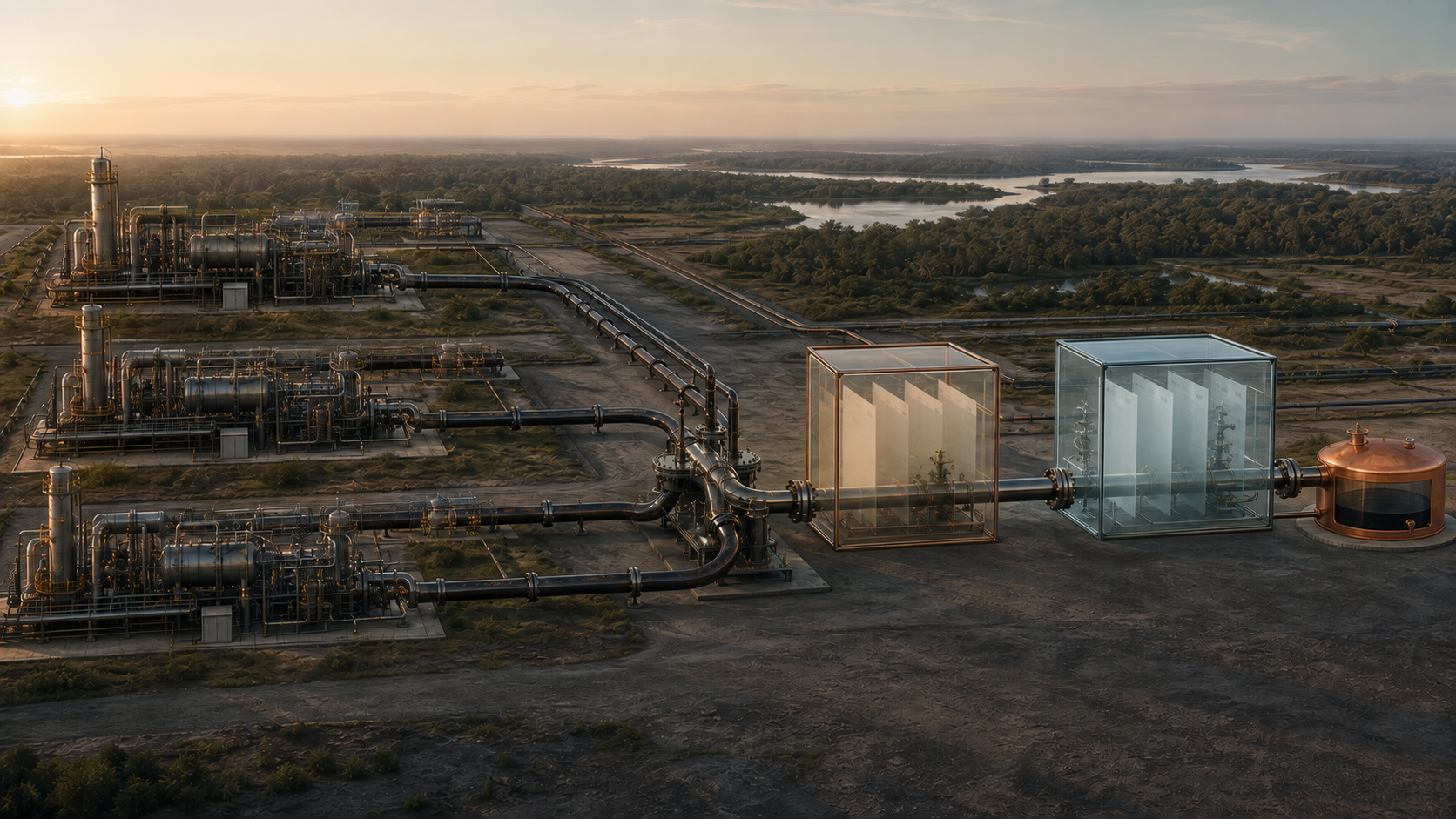
The headline belongs to the ventures
Chevron’s 2 September announcement uses one sentence to connect improved fiscal, commercial and legal terms with a large future programme. The enhancements, it says, support joint-venture plans to invest more than $7 billion over five years and more than double production to approximately 600,000 barrels a day compared with 2026. It also says total costs are below $20 a barrel.
The grammar matters. These are joint-venture plans. The release does not call 600,000 barrels a day net production attributable to Chevron, does not book that figure into Chevron’s production table and does not allocate it among the ventures. It later says the three Venezuelan JVs collectively increased production by 15% this year. An earlier Chevron investor slide labels roughly 200,000 barrels a day of growth since 2022 as a change in gross production across joint ventures.
That history supports an operating-JV reading, but precision still requires a boundary: the September release itself calls 600,000 a JV production target, not “gross” in a quoted definition. The safe conclusion is narrower and more useful. It is not a disclosed Chevron-net number.
Three interests refuse one multiplier
Chevron’s current Venezuela operations page lists a 39.2% interest in Petroboscán, 30% in Petropiar and 49% in Petroindependencia. The ventures do not merely have different names. Petroboscán operates the Boscán field in western Venezuela. Petropiar produces and upgrades extra-heavy crude in the Orinoco Belt. Petroindependencia also works extra-heavy oil in the Carabobo area.
There is therefore no honest calculation in which 600,000 is simply multiplied by 49%. That is the latest and largest of the three disclosed interests, not a portfolio rate. Multiplying by 30% or 39.2% would be equally arbitrary. A weighted calculation would need production by venture, entitlement barrels, fiscal treatment, operating losses, upgrading yields and lifting allocations. None of that detail appears in the announcement.
Even a technically correct working-interest calculation would not reproduce Chevron’s reporting. Its second-quarter Form 10-Q says the Venezuelan assets are operated by independent affiliates. Since 2020, the business has been recorded as non-equity investments: income is recognised only when cash is received, and Venezuelan production and reserves are not included in Chevron’s results.
The operating barrel, the economically attributable barrel, the lifted barrel and the recognised dollar are four different observations.
April was a portfolio exchange, not free acreage
The September expansion follows an April asset swap with PDVSA. Chevron received an additional 13.21% working interest in Petroindependencia, taking it to 49%. Petropiar, in which Chevron holds 30%, received rights to develop the adjacent Ayacucho 8 area.
Venezuela received something in return: Chevron subsidiaries’ 60% and 100% operated interests in offshore Plataforma Deltana Blocks 2 and 3, plus a 25.2% non-operated interest in Petroindependiente in western Venezuela. The transaction concentrated Chevron’s position in Orinoco heavy oil and removed other gas and oil options from its Venezuelan perimeter.
The new Carabobo 1 and Carabobo-2-South-A rights announced in September extend that concentration. They may create adjacency and development efficiencies. They do not arrive as costless inventory, recognised reserves or current production. The public documents do not provide project schedules, recovery factors, development wells, upgrading requirements or capital allocations.
Portfolio depth has increased. So has exposure to one resource system, one fiscal jurisdiction and a linked set of operating constraints. Both sides of that sentence belong in the ledger.
More than $7 billion has no disclosed Chevron column
The investment number is large enough to invite a shortcut. If Petroindependencia is 49% owned, one might assign 49% of $7 billion to Chevron. That would be a fabricated obligation. The programme covers three ventures with different interests, and the release provides no division by project, year, partner or financing source.
Joint ventures can be funded through partner contributions, venture cash flow, borrowing, in-kind arrangements, debt-recovery mechanisms or combinations of them. Chevron’s public material has previously described a venture-funded model used to recover outstanding debt. The current announcement does not say how much of the new programme follows that model, how much is binding, or what portion Chevron must supply.
The same restraint applies to “total costs of less than $20 per barrel.” Chevron gives no reconciliation. The phrase may be commercially significant, but it cannot be turned into an all-in fiscal breakeven, realised margin or return on capital without knowing what is included: operating expense, sustaining capital, diluent, upgrading, transport, royalties, taxes, financing, prior debt recovery and the timing of each cash flow.
A cost measure without a definition is a monitoring claim, not a valuation model.
Permission is a stack, not a switch
The operating structure has at least two public-law surfaces. Venezuela controls resource access, hydrocarbon law and the fiscal framework around the state-linked ventures. Its foreign ministry says the September package includes reserve access for Chevron Carabobo Holdings in Petroindependencia and adapts Petroboscán, Petropiar and Petroindependencia to the new Hydrocarbons Law and an updated legal and fiscal framework. The government account does not publish the executed contracts or their economic schedules.
US sanctions rules create a separate permission layer. OFAC General License 50C names Chevron Corporation and authorises specified transactions related to Venezuelan oil-and-gas operations. It also imposes conditions: approved dispute-resolution venues, directed treatment of certain monetary payments, counterparty and vessel exclusions, and reports after the first transaction and every 90 days while the activity continues.
Other licences cover adjacent parts of the chain. GL 46D addresses specified trade and movement of Venezuelan-origin oil; GL 47B addresses US-origin diluent; GL 48C covers specified supplies and services; and GL 52B covers specified PDVSA transactions. Their conditions are not interchangeable.
A licence removes particular legal prohibitions for particular activity. It does not produce a barrel, finance a well, guarantee a tanker, preserve future policy or compel a cash distribution.
The accounting finish line is cash
Chevron’s cash-receipt accounting rule is not a footnote to the story; it is the story’s final gate. A venture can raise production without adding reported Chevron production. It can lift oil without producing immediate recognised income. A profitable operating period can still be separated from Chevron’s accounts by recovery terms, payment routing, taxes, royalties, export logistics or timing.
The 10-Q says liftings restarted in 2023 after US authorisations and that Chevron expects deliveries to the United States and international markets to continue under current permissions. It also warns that geopolitical developments could affect operations and future results.
That makes cash receipt the observable bridge. The strongest future evidence will not be a repeated 600,000 target. It will be a reconciliation from venture production to Chevron liftings, from liftings to proceeds, and from proceeds to cash recognised. Until that appears, the announcement describes a larger operating option rather than a quantified Chevron earnings stream.
What remains unpriced
The September agreements may materially improve the economics. The public record supports that possibility, not a completed valuation. Missing items include the executed fiscal terms, capital schedule, production allocation by JV, definition of the cost metric, debt-recovery balance, entitlement and lifting rules, taxes and royalties, project milestones, decline assumptions, upgrader and diluent constraints, and a distribution waterfall.
These gaps are not reasons to dismiss the plan. They identify the documents that can convert it from scale language into investable evidence.
For now, the disciplined reading is simple. Three ventures carry the barrels. Different interests carry the economics. Two governments define important permission surfaces. Chevron’s accounts wait for cash.
Sources
- Chevron, Venezuela expansion announcement, 2 September 2026
- Chevron, Venezuela heavy-oil asset swap, 13 April 2026
- Chevron, Venezuela operations and JV interests
- Chevron, Form 10-Q for the quarter ended 30 June 2026
- Venezuelan Ministry of Foreign Affairs, account of the energy agreements, 2 September 2026
- OFAC, Venezuela General License 50C, 27 August 2026
Member Briefing
Deeper Profile Context
Sign in with the right membership level to unlock the full briefing and source notes.
Only for Strategic Circle
Strategic Circle
Open to all readers. Unlock profile briefings after joining and signing in.
Join Strategic CircleOnly for Leadership Alliance
Leadership Alliance
For qualified IP-asset owners and management; sign in to unlock alliance briefings.
Join Leadership Alliance