
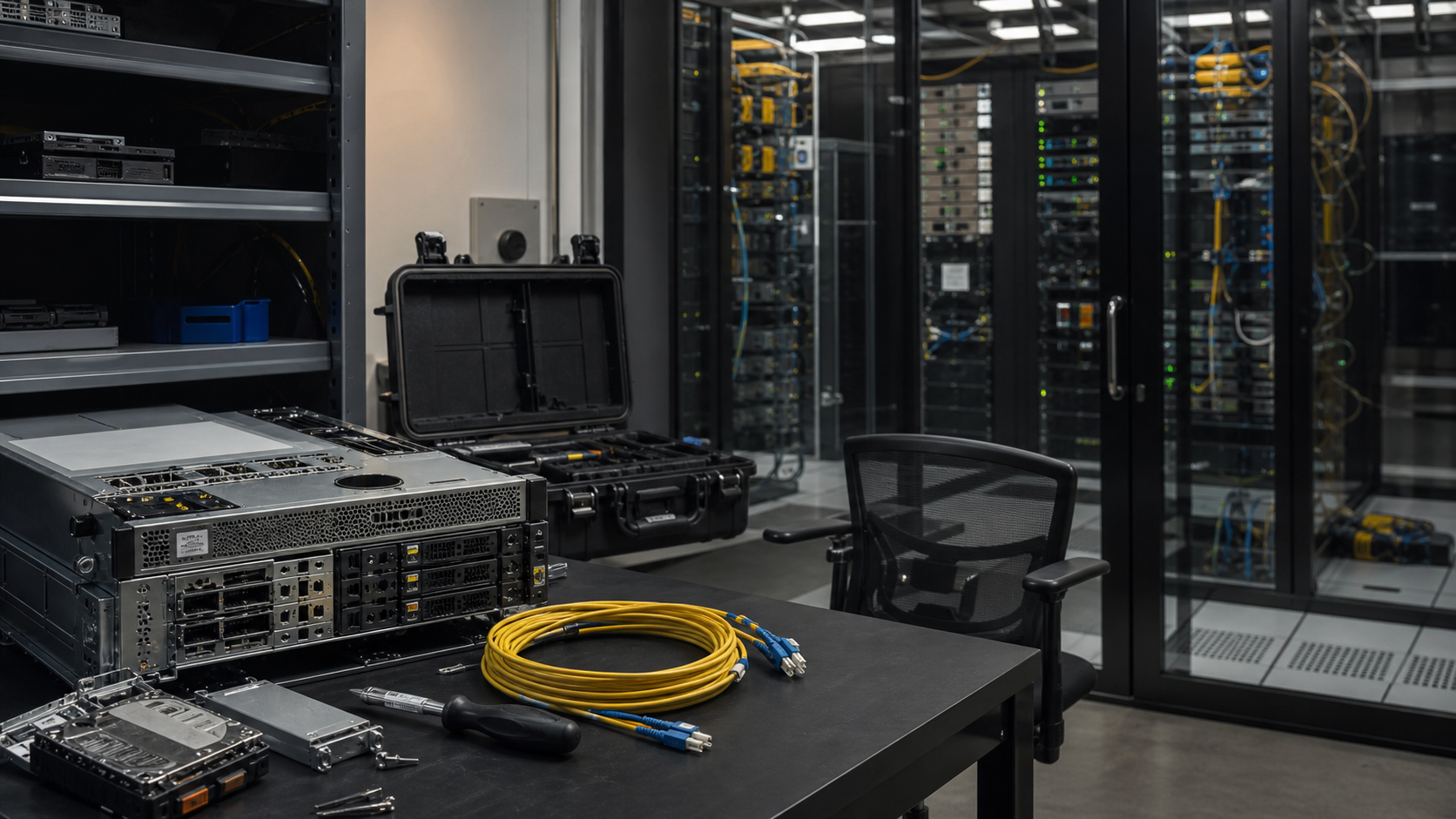
Summary
- Centrilogic IP Tech is best read as public network-resource evidence for Centrilogic's operating infrastructure, not as a separate consumer brand. ARIN lists "Centrilogic IP Tech" as the technical, abuse and network operations point of contact for Centrilogic's AS19693 record, while Centrilogic's commercial pages sell managed infrastructure, colocation, cloud, connectivity, cybersecurity and application services.
- The investable question is whether mid-market and enterprise customers still pay a premium for accountable hybrid operations when they can also buy hyperscale capacity, public-cloud marketplaces and large managed-service bundles. Centrilogic's case is strongest when the buyer needs a named engineering team, migration ownership, compliance support, remote hands, secure facilities, network operations and steady-state cost control.
- Public evidence supports a real operating base: owned or operated facilities in Rochester, Buffalo, Mississauga and other locations, named customer stories across banking, mortgage insurance, manufacturing, financial software and ISP security, BGP/ARIN records, support channels and data-centre hiring signals. The public record is weaker on current utilization, margins, incident history, detailed pricing, certificate scope and customer concentration.
The buyer is buying a witness, not just a server
The opening buyer is a North American financial software company with a familiar cloud choice. It can provision virtual machines on Azure, AWS or Oracle Cloud Infrastructure in an afternoon. It can use a marketplace managed-service offer, buy direct cloud support, or ask a global systems integrator to run the migration. Yet the board's real question is not whether a virtual CPU is available.
The question is who will answer when an application misses a recovery window, a compliance reviewer asks how privileged access is monitored, a migration overruns, or a customer asks whether the company has enough operational staff to keep the service alive. The visible unit is a rack, VM, backup tier, private cloud node or managed-service month. The hidden unit is accountable operations.
That is the right frame for Centrilogic. The company's public website describes a portfolio spanning advisory, applications, cloud, data and AI, managed infrastructure and cybersecurity, and says its services are designed to build and manage end-to-end digital solutions rather than simply sell a hardware slot. Its home page explicitly separates "cloud," "managed infrastructure" and "cybersecurity," with managed infrastructure presented as fully managed services for resilient, secure and available systems. See https://www.centrilogic.com/ and https://www.centrilogic.com/services/. A buyer that only wants the cheapest compute unit may never enter that sales motion. A buyer that wants a vendor to take operational responsibility for a hybrid estate is the natural audience.
The economic issue is that accountability has a large fixed cost. A provider promising managed infrastructure has to pay for engineers, facilities, physical security, monitoring, customer success, software systems, network operations, backup platforms, cloud partner skills, insurance, audits and power before the next customer's monthly invoice arrives. Centrilogic's managed-infrastructure page makes the promise in availability language: unplanned outages cause interruption, financial loss and reputational damage, and the company says its mission is to keep IT environments "always on and always available." The same page lists co-location, private cloud, connectivity, disaster recovery, managed hosting and help desk as the infrastructure foundation. That evidence is at https://www.centrilogic.com/services/managed-infrastructure/.
The customer's alternative is not nothing. Hyperscale platforms have made self-service infrastructure easier, richer and more procurement-friendly. Microsoft, Amazon, Oracle and Google can sell compute, storage, security tooling, managed databases, cloud-native disaster recovery and partner marketplaces. Large MSPs can wrap those platforms with global support. That makes Centrilogic's weakest evidence hinge specific: do enough buyers still pay a premium for a managed hybrid operator when hyperscale marketplaces and large MSPs sell similar promises at greater scale?
The answer is not visible in public revenue, because Centrilogic is private. It has to be inferred from service breadth, customer references, acquisition history, network-resource evidence and the kind of customer problem its public material keeps repeating.
The public identity starts with a network contact
The directory label "Centrilogic IP Tech" is not a separate public product line in the available record. It appears as an internet registry contact tied to Centrilogic's network operations. ARIN's public Whois-RWS page for handle CIT3-ARIN lists the point-of-contact name as Centrilogic IP Tech, company Centrilogic, street address 28 Mansfield Street, Rochester, New York, phone +1-888-999-3091 and email IPtech@centrilogic.com, with a registration date in 2007 and a last update in March 2026. The ARIN record is here: https://whois.arin.net/rest/poc/CIT3-ARIN.
That matters because it anchors the entity in an operating layer rather than in marketing copy. BGP.tools shows AS19693 as Centrilogic, Inc., registered on 22 August 2007, active under ARIN, with the same Rochester address and Centrilogic IP Tech named as technical, abuse and network operations contact. It also shows the AS originating IPv4 and IPv6 prefixes and using upstreams including Arelion, Cogent, Zayo and NTT America. The public BGP view is https://bgp.tools/as/19693. PeeringDB separately lists AS19693 as "CentriLogic US," with AS-CENTRILOGIC-US as the route-set, network type NSP, 50 IPv4 prefixes, 3 IPv6 prefixes, global scope and interconnection facilities in Buffalo and Rochester. That record is https://www.peeringdb.com/net/7328.
The registry-contact evidence should not be overstated. ASNs, prefixes, handles and route sets are not customers, relationships or proof of revenue. They are evidence that the company has a network operations surface and that the public internet sees Centrilogic as more than a consultancy. Hurricane Electric's BGP Toolkit records AS19693 with 25 IPv4 originated prefixes, one IPv6 originated prefix, four IPv4 upstream peers in the visible table and the same broad route evidence: https://bgp.he.net/AS19693. BGP.tools also shows AS31863, another Centrilogic-associated network, with a larger originated-prefix list and many server-hosting tags tied to the Dacentec legacy footprint: https://bgp.tools/as/31863. Cloudflare Radar lists AS31863 as DACEN-2, also known as Centrilogic, Inc., and identifies AS19693 and AS32882 as ASes from the same organization: https://radar.cloudflare.com/routing/as31863.
For a buyer, the practical question is not whether Centrilogic owns every IP address in a routing table. It is whether the provider can operate the connectivity, support and incident path that a managed-infrastructure promise implies. The network-resource evidence is useful because it reveals an operating edge. It also reveals diligence questions: which prefixes belong to Centrilogic services, which are customer or legacy routes, which are protected by RPKI, what change controls govern BGP announcements, what happens during a carrier impairment, and how does the support team escalate routing incidents?
Those questions turn a registry handle into buyer-risk analysis.
The rack-plus-engineer unit is the commercial center
Centrilogic's colocation page is the clearest expression of the rack-plus-engineer unit. It says its data centers are designed for uptime, reliability, security and convenience, and that customers can combine colocation with managed services, cloud and other portfolio offerings as their business evolves. It also says customers can keep control of critical hardware, systems and applications while cutting the time and cost of maintaining their own data centers. The page lists power, connectivity, physical space and security as the core components: https://www.centrilogic.com/services/managed-infrastructure/co-location-services/.
The key phrase is not "rack." It is "combine." A bare rack is a commodity if the buyer can find another cage, another power circuit and another carrier. A rack plus managed operating systems, managed security, load balancing, data migration, remote eyes and hands, advanced monitoring and vulnerability scanning is a different product. Centrilogic's colocation page lists those supplemental services explicitly, including managed security with firewall, VPN and IDS/IPS, load balancing, data migrations and recovery, remote eyes and hands, and technical support.
That bundle converts physical space into an outsourced operating layer.
The same logic appears in managed hosting. Centrilogic says its managed hosting includes 24/7/365 monitoring and management backed by SLAs, with managed backup, storage and recovery services around databases, applications and other workloads. Its managed-storage tiers mention encrypted data at rest, dedicated IOPS up to 40,000 in a performance tier, RTO targets from less than one hour to less than 24 hours depending on tier, and support across colocation, managed hosting and cloud environments. The public page is https://www.centrilogic.com/services/managed-infrastructure/managed-hosting-services/. These are not neutral product bullets; they describe where margin and cost sit. The customer is paying for the right people, tooling and architecture to be awake before the customer is forced to become awake.
Disaster recovery makes the same point more sharply. Centrilogic's disaster-recovery page describes automated and continuous replication, failover testing, VM failover, automated recovery of network and security settings, custom architecture for hybrid environments, recovery sites across Canada, the United States and the United Kingdom, and domestic data residency. It publishes RTO and RPO tiers: Standard at 24-hour RTO and 2-hour RPO, Enhanced at 12-hour RTO and 2-hour RPO, and Premium at 2-hour RTO and 15-minute RPO. The page is https://www.centrilogic.com/services/managed-infrastructure/disaster-recovery-services/. Recovery promises like that are not sold by square foot. They are sold by operational confidence.
This is why the Centrilogic buyer should model a managed-infrastructure bill differently from a cloud bill. A cloud bill is usually measured by compute, storage, network, software and support units. A Centrilogic-style managed bill may include some of those units, but the economic core is the transfer of facility, migration, security, monitoring and incident accountability. If the buyer already has a strong platform team, mature infrastructure-as-code, tested recovery plans and cloud governance, it may not need that transfer. If the buyer has legacy applications, lean internal staff, compliance exposure and limited appetite for 2 a.m.
facilities or migration blame, the managed premium can be rational.
Pricing opacity makes the benchmark harder
Centrilogic does not publish a simple rack and managed-service price card in the way some retail hosting providers do. That is not unusual for enterprise colocation, private cloud and managed services, where power, cage configuration, bandwidth, recovery tier, software licensing, support scope, compliance obligations and migration work can change the deal. It does mean the buyer cannot compare Centrilogic only by scanning a public monthly rate.
The more useful comparison is a responsibility map: which tasks does the provider own, which tasks remain with the customer, which tasks are delegated to a hyperscaler, and which tasks require a third party?
That responsibility map should include five cost buckets. The first is facility cost: rack space, power, cooling, security, remote hands and cross-connects. The second is infrastructure cost: servers, storage, backup, firewalls, load balancers, operating systems and patching. The third is cloud cost: Azure, AWS, OCI, VMware or other platform spend, reserved capacity, licensing and egress. The fourth is labour cost: project management, architecture, 24/7 support, SOC analysts, database specialists, network engineers and customer success.
The fifth is risk cost: downtime, missed recovery objectives, audit gaps, failed migrations and unclear incident ownership.
This is where a cheaper substitute can mislead procurement. A raw hyperscale estimate may look lower because it omits internal labour, migration risk, emergency troubleshooting and compliance evidence. A bare colocation quote may look lower because it omits managed operating systems, security monitoring, backup testing and application support. A large MSP quote may look comparable but may rely on offshore delivery or standardized runbooks that do not fit legacy workloads. Centrilogic's public material repeatedly emphasizes customized environments and made-to-measure service design, including its "Discover, Design, Build, Manage" approach on the main site and managed-infrastructure pages: https://www.centrilogic.com/ and https://www.centrilogic.com/services/managed-infrastructure/.
The premium is justified only when the customer actually uses that accountability. If Centrilogic is merely reselling a cloud subscription and answering low-complexity tickets, the customer should test a cheaper MSP or direct cloud support. If Centrilogic is coordinating a legacy ERP migration, operating a bank's private cloud, monitoring regulated security events, hosting critical cabinets and proving recovery objectives, the price comparison has to include the avoided cost of building that operating team internally.
The buyer should force the proposal to separate recurring infrastructure, recurring managed services, one-time migration work, third-party licences and optional compliance services so the accountability premium is visible rather than bundled into a vague transformation fee.
Facilities make the fixed cost visible
Centrilogic's facility pages show the physical base behind the service promise. The Rochester, New York page says the company owns and operates a secure and redundant self-contained data center that delivers managed hosting, hybrid hosting, cloud, colocation and supplementary managed services. It lists a 22,000 square foot data center, hardened perimeter, 18-inch raised floor, high-density and high-availability engineering, customer meeting and staging areas, SSAE 16 SOC 1 Type II certification and ISO 9001 and ISO 27001 compliance. Power features include diverse utility feeds from two separate substations, A+B distribution, N+1 UPS, backup diesel generator and emergency fuel contracts. The page is https://www.centrilogic.com/rochester-new-york-data-center/.
The Buffalo page has a similar structure, but with a different geographic role. It says Centrilogic owns and operates a secure and redundant downtown Buffalo data center in Main Place Tower, the region's primary telecom hub, and lists 23,000 square feet, hardened perimeter, A+B power distribution, N+1 UPS, backup diesel generator, multiple Tier 1 carrier backbone providers, multi-homed bandwidth, inter-facility connectivity, access control and monitored CCTV. The source is https://www.centrilogic.com/buffalo-new-york-data-center/. That is the visible side of a monthly managed-infrastructure invoice: not just the rack, but the building, power, carrier access and people who operate the building.
The Greater Toronto Area page shows the Canadian side of the same proposition. Centrilogic describes the facility as the first of three Mississauga data centers, engineered to Tier 3+ standards with some Tier 4 attributes, offering managed hosting, colocation, cloud computing and advanced IT outsourcing. The page lists 28,000 square feet, a self-contained facility, no single points of failure across critical systems, 2 x 500 kW UPS systems, two backup diesel generators, a PUE rating of 1.2, multiple Tier 1 providers with divergent paths, cloud onramps and biometric security controls. See https://www.centrilogic.com/greater-toronto-ontario-data-center/.
Mississauga North adds disaster-recovery texture. Centrilogic says that facility has 15,000 square feet, secure emergency-space office facilities, N+1 UPS, a Caterpillar diesel generator, 48 hours of standby fuel with hot-fill capability, redundant fibre connections into the building envelope and biometric access. That page is https://www.centrilogic.com/mississauga-ontario-north-data-center/. The company also lists locations including Mississauga, Rochester, Downtown Toronto, Vancouver, Greater Toronto, Scottsdale, Buffalo, Lenoir and Hyderabad on its locations page: https://www.centrilogic.com/contact-us/locations/.
Facility evidence cuts both ways. It supports the claim that Centrilogic is an infrastructure operator with physical assets and operational dependencies. It also shows why the business is capital and labour intensive. Power systems, cooling, fire suppression, raised floors, cages, remote hands, security controls, monitoring and audits must be maintained even when a buyer only sees an invoice line for a managed service. If demand shifts too quickly toward self-service public cloud, those fixed costs become harder to absorb. If customers keep valuing locality, compliance, custom racks and direct operations, those fixed costs become the moat.
Cloud services are the substitute and the channel
Centrilogic does not position itself as anti-cloud. Its public cloud page says it supports application modernization, public cloud, private cloud, hybrid cloud, multicloud and modern workspace, with public-cloud work on Microsoft Azure, Oracle Cloud Infrastructure and AWS. It claims public and private cloud integration, cost optimization through FinOps practices and ongoing support. The page is https://www.centrilogic.com/services/cloud-services/. This creates a more complicated competitive picture: hyperscale cloud is both a substitute for Centrilogic's data centers and a channel for Centrilogic's managed services.
The Microsoft Azure page makes this explicit. Centrilogic says its managed Azure service combines Microsoft's Azure platform with Centrilogic support and managed services, including 24/7/365 issue response, provisioning, scaling, identity management, monitoring, alerting, governance, OS, network, security and storage management, service-management discipline, cloud architecture guidance, lifecycle orchestration, project management, incident and change management and SLA-backed event response. It also describes a multicloud management portal with single-vendor billing, hybrid cloud capabilities and financial optimization guidance. The page is https://www.centrilogic.com/services/cloud-services/microsoft-azure-managed-services/.
This matters for the rack-plus-engineer thesis because a buyer might not choose between Centrilogic and Azure. It may choose Centrilogic on Azure, Centrilogic plus colocation, Centrilogic plus private cloud, or Centrilogic for a migration from owned hardware into public cloud. That creates a service margin around cloud complexity rather than a pure facility margin. Centrilogic's December 2025 announcement says it achieved all six Microsoft AI Cloud Partner Program solution designations across Infrastructure, Data and AI, Digital and App Innovation, Security, Modern Work and Business Applications, and says it has supported more than 700 mid-market and enterprise customers globally with 150+ Microsoft-certified professionals. The source is https://www.centrilogic.com/centrilogic-achieves-all-six-microsoft-ai-cloud-partner-designations/.
The risk is that hyperscale partners can also compress the value chain. Microsoft, AWS and Oracle have their own support programs, implementation partners, marketplaces, cloud-native migration services and increasingly automated management layers. If a buyer can get sufficient governance and support inside a hyperscaler or through a larger MSP, Centrilogic must prove its own value through customer intimacy, legacy workload knowledge, hybrid facility control, application expertise, compliance support or price clarity.
The cloud-service page itself says Centrilogic has been named a Major Player in IDC MarketScape reports for Canadian managed multicloud services and cloud professional services. That recognition helps positioning, but it does not remove price pressure from larger providers and automated cloud-native operations.
Customer stories show the product is blame transfer
Centrilogic's most useful public customer stories are not trophy logos. They explain the type of operating risk customers are trying to shift. Sagen, a Canadian private mortgage insurer, needed to separate from Genworth after Brookfield's acquisition and had less than a year to build its own secure IT infrastructure. Centrilogic's case study says Sagen chose it for cloud and cybersecurity expertise, Microsoft partnership and the ability to meet a tight timeline; Centrilogic provided cross-cloud or multicloud security services, Azure and Microsoft 365 licensing, cloud spend optimization and managed security services including logging, SIEM, vulnerability scanning, intrusion detection and SOC as a service. The case study is https://www.centrilogic.com/sagen-cloud-cybersecurity/.
That story is not just about technical services. It is about institutional blame. A divested financial-services company had to stand up its own secure operation quickly while protecting sensitive data and coordinating with other vendors. The buyer did not merely need a VM; it needed a partner that could absorb tasks its internal team could not instantly staff. The same pattern appears in WealthONE. Centrilogic's digital-bank case study says WealthONE initially used Centrilogic for managed private network services, then expanded the relationship to include architecture and management of its IT infrastructure, storage, databases, system security and private cloud servers. It describes the bank's online operations as dependent on 24/7/365 access, SOC support, system support, maintenance, upgrades, weekly and monthly operating reviews and compliance work. See https://www.centrilogic.com/digital-bank-wealthone-relies-centrilogic-to-deliver-it-innovation-and-dependability/.
CooperVision shows the facility side of the same economics. Centrilogic says CooperVision's Rochester data center supported core ERP and other enterprise systems, operations in 36 countries and roughly 95% of revenue-driving activity. The case study says CooperVision signed a 60-month colocation contract with Centrilogic for 32 cabinets in a private cage, power and some network circuits, and that downtime could equate to millions of dollars an hour. The page is https://www.centrilogic.com/coopervision-gains-flexibility-and-strategic-focus-with-centrilogic/. The point is not that every buyer has CooperVision's scale. It is that the customer bought away from running a facility internally because facilities work was no longer the best use of senior engineering time.
Other case studies push the thesis into public cloud and security. Haynes International used Centrilogic to migrate a mission-critical Dynamics AX environment to Azure to extend support for Windows Server 2008 and SQL Server 2008, improve security and reduce server counts and Azure hardware costs through optimization. The page cites a 40% reduction in total servers in the AX environment and cost savings from availability and pricing strategies: https://www.centrilogic.com/centrilogic-solves-global-manufacturing-companys-erp-challenge/. Imagine, a Dublin ISP, used Centrilogic for SOC-as-a-service under EU regulatory pressure, with vulnerability scanning, SIEM, MDR and monitoring across servers and devices: https://www.centrilogic.com/enhancing-isp-security-in-a-strict-regulatory-environment/. Finastra used Centrilogic on an Azure and Kubernetes project for a financial software open API platform: https://www.centrilogic.com/creating-the-worlds-first-open-api-platform-for-financial-software/.
The common thread is that buyers are not simply shopping for cloud capacity. They are shopping for a party that can help answer for migrations, compliance, uptime, cost optimization and security operations. That makes Centrilogic's revenue logic closer to managed risk transfer than hosting resale. It also sets a high bar. If Centrilogic cannot maintain engineering quality, customer success discipline and incident response, the value proposition collapses faster than a commodity rack would.
Acquisition history explains the full-stack ambition
Centrilogic's current breadth did not arise only from organic facility expansion. In 2018, Centrilogic announced a significant equity investment from TriSpan Opportunities Fund and Long Point Capital, saying the money would support an end-to-end managed hosting, private network and application-management strategy for mid and large enterprises globally. The announcement said financial terms were not disclosed and positioned the company as founded in 2007, with regional headquarters in Canada, the United States and the United Kingdom. The source is https://www.centrilogic.com/centrilogic-secures-strategic-equity-investment-from-trispan-opportunities-fund-and-long-point-capital/.
TriSpan's own portfolio page says CentriLogic was the second Opportunities Fund investment completed in June 2018 and that, under TriSpan ownership, the company strengthened its balance sheet and more than doubled in size with two significant acquisitions in early 2020, becoming the largest independent IT outsourcer in Canada with a strong presence in the Northeast United States. That independent ownership context is at https://www.trispanllp.com/portfolio/end-to-end-it-service-provider/. The phrase "independent IT outsourcer" is important because it indicates that the strategic goal is not merely more cabinets. It is broader outsourcing wallet share.
The acquisition trail supports that reading. Centrilogic's ManageForce roundup says it acquired Chicago-based ManageForce, a cloud, ERP and data-solutions provider focused on Oracle and Microsoft applications and databases, and that the deal expanded service capabilities and the U.S. footprint in Chicago, Boston and Portland. See https://www.centrilogic.com/media-coverage-roundup-centrilogic-acquires-manageforce/. Its ObjectSharp roundup says it acquired a Toronto-based cloud-native development and application-services company, adding to IT transformation and managed public cloud capabilities: https://www.centrilogic.com/media-coverage-roundup-centrilogic-acquires-objectsharp/. Its WatServ announcement says that acquisition strengthened IT transformation and managed cloud capabilities: https://www.centrilogic.com/centrilogic-acquires-watserv-to-strengthen-it-transformation-and-managed-cloud-capabilities/.
Older acquisitions explain infrastructure roots. Centrilogic's Advanced Knowledge Networks announcement says the Canadian managed IT provider added highly secure managed infrastructure, cloud and private network services: https://www.centrilogic.com/centrilogic-acquires-advanced-knowledge-networks/. The Capris Group acquisition announcement says Centrilogic expanded its Ontario data-center footprint and added application and platform management services: https://www.centrilogic.com/centrilogic-acquires-the-capris-group/. These deals turn the company into a bundle: facilities, network, private cloud, public cloud, ERP, applications, data and security.
The acquisition strategy creates both upside and integration risk. The upside is cross-sell. A customer that starts with colocation can add managed security, cloud migration, application management and data services. A customer that starts with Azure migration can later use disaster recovery or private connectivity. The risk is operational complexity. Integrating acquired service practices, support portals, pricing models, cultures and systems is hard. The public record does not disclose churn, margins or utilization after acquisitions.
Buyers should assume the full-stack promise depends on how well Centrilogic has integrated its acquired capabilities into a coherent support model.
Network evidence supports continuity, but it is not a guarantee
Connectivity is central to Centrilogic's promise. Its connectivity page describes managed SD-WAN, cloud connectivity, internet services and private networking, with a design-build-manage model for multi-site and multi-platform connectivity. It says cloud connectivity can connect to Microsoft Azure, Oracle, Google, IBM and other platforms, and says private networking includes Ethernet, IP VPN and wavelength services. The page is https://www.centrilogic.com/services/connectivity/. The internet-services page adds MPLS Ethernet and IP-VPN, dedicated internet access, CDN and data-center network services, including scalable bandwidth up to 10 Gbps and DDoS mitigation. See https://www.centrilogic.com/services/connectivity/internet-services/.
The public routing record is consistent with a provider that has active network infrastructure, but it has to be interpreted cautiously. PeeringDB's AS19693 page lists selective peering policy, global scope, 100-1000 Mbps traffic level and Buffalo/Rochester facilities. BGP.tools lists observed upstreams for AS19693 including Arelion, Cogent, Zayo and NTT America, along with route descriptions for Centrilogic and several customer or inherited labels. Hurricane Electric's AS-CENTRILOGIC:AS-CUSTOMERS AS-set lists customer ASNs and identifies Centrilogic IP Tech as both admin and technical contact: https://bgp.he.net/irr/as-set/AS-CENTRILOGIC%3AAS-CUSTOMERS. Hurricane Electric's AS-CENTRILOGIC-CA record similarly lists a Canadian network AS-set that includes AS14453, AS19693 and AS33162, with Centrilogic IP Tech as contact: https://bgp.he.net/irr/as-set/AS-CENTRILOGIC-CA.
For customers, the meaningful diligence is operational. How does Centrilogic handle route-change approval? How does it coordinate customer-owned prefixes? How quickly are abuse, NOC and technical tickets triaged? Which facilities have which upstreams and cloud onramps? Are BGP communities documented to customers? What are the RPKI and IRR hygiene practices? Does DDoS mitigation apply to all access products or only specific dedicated internet configurations? The public records show a contactable network operations surface, not a universal assurance.
In managed infrastructure, the difference between a contact handle and a tested escalation path is where customer trust is won or lost.
The same caution applies to support visibility. Centrilogic's public support page lists 24/7 technical support numbers for the United States, Canada and the United Kingdom, along with a customer support portal and client-services email: https://www.centrilogic.com/support/. A support page does not prove service quality, but it is a necessary surface for an accountable operator. The Dacentec legacy status page, at https://billing.dacentec.com/hostbill/index.php?%2Fstatus=, points to scheduled events and a Lenoir, North Carolina address. That is not a full Centrilogic operational status dashboard, but it is a trace of the hosting-service footprint tied to AS31863 and the Lenoir data-center story.
The cost base is power, labour and software
The hidden fixed cost behind a managed infrastructure promise starts with power. Centrilogic facility pages repeatedly list UPS systems, backup generators, fuel contracts, redundant cooling, humidity controls and fire suppression. Those systems are expensive to install, maintain and test. The broader North American market is making that harder. JLL's North America Data Center Report for year-end 2025 says vacancy remained at a record-low 1% for a second consecutive year despite unprecedented construction, which signals sustained demand and tight supply: https://www.jll.com/en-us/insights/market-dynamics/north-america-data-centers. CBRE's Global Data Center Trends 2025 says power capacity constraints are forcing preleasing and extending construction timelines to 2027 and beyond: https://www.cbre.com/insights/reports/global-data-center-trends-2025.
Power scarcity affects Centrilogic even if it is not building hyperscale AI campuses. A tight data-center market lifts expectations around power availability, cross-connect capacity, cooling, backup and facility resilience. It also makes customer procurement more sensitive to whether a provider has existing powered capacity in useful metro areas. Cushman & Wakefield's Americas Data Center Update for H2 2025 says the next phase of the Americas market is being shaped by regulatory guardrails, power availability, land use and infrastructure requirements, not just capital deployment: https://www.cushmanwakefield.com/en/insights/americas-data-center-update. That context supports Centrilogic's facility value, but it also raises operating costs.
Labour is the second cost base. Centrilogic's own careers page says it is always searching for motivated professionals and positions itself as a team of digital transformation experts: https://www.centrilogic.com/careers/. A current public job listing for a Centrilogic Data Center Technician in Rochester says the role monitors building-management systems, responds to alarms, provides 24/7/365 support by phone and email, troubleshoots problems, performs audits and rounds, and maintains equipment in data centers: https://www.ziprecruiter.com/c/CentriLogic/Job/Data-Center-Technician/-in-Rochester%2CNY?jid=dfd2b408d2ba1ea7. That job trace is exactly the hidden labour behind a "managed" invoice. Buyers pay not only for hardware, but for people watching building systems and answering support channels.
Software and cloud partnerships are the third cost base. Managed Azure, SOC-as-a-service, SIEM, vulnerability scanning, backup, storage, orchestration, cloud-cost optimization and customer portals all require operating systems, certification and vendor management. Centrilogic's security page describes assessments, governance, risk and compliance, CISO-as-a-service, managed security, SOC-as-a-service, penetration testing, managed detection and response, threat detection and incident response: https://www.centrilogic.com/services/security-and-compliance/. These services can create higher-margin advisory and managed revenue, but only if the company maintains enough certified staff and repeatable delivery systems.
Employee-review evidence is a weak but relevant signal on execution risk. Glassdoor lists Centrilogic around 3.1 to 3.3 out of 5 based on 52 reviews, and individual reviews include both positive and negative commentary; one negative review complains about priorities and leadership. The broad Glassdoor page is https://www.glassdoor.com/Reviews/Centrilogic-Reviews-E1141120.htm and the review example is https://www.glassdoor.com/Reviews/Employee-Review-Centrilogic-E1141120-RVW92569558.htm. Review sites are not audited operational evidence, and they skew toward employees with strong opinions. But for a managed-services buyer, staffing stability and leadership clarity matter because service quality depends on people, not just platforms.
Competition comes from both below and above
Centrilogic competes from below with commodity hosting, unmanaged colocation, small MSPs and direct cloud self-service. A customer that only needs a few Linux servers, a backup target or a simple VPN can often buy cheaper service elsewhere. The company's own value proposition assumes complexity: managed infrastructure, private cloud, hybrid cloud, compliance, security and application operations. If the customer's workload is simple, that breadth becomes cost, not value.
It also competes from above with hyperscalers and large systems integrators. Azure, AWS and OCI can sell mature infrastructure and security primitives directly. Public cloud marketplaces let customers add managed services without leaving the hyperscale procurement channel. Global MSPs can bring larger balance sheets, offshore delivery, wider partner status and packaged frameworks. Centrilogic's differentiation has to be intimacy, hybrid facility control, regional expertise, existing customer trust, application depth and the willingness to own operational details that are too small or messy for a hyperscale default.
Market reporting makes the threat and opportunity visible at the same time. Brookings' 2025 discussion of data centers notes that AI and cloud demand are increasing reliance on large-scale facilities, while raising issues around energy, workforce, permitting, grid investment and transparency: https://www.brookings.edu/articles/the-future-of-data-centers/. McKinsey's analysis of U.S. hyperscale data centers describes continuing growth in cloud migration, digital services and AI-related demand, but also stresses state-level power, workforce and infrastructure tradeoffs: https://www.mckinsey.com/industries/public-sector/our-insights/the-data-center-balance-how-us-states-can-navigate-the-opportunities-and-challenges. The market is expanding, but much of the headline demand accrues to hyperscale platforms and large colocation campuses.
The managed-services market also expands because complexity expands. Mordor Intelligence estimates the data-center managed-services market at USD 54.23 billion in 2025, USD 62.05 billion in 2026 and USD 121.67 billion by 2031, with outsourcing of infrastructure complexity, AI workload density and power constraints as drivers: https://www.mordorintelligence.com/industry-reports/data-center-managed-services-market. The exact forecast should be treated as market research rather than company-specific evidence, but it supports the broader logic: as infrastructure becomes more complex, some customers outsource operations rather than build internal teams. Centrilogic is exposed to that demand, provided it can prove the value of its service layer.
Third-party data-center directories add external confirmation but not full diligence. Baxtel lists CentriLogic as operating data centers across multiple regions: https://baxtel.com/data-centers/centrilogic. Datacenters.com describes Centrilogic as a global IT solutions provider specializing in managed services, cloud computing, application management and data-center services: https://www.datacenters.com/providers/centrilogic. Data Center Map lists Centrilogic facilities and provider context: https://www.datacentermap.com/c/centrilogic/. These directories are useful procurement clues, but buyers should rely on direct contract, facility, audit and SLA evidence before making a decision.
Compliance is a selling point and a liability
Compliance appears repeatedly in Centrilogic's public record. The About page says Centrilogic's services are supported by industry-leading standards and practices, citing PCI DSS compliance audit, ISO certification and SOC 1 Type 2 and SOC 2 Type 2 audits: https://www.centrilogic.com/about/. The Rochester facility page claims SSAE 16 SOC 1 Type II certification and ISO 9001 and ISO 27001 compliance. The Greater Toronto page describes Tier 3+ design with some Tier 4 attributes. Customer case studies discuss SOC support for banking, mortgage insurance, manufacturing and ISP security.
This is commercially valuable because compliance converts service quality into procurement language. A bank, insurer, manufacturer or ISP can tell auditors and customers that it has selected an operator with public compliance commitments, facility security, SOC services, monitoring and defined recovery options. WealthONE's case study explicitly says Centrilogic helps with SOC monitoring, compliance and review of SLAs. Imagine's case study says Centrilogic helped the ISP implement SOC capabilities under national and EU regulatory requirements. Sagen's story links cloud and cybersecurity to sensitive financial data.
The liability is that compliance claims create diligence obligations. A buyer should not assume every certificate, audit or control applies to every service, facility or customer environment. It should ask for current reports, certificate scopes, bridge letters, cloud shared-responsibility mappings, data-residency documentation, incident-notification terms, subcontractor lists, privileged-access controls, vulnerability-management procedures, backup evidence and recovery-test results. If the buyer is paying a managed-infrastructure premium for compliance comfort, scope matters more than slogans.
This is also where the local-cloud-substitution topic matters. A customer may use Centrilogic because it wants Canadian, U.S. or U.K. operational locality, not because public cloud is unavailable. Centrilogic's managed-hosting page says managed storage is delivered from global data centers and mentions guaranteed data residency, while its disaster-recovery page mentions domestic data residency. Those claims can matter for regulated customers, but they must be mapped to actual workloads, backup paths, support access and logs. Locality is only valuable if it is operationally enforced.
What would change the judgment
The positive judgment would strengthen if Centrilogic disclosed or demonstrated rising managed-services bookings, high customer retention, strong utilization in key facilities, clean integration of acquired practices, current audit scopes, consistent support metrics, tested recovery outcomes and clear pricing that makes the managed premium legible. More recent customer references showing hybrid cloud, private cloud, SOC and colocation working together would also help. So would evidence that customers are expanding from one service line into multiple lines, because that would validate the full-stack acquisition thesis.
The judgment would weaken if public evidence showed rising customer churn, repeated facility incidents, support degradation, weak staff retention, stale certifications, unclear data-residency scope, unresolved acquisition fragmentation or a shrinking infrastructure footprint. It would also weaken if customers increasingly choose direct hyperscale management plus specialist security platforms instead of managed hybrid operators. The most dangerous outcome for Centrilogic is not that public cloud grows. Public cloud already grows.
The danger is that public cloud plus large MSPs makes smaller hybrid operators look redundant except for legacy workloads.
The facts that matter most are not just technical. Power prices, grid delays, data-center vacancy, labour availability, Microsoft and Oracle partner economics, security-platform costs and customer procurement behavior all affect Centrilogic's margin. If powered space becomes scarce and customers need regional control, facilities become more valuable. If energy and labour costs rise faster than customer willingness to pay, the same facilities become a margin drag. If AI creates demand for dense power that Centrilogic's facilities cannot support, hyperscalers and specialized colocation campuses may capture the growth.
If AI also creates mid-market governance and security complexity, Centrilogic's advisory and managed layer may benefit.
For buyers, the diligence sequence is straightforward. Identify which workloads need Centrilogic rather than direct cloud. Map each workload to recovery objectives, compliance requirements, latency needs, support windows, data-residency rules and exit options. Ask which facility, cloud region, network AS, support team and service stack actually touches the workload. Review audit scopes and status evidence. Test escalation before production dependency. Price the internal staff that would be required to replicate the service. Then compare that total against self-service cloud, a large MSP and a pure colocation provider.
The watchpoint is accountability at a fair price
Centrilogic's strategic relevance is not that it can host a server. Many companies can host a server. Its relevance is that it can plausibly offer a rack, a cloud migration, a SOC, a network path, a backup plan, a recovery target and an engineer who knows why those pieces are connected. That is valuable for customers whose digital operations are important enough to outsource but not simple enough to self-service entirely.
The public evidence supports a moderate-confidence view that Centrilogic has the ingredients of an accountable hybrid infrastructure operator: facilities, network contacts, cloud partnerships, customer case studies, private-equity-backed acquisition breadth, support channels and managed-security language. The evidence does not prove that every service is equally strong today, that margins are attractive, or that the company can always defend its premium against hyperscale and larger MSP competition.
The investment-style reading is therefore conditional. Centrilogic deserves attention when a buyer has legacy systems, regulated data, migration risk, constrained staff, steady workloads, local or regional operating needs, network complexity or a board that wants named accountability for uptime and compliance. It is less compelling when a buyer has cloud-native workloads, strong internal platform engineering, global scaling needs, commodity hosting requirements or a procurement culture that prefers the largest cloud marketplace by default.
The rack-plus-engineer thesis survives only if the engineer remains the scarce good. A rack without accountable operations is a commodity. An engineer without facility, network and cloud control is just a consulting hour. Centrilogic's case is that customers still need the combination. The next few years will test whether that combination is a durable premium or a transitional bridge while hyperscale platforms and larger MSPs absorb more of the blame.