
AFRINIC saga currently tracked end-to-end.
Governance / Case File
CASE FILE
Case File governance intelligence tracks institutions, policy processes, standards activity, registry operations, accountability disputes, and implementation signals that affect internet infrastructure. BTW.
Institutional BreakdownLegal and Policy ConflictElection and Control Risk

Institution legitimacy and continuity risk mapping.
Primary-source based timeline and risk analysis.
Used for continuity and policy exposure planning.
Latest Coverage
Latest from CASE FILE
786 articles

CASE FILE
The Message Was Accepted Before It Was Released: IETF's Mail Transition and the Authority to Hold, Rewrite and Relay
On 11 September, a first-time sender may hand a message to the IETF's mail system and receive an apparently ordinary SMTP outcome while the operational copy waits elsewhere for a challenge response. That gap between acceptance and release is the real story in the IETF's new email…

CASE FILE
The Method Was Safe. The Body Still Defined the Request: HTTP QUERY and the Authority to Name an Equivalent Resource
HTTP has long forced complex read operations into an awkward choice: expose the query in a GET URI, or carry it in POST content and surrender the assumptions attached to a safe, idempotent method. RFC 10008 introduces QUERY as a third path. Its promise is precise, but so is its…

CASE FILE
The Network Changed Before the Decision Became Final: NETCONF Confirmed Commit and Rollback Authority
NETCONF can place a candidate configuration into active use while a timer still gives the server authority to restore the previous state. That provisional success is useful precisely because a protocol acknowledgement, a final datastore and a functioning network are different…

CASE FILE
The Query Changed. The Cache Answered Anyway: No-Vary-Search and the Authority to Declare URL Equivalence
Two addresses can look different while an application treats them as the same page. No-Vary-Search lets an origin expose that knowledge to caches. The tempting story is fewer misses. The operational story is harder: one party declares which distinctions do not matter, another…

CASE FILE
Internet Society Adopted a Pay Philosophy. The Policy Itself Is Missing From the Index
Internet Society's Board has adopted a Senior Executive Compensation Philosophy Policy on advice from its Compensation Committee and Willis Towers Watson. The public resolution says the policy was attached as Exhibit A, yet the checked resolution page does not expose the exhibit…

CASE FILE
The Answer Was Not Ready. The Browser Could Still Move: HTTP 103 Early Hints and the Authority to Speculate
A server can reveal a likely stylesheet before it knows whether the request will end in a page, an error or a redirect. HTTP 103 gives that provisional clue a place on the wire. The clue can save time, but it cannot become the answer: the client still decides whether to spend…

CASE FILE
The Token Was Bound to a Key. The Action Was Still Unauthorized: DPoP and the Authority of a Sender Constraint
DPoP can stop a copied OAuth token from becoming a portable credential. It cannot decide whether the key holder is the right client, whether the token still carries the right audience and scope, or whether today's resource state permits the requested effect.

CASE FILE
The Error Returned as a New Question: DNS Report-Channel and the Authority of Feedback
An authoritative server can announce where it wants to hear about failures it cannot see. It cannot make a resolver diagnose, report or believe anything. DNS Error Reporting turns one local validation failure into a second DNS query, then leaves transport, caching and human…

CASE FILE
The Signature Verified. The Command Was Still Unauthorized: HTTP Message Signatures and the Authority of Covered Components
RFC 9421 can prove that selected parts of an HTTP message survived in a defined semantic form. It cannot decide whether the signer was entitled to issue the command, whether an omitted field changed its meaning, or whether a valid request has already been used.

CASE FILE
The Packet Hid Its Exact Length. The Pattern Still Spoke: EDNS Padding and the Limits of DNS Privacy
An encrypted DNS message can conceal its names and answers while leaving a surprisingly useful silhouette. EDNS Padding changes that silhouette by adding bytes. The difficult question is not whether the packet became larger, but whether client, server, transport and path made…

CASE FILE
The Record Bound the Options. The Client Still Chose the Connection: DNS SVCB, HTTPS and Service Authority
A domain owner can authenticate a list of preferred endpoints, protocols and connection parameters before the first application exchange. That does not make the first preference a command, turn a routing target into the origin, or prove which path a real client can securely…

CASE FILE
At Internet Society, One Organization’s Ballot Can Count as Six—or Stay One
An Internet Society Organization Member can enter two elections through one authorized delegate and still carry a different amount of voting force. In the Board of Trustees election, one selection is multiplied by membership class when votes are counted. In the Organization…

CASE FILE
Internet Society Put Board Email on a Retention Clock It Does Not Publish
Internet Society has now written archive retention into the procedure governing every Board mailing list. That is a useful continuity rule. Yet the public procedure points to another policy for the actual period, leaving readers unable to tell which clock, custodian and…

CASE FILE
The Counter Hit Its Ceiling. The Filename Opened a New Epoch: RPKI Manifests and Recovery Authority
A correctly signed RPKI manifest can become unusable because a relying party remembers an impossible predecessor. RFC 9981 gives the issuer a narrow way out: change the manifest filename, start a new comparison epoch and preserve every other freshness, location and integrity…

CASE FILE
The Feed Was Valid. The Answer Was Local: DNS Response Policy Zones and the Authority to Rewrite Resolution
An authenticated threat feed can tell a resolver what a publisher recommends. It cannot decide which users lose a name, whether the answer should disappear or be replaced, or who owns the damage when a correct transfer produces the wrong operational result.

CASE FILE
The Digest Matched. The Zone Was Still Wrong: ZONEMD and the Limits of Cryptographic Integrity
A whole-zone checksum can expose truncation, corruption and substitution. It can also authenticate a mistake with perfect precision. The decision for infrastructure leaders is not whether to trust cryptography, but how narrowly to interpret what it has proved.

CASE FILE
At PP-26, a Debt Balance Is Not a Voting Status
The ITU Constitution does not say that any unpaid invoice cancels a State's vote. It sets a comparison: countable arrears must be measured against the contribution due for the two preceding years. A compliant repayment schedule can change what is counted without making the debt…

CASE FILE
The Signal Was Signed. The Delegation Was Not Yet Secure: CDS/CDNSKEY and the Authority to Publish DS
A child zone can publish a perfectly signed request for a new DNSSEC secure entry point and still lack the one chain that would validate it. CDS/CDNSKEY makes parent coordination machine-readable; it does not collapse operational control, registrant authority, parent admission…

CASE FILE
The Catalog Was Valid. The Deletion Was Not: DNS Catalog Zones and the Authority to Provision
An authenticated DNS transfer can deliver a perfectly formed catalog whose operational consequence is to remove every zone from a secondary fleet. The transport may be trustworthy and the syntax impeccable while the decision encoded inside it is still wrong. DNS Catalog Zones…
CASE FILE
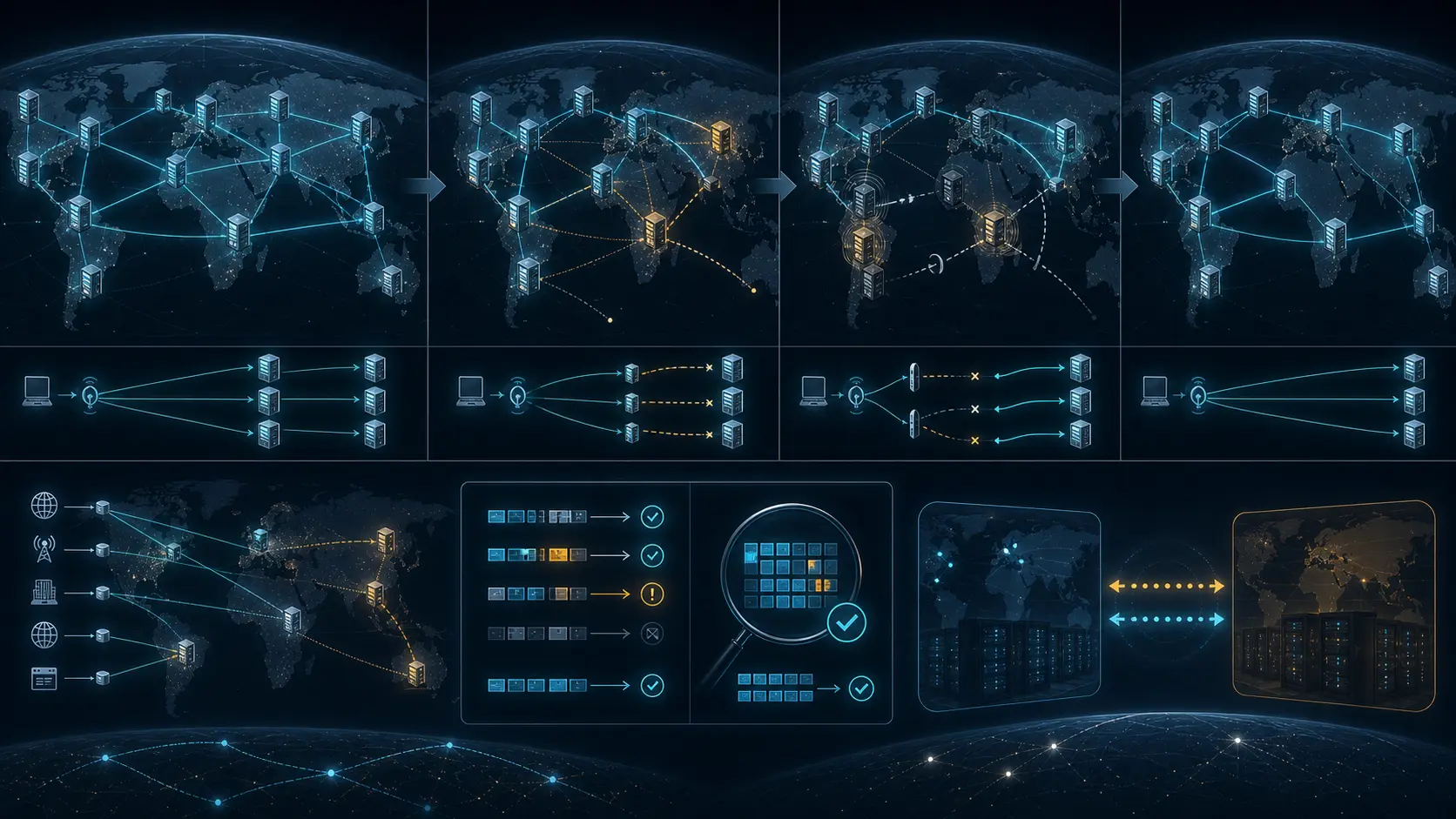
The F-Root outage that showed why redundancy is not the same as readiness
A January 2020 DNS incident exposed a narrow but consequential weakness in distributed infrastructure: many nodes can exist, yet recovery can still depend on whether separate organisations can detect a semantic fault, agree on its cause and exercise emergency routing authority…
Member Unlock
Restricted Profile Intelligence
Login is required to unlock full profile briefings and deep-dive sections.
Strategic Circle Briefing
Join to unlock strategic briefings after signing in.
Join Strategic CircleLeadership Alliance Briefing
For qualified IP-asset owners and management; sign in to unlock alliance briefings.
Join Leadership AllianceSession Map
Active Dossiers
AFRINIC Saga
Multi-year governance and legal crisis with implications for RIR accountability worldwide.
Open AFRINIC Saga