
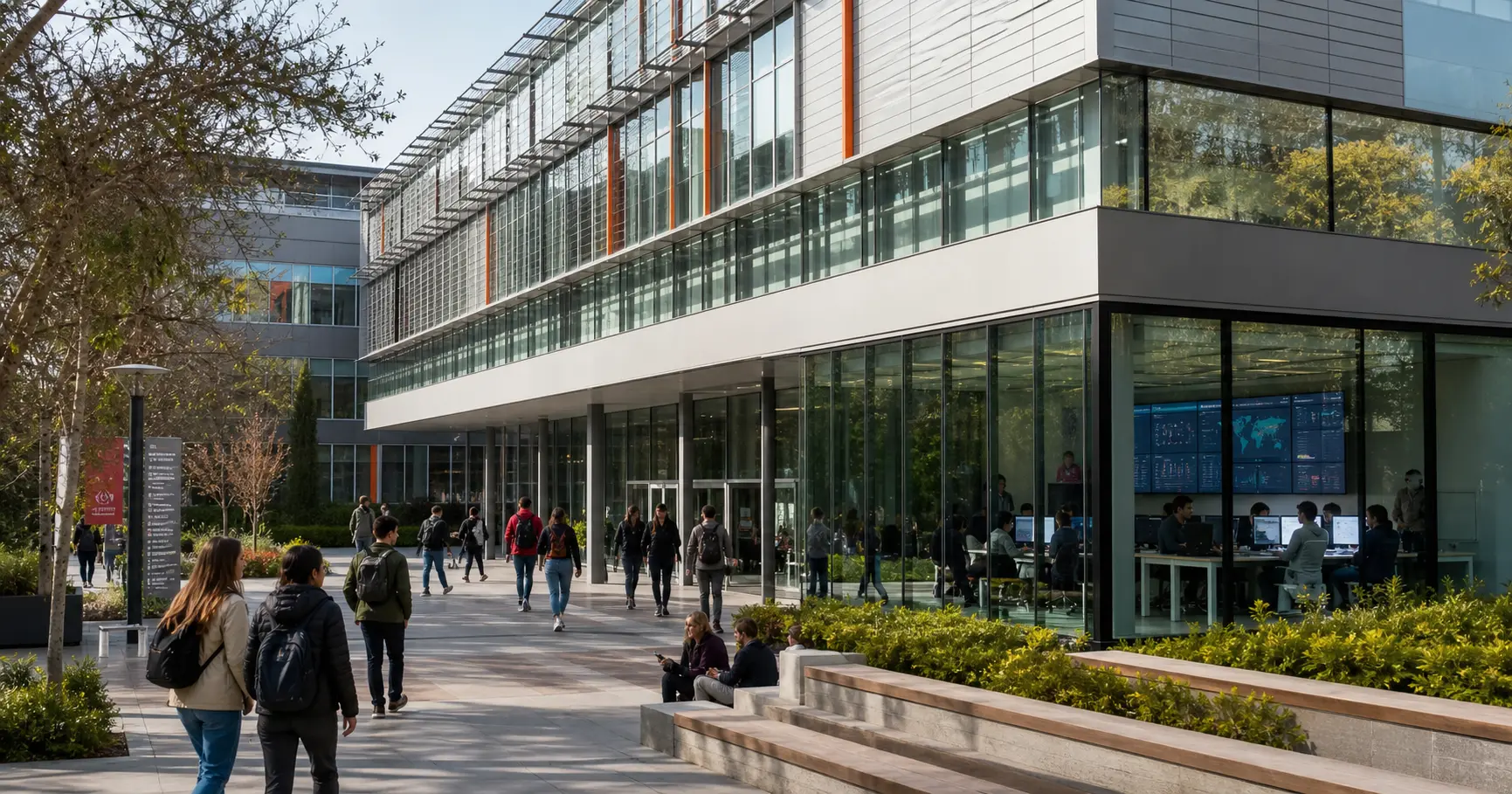
Istanbul Bilgi University, founded in 1996 in Istanbul, is a foundation university with over 20,000 students and 150 programs. Its educational continuity was disrupted in May 2026 when a presidential decree revoked its license, only to be reversed days later following YÖK intervention. The institution relies entirely on state authorization and a central SIS for all academic operations. Network monitoring is limited to the inactive AS212058 marker. Evidence boundaries include missing direct government gazette pages and unclear legal-control chain among the foundation, Can Holding, and trustees. Watchpoints center on new regulatory decisions, SIS availability, AS212058 changes, and emergence of named authorities.
BILGI
Istanbul Bilgi University (BILGI), established in 1996 as Turkey's fourth private foundation university, serves over 20,000 students across three Istanbul campuses. Its educational continuity depends on state authorization and a central student information system (SIS). In May 2026, a government license revocation and swift reversal underscored the university's vulnerability to regulatory shifts, making its legal and digital operational surfaces a live watchpoint for students, families, and international partners.
Why It Matters
A license revocation or prolonged SIS outage would immediately halt academic and administrative operations, delay graduations, strand international exchange students, and trigger financial and legal claims from students and partners. The May 2026 crisis, though reversed within days, highlights the speed and breadth of potential disruption when an institution's legal basis and digital backbone are both subject to state action.
What Public Sources Show
Istanbul Bilgi University, founded in 1996 as Turkey’s fourth private foundation university, serves more than 20,000 students across three Istanbul campuses. In May 2026, the institution was thrown into turmoil when the government abruptly revoked its operating license, only to reverse the decision days later. The episode exposed a fundamental dependency: the university’s existence hinges on state permission, while its daily operations run through a central Student Information System.
BILGI offers over 150 undergraduate, graduate, and associate degree programs and maintains exchange partnerships with more than 250 institutions in 40 countries. Its campus at santralistanbul, a converted power plant on the Golden Horn, symbolizes its blend of education and culture. With 1,100 academic and administrative personnel, the university is a significant employer and educational hub in Istanbul.
The license crisis began on 21 May 2026 when President Erdoğan signed a decree closing the university after its founding foundation was placed under trusteeship. Within four days, following a submission by the Higher Education Council (YÖK), a new presidential decision revoked the earlier decree and reinstated the license. The university announced that education would continue without interruption and that spring final exams would proceed as scheduled.
BILGI’s Student Information System (SIS) is the mandatory platform for course enrollment, grading, transcripts, attendance, and tuition payments. A disruption to SIS—whether from a license suspension, a cyber incident, or an administrative order—would immediately freeze the academic lives of tens of thousands of students and stall administrative workflows. The university’s information security policy signals awareness of these risks but does not guarantee operational resilience.
The university holds the autonomous system number AS212058, although it currently advertises no IPv4 or IPv6 prefixes globally. This registry marker provides a narrow technical observation point. If BILGI were to activate network resources or expand its internet presence, changes in routing would be an early signal of operational shifts or infrastructure investment.
The full legal-control chain among the Bilgi Education and Culture Foundation, Can Holding, and the state-appointed board of trustees remains opaque. No publicly available documents describe the technical dependencies between the university’s SIS, campus networks, and external hosting. Future changes to the license, the registry marker, or the SIS service provider could materially alter the university’s risk profile and should be monitored.
Operating Surface
Istanbul Bilgi University is a Turkish foundation higher education institution that delivers more than 150 undergraduate, graduate, and associate degree programs. Its operating surface includes regulated degree delivery, SIS-dependent student administration, tuition payment workflows, an information security management system, and the AS212058 registry marker, which provides a narrow network monitoring signal.
BILGI matters because an abrupt license withdrawal, as seen in May 2026, can freeze course registration, exams, grading, transcripts, and tuition payments for over 20,000 students and 1,000 staff. The episode demonstrates how state permission and the SIS form a concentrated control surface where a single administrative decision can disrupt an entire educational community. The AS212058 marker offers a technical signal of the university's current network status.
Watchpoints
BILGI's May 2026 crisis demonstrates how a foundation university's survival can be weaponized through its license-linked governance. The speed of the reversal, driven by YÖK's submission, suggests that education continuity is a state priority, but the underlying ownership struggle (foundation trusteeship, Can Holding) remains unresolved. Infrastructure monitoring is secondary to political-legal watching.
The most consequential watchpoint is any new Presidential or YÖK decision affecting BILGI's license, published in the Resmi Gazete. Secondary, but actionable, are changes to the SIS provider or technology stack, which could indicate a shift in administrative control. AS212058 activation would signal a deliberate network expansion worth investigating.
The exact Resmi Gazete texts for decisions 11384 and 11387 are missing; obtaining them would confirm the legal basis. The current financial and ownership structure, including any TMSF role, remains unsourced. Technical documentation on SIS architecture, hosting, and disaster recovery is absent, preventing a full digital risk assessment.
Sources
- Registry RDAP / WHOIS record - public-source identity and registry context for BILGI.
- ipinfo.io - IPinfo identifies AS212058 as Istanbul Bilgi University in Türkiye, associates it with bilgi.edu.tr, lists RIPE as the registry, and currently shows no prefixes, peers, upstreams or downstreams in its dataset.
- bilgi.edu.tr - BİLGİ's official about page says the university entered Turkey's higher education system after the BİLGİ Education and Culture Foundation application on 7 June 1996 and approval under Law 4142.
- bilgi.edu.tr - BİLGİ's official academic page describes more than 150 undergraduate, graduate and associate degree programs, exchange and partnership programs at more than 250 institutions in 40 countries, and more than 1,000 scientific and cultural activities each year.
- bilgi.edu.tr - BİLGİ's official campus page lists three Istanbul campuses, including santralistanbul, Dolapdere and Kuştepe, and describes santralistanbul as a 118 decare site on the Haliç that includes the former power plant now used as the Energy Museum.
- it.bilgi.edu.tr - BİLGİ's IT page states that SIS is used for student course enrollment, grading, transcripts, exam results, schedules, attendance and other student data needs, and also supports academic staff information workflows.
- bilgi.edu.tr - BİLGİ's information security policy states that the university aims to secure information used in all university activities using confidentiality, integrity and availability principles and an ISMS aligned with TS/ISO 27001:2013.
- aa.com.tr - Anadolu Ajansı reported on 25 May 2026 that the decision revoking İstanbul Bilgi University's operating license was revoked, that the decision followed a YÖK submission under Higher Education Law article context, and that education would continue.
- tr.euronews.com - Euronews reported that the university's operating license was first revoked after its founding foundation was placed under trusteeship, and later reported that the university was allowed to reopen after the Official Gazette decision.
- euronews.com - Euronews reported that BİLGİ was founded on 7 June 1996 as Turkey's fourth private foundation university, became part of Laureate International Universities in 2006, was acquired by Can Holding in 2019, and has more than 20,000 students.
- bilgi.edu.tr - Shows that BİLGİ publishes tuition-fee information and online payment links for current undergraduate and associate-degree students through SIS.
- bilgi.edu.tr - Describes 2026-2027 graduate tuition-fee links, program fee coverage periods, scholarships and discounts, including alumni, corporate, public or municipal, startup, bar association and staff discounts.
Signal Brief
- Signal: BILGI
- Region:
- Market Class: Global Institutional Trends
Operating Footprint
- public operating records
- official service pages
- documented relationships updates
Market Context
- A license revocation or prolonged SIS outage would immediately halt academic and administrative operations, delay graduations, strand international exchange students, and trigger financial and legal claims from students and partners. The May 2026 crisis, though reversed within days, highlights the speed and breadth of potential disruption when an institution's legal basis and digital backbone are both subject to state action.
- Operational relevance: Medium
- Time Horizon: Next quarter
What To Watch
- official company sources
- public registries
- operator-published records
Member Briefing
Deeper Trend Context
Sign in with the right membership level to unlock the full briefing and source notes.
Only for Strategic Circle
Strategic Circle
Open to all readers. Unlock trend briefings after joining and signing in.
Join Strategic CircleOnly for Leadership Alliance
Leadership Alliance
For operators, investors, and policy teams that need relationship evidence, failure paths, and source notes. Sign in to unlock.
Join Leadership AllianceSnapshot
Category
Global Institutional TrendsIstanbul Bilgi University is a Turkish foundation higher education institution that delivers more than 150 undergraduate, graduate, and associate degree programs. Its operating surface includes regulated degree delivery, SIS-dependent student administration, tuition payment workflows, an information security management system, and the AS212058 registry marker, which provides a narrow network monitoring signal.
Content Type
EventPrimary Domain
MarketImpact
MediumA license revocation or prolonged SIS outage would immediately halt academic and administrative operations, delay graduations, strand international exchange students, and trigger financial and legal claims from students and partners. The May 2026 crisis, though reversed within days, highlights the speed and breadth of potential disruption when an institution's legal basis and digital backbone are both subject to state action.
Confidence
High confidence (95%)Confidence score guide
Several public sources