
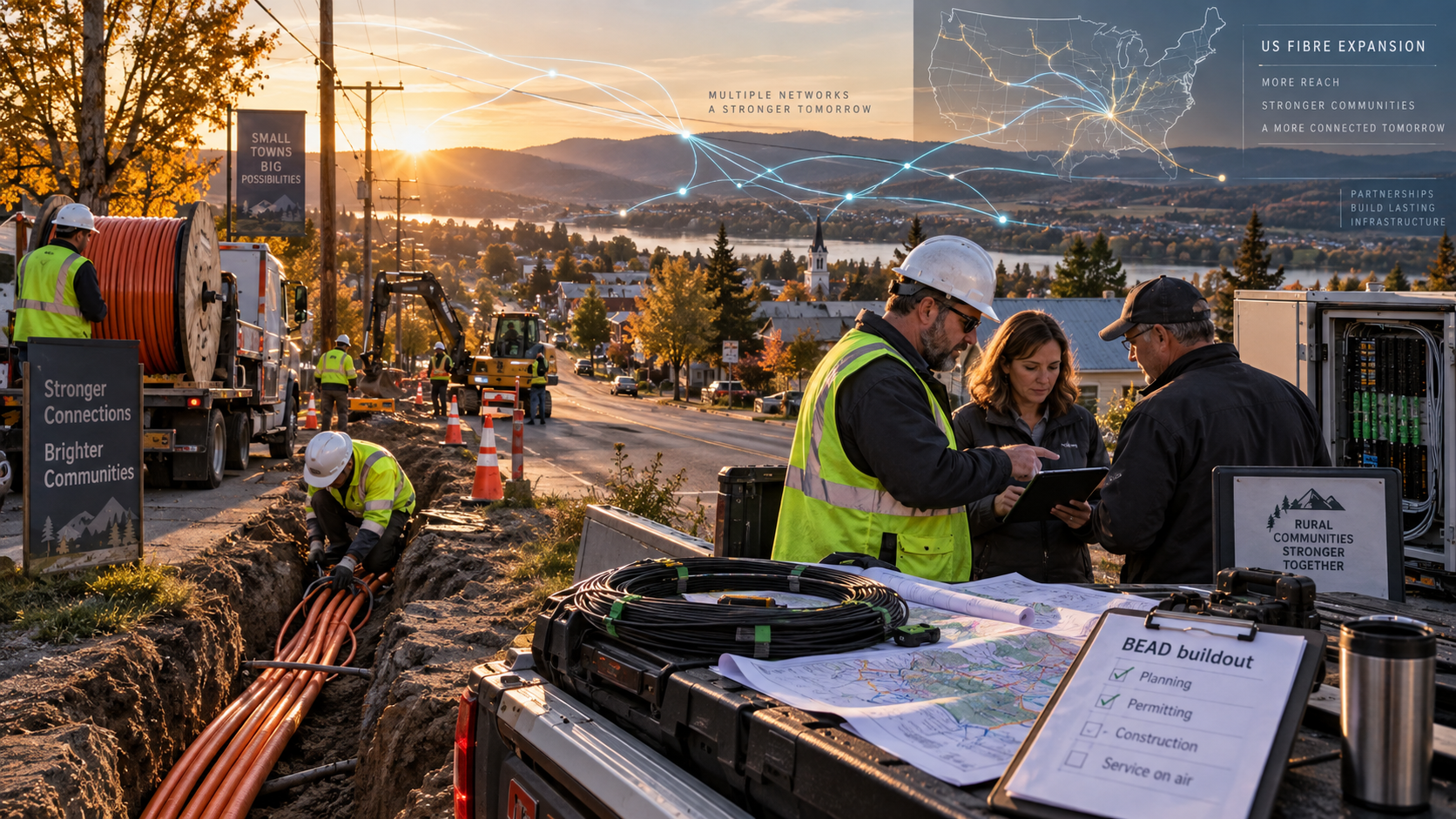
- Andrew Lipman expects BEAD construction and compliance demands to add to consolidation pressure on smaller US fibre operators
- AlixPartners says 95% of surveyed industry participants expect most fibre M&A to focus on operators with fewer than 500,000 passings
The fact
Morgan Lewis partner Andrew Lipman used Metro Connect Fall in Austin to highlight the pressure building around US fibre deployment as AI demand, continued FTTH construction and BEAD-funded projects increase the amount of network work moving into the field.
The event's mass-fibre deployment session focused on the problems operators and contractors face once projects move into construction, including labour shortages, permitting, supply-chain constraints, tariffs, inflation and Buy America requirements. Lipman chaired the discussion alongside executives from Dycom, Vantage Point Solutions, Alabama Power, BAAC and Remnant Fiber, Render Networks and Amdocs.
Separate research from AlixPartners shows why those delivery pressures matter financially. Its 2026 U.S. Fiber Consolidation Sentiment Index found that 82% of operators, 81% of investors and 75% of lenders expect consolidation to increase. Ninety-five per cent of respondents expect most deal activity to involve companies with fewer than 500,000 fibre passings, with half expecting the strongest activity below 100,000 passings.
The report also found that 44% of operators with less than $100 million in revenue were missing their take-rate targets, compared with 9% of larger peers. Two-thirds of operators said they had slowed or stopped new-market builds, while 91% said liquidity pressure would accelerate dealmaking.
The assessment
Winning BEAD money does not remove the hard part of building a fibre network. An operator still has to find crews, buy equipment, secure permits, complete construction and connect customers on the timetable attached to the project.
That can be particularly difficult for a smaller provider whose footprint grows quickly after an award. The network becomes larger, but so do the working-capital needs and the amount of construction and operating work the company has to manage. AlixPartners says BEAD winners that cannot support that growth may look for a partner rather than try to deliver everything alone.
For BTW readers, some of the next US fibre deals may come from operators trying to keep funded builds on track rather than simply choosing a good time to sell. The clearest sign will be whether smaller BEAD winners can meet construction and customer targets without needing new capital or a larger partner.
What to watch
Watch for acquisitions, joint ventures and refinancing involving smaller operators with BEAD awards. Construction delays, missed take-rate targets and new capital needs would add pressure, while operators meeting build and activation milestones on their own would show that smaller providers can absorb the expansion.
Member Briefing
Deeper Profile Context
Sign in with the right membership level to unlock the full briefing and source notes.
Only for Strategic Circle
Strategic Circle
Open to all readers. Unlock profile briefings after joining and signing in.
Join Strategic CircleOnly for Leadership Alliance
Leadership Alliance
For qualified IP-asset owners and management; sign in to unlock alliance briefings.
Join Leadership Alliance