
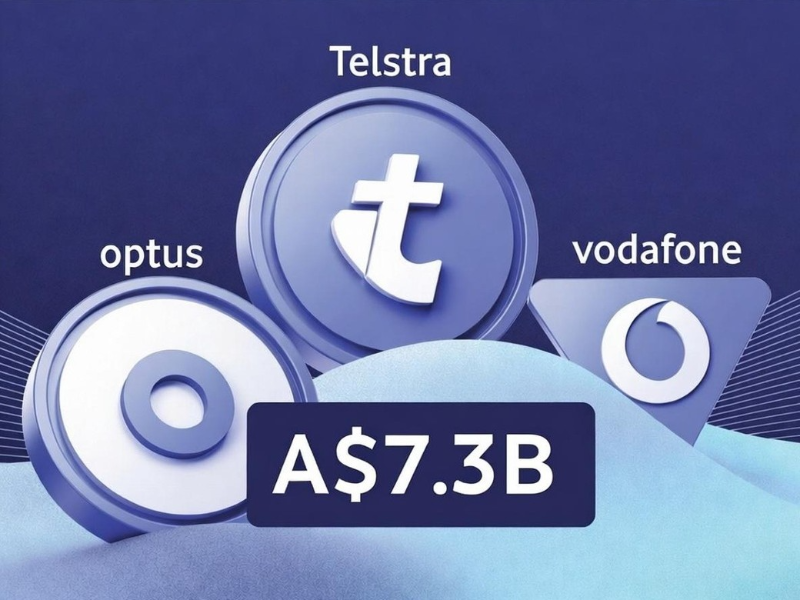
Australian operators face A$7.
- Australian mobile carriers must pay A$7.3 billion for new 5G and 3.6 GHz spectrum licences awarded in recent auctions.
- The high cost may influence pricing, investment strategies and network deployment timing across the country’s telecom sector.
What happened: Telcos confront hefty spectrum fees in Australia
Australia’s major mobile operators are set to shoulder a collective A$7.3 billion bill for licences to use newly auctioned spectrum, as the nation’s telecommunications regulator finalises payment schedules following recent 5G and mid-band frequency auctions. The spectrum is crucial for expanding next-generation 5G networks and improving capacity and coverage in both urban and regional areas.
Operators including Telstra, Optus and TPG Telecom secured significant portions of the available spectrum in the 3.6 GHz band and other key frequency ranges. These holdings are designed to support high-speed 5G services and enterprise connectivity solutions, which increasingly demand greater capacity and lower latency.
However, the combined cost of licences has drawn attention across the industry due to its scale. For smaller players, in particular, the financial outlay could affect their ability to sustain competitive network upgrades. Larger carriers, while better positioned financially, also face strategic decisions about how quickly and widely to deploy their spectrum holdings to justify the investment.
Industry stakeholders note that spectrum costs have been rising globally as demand for bandwidth intensifies, with mid-band frequencies considered among the most valuable for 5G performance. In Australia’s case, the auction process and reserve pricing set by the regulator have contributed to the high final price tag.
Also Read: Simba Telecom: Singapore’s rising telco challenger
Also Read: UK telcos face government pressure over mid-contract price rises
Why it’s important
Spectrum underpins mobile connectivity, and the financial terms on which licences are sold influence how operators plan network roll-outs and long-term investment. The A$7.3 billion cost will now enter carrier balance sheets as a significant capital commitment.
For consumers, the impact may show up indirectly through pricing, as operators seek to recoup costs while also funding infrastructure build-outs such as 5G standalone networks and network densification. Pricing pressure could be particularly acute in segments where competition is intense.
From a policy perspective, the situation highlights the ongoing challenge regulators face in balancing fair market competition with the need to generate public revenue through spectrum sales. If auction costs are too high, there is a risk that network expansion will slow or smaller players will be squeezed out, potentially leading to less competitive outcomes.
Finally, the timing coincides with a global push toward private 5G networks and enterprise use cases, areas that rely heavily on mid-band spectrum. How Australian operators leverage their holdings could influence digital transformation across sectors such as manufacturing, logistics and healthcare.
Member Briefing
Deeper Trend Context
Sign in with the right membership level to unlock the full briefing and source notes.
Only for Strategic Circle
Strategic Circle
Open to all readers. Unlock trend briefings after joining and signing in.
Join Strategic CircleOnly for Leadership Alliance
Leadership Alliance
For operators, investors, and policy teams that need relationship evidence, failure paths, and source notes. Sign in to unlock.
Join Leadership AllianceSnapshot
Category
Global National Telecom TrendsRegion
ASIA PacificSignal Focus
GovernanceContent Type
EventPrimary Domain
MarketTopic
GovernanceImpact
MediumConfidence
Limited confidence (80%)Confidence score guide
Several public sources