
- The levy equals 2% of licensed communications companies’ annual gross revenue
- Half of the payment supports the Consolidated Fund, while the remainder funds regulation and universal-access programmes
The fact
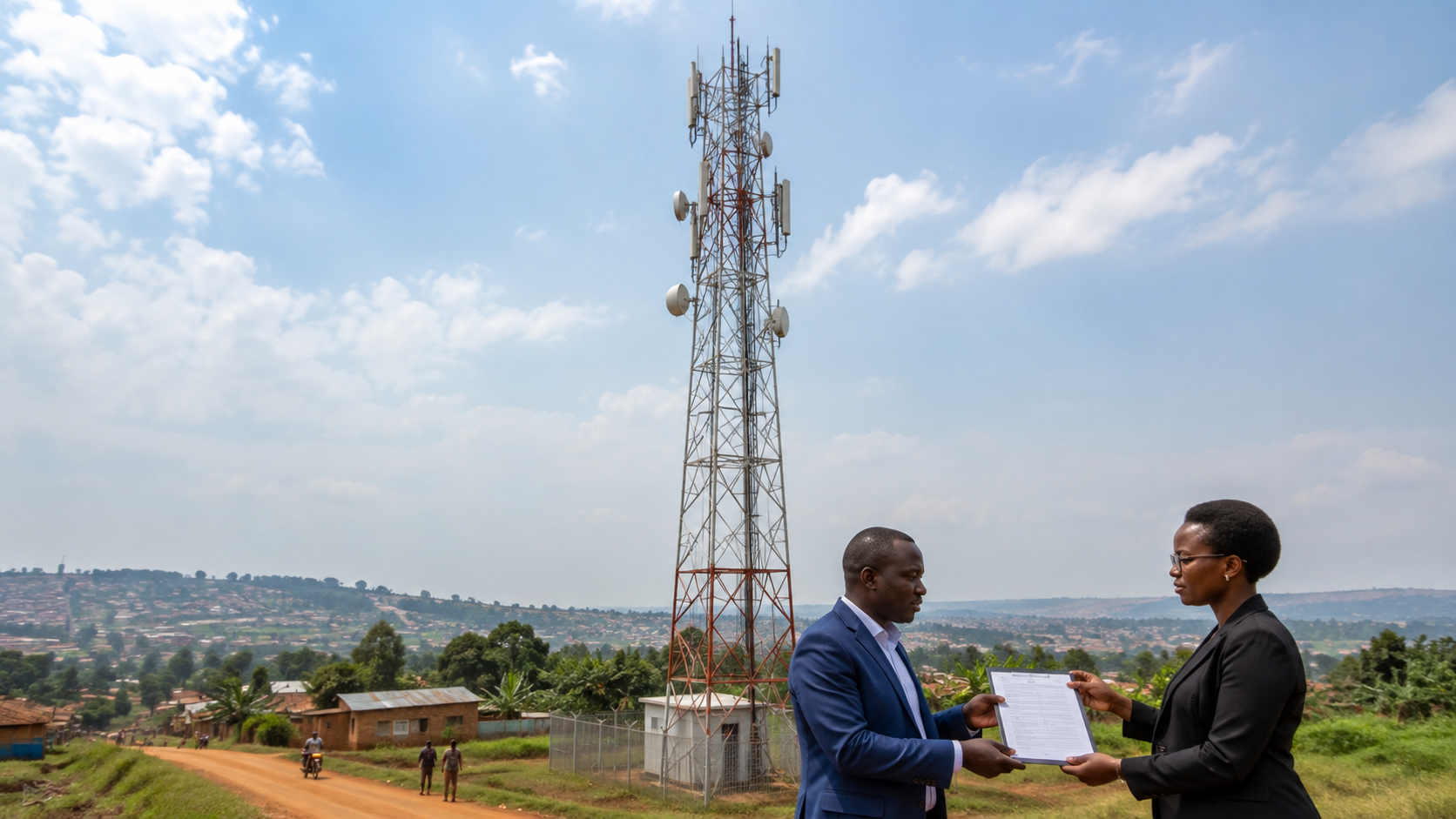
ATC Uganda has paid UGX20.9 billion to the Uganda Communications Commission under Uganda’s statutory levy on licensed communications companies. The handover took place on 30 July. The levy is set at 2% of annual gross revenue. The commission said half of the proceeds goes to the Consolidated Fund. The other half supports the regulator and the Uganda Communications Universal Service and Access Fund, which finances connectivity programmes. ATC Uganda, part of American Tower, operates passive infrastructure shared by mobile-network operators.
The payment fulfils an existing legal obligation; it is not a voluntary donation or a newly announced tower rollout.
The assessment
ATC Uganda’s payment enters a public funding process rather than financing a specific tower project. Once the levy is collected, the Uganda Communications Commission and other government bodies decide which programmes receive the money and how those projects are procured and delivered.
Because the levy is charged on gross revenue, companies pay it before profit is taken into account. Operators and tower companies therefore have to include it in their annual cost planning, whether or not the market performs strongly. The practical benefit depends on how quickly the fund converts receipts into working infrastructure in underserved areas. For BTW readers, the UGX20.9 billion payment is evidence of money collected, not connectivity delivered. The useful measure will be the number of funded projects completed, the areas reached and the services that become available.
What to watch
The commission should disclose how much of the levy is allocated, contracted and spent, along with project locations and completion dates. Coverage and service data would show whether funded infrastructure is operating. For ATC Uganda, future disclosures may indicate whether universal-access projects use existing shared towers or require additional sites.