
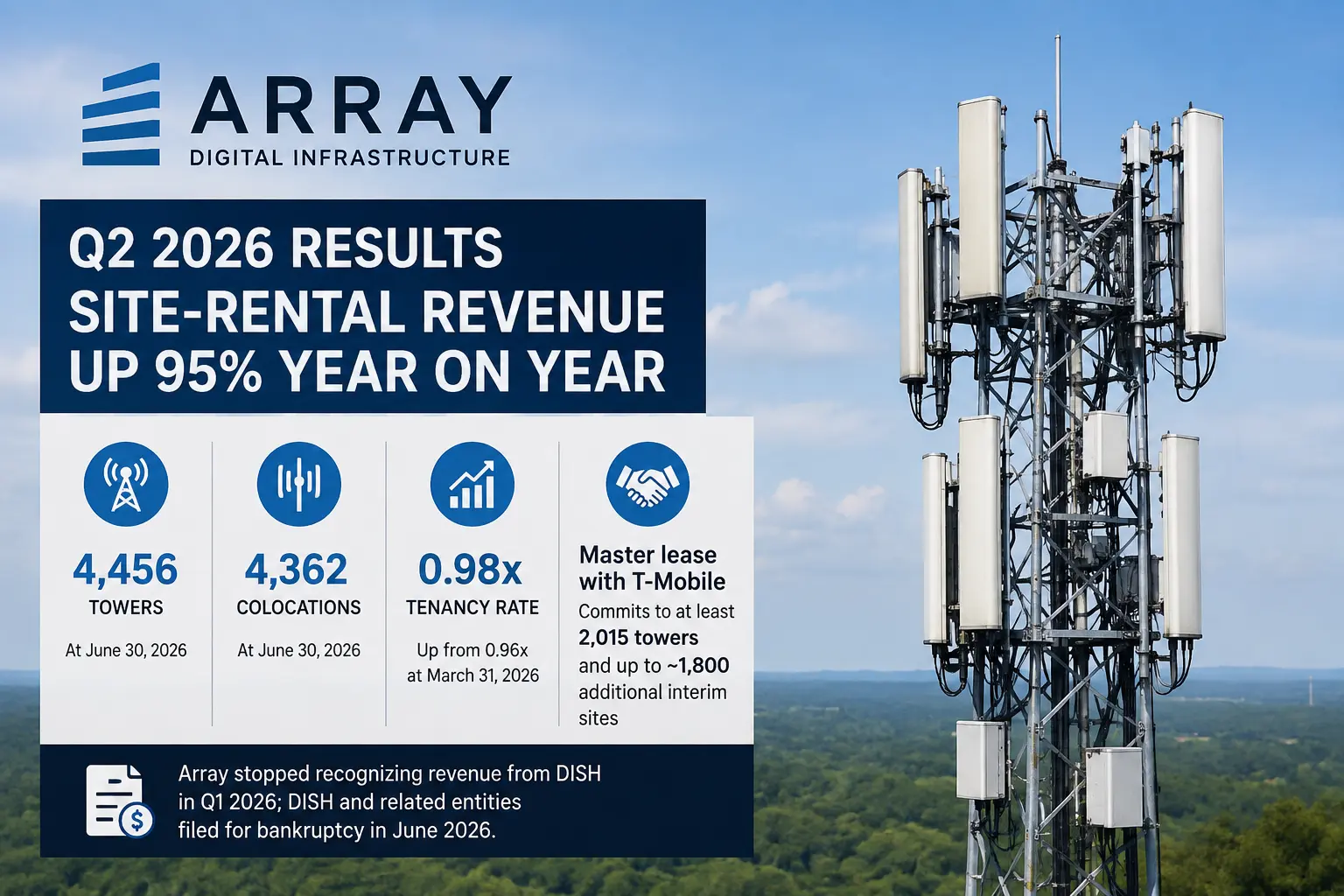
- Array ended June with 4,456 towers and 4,362 colocations, while its tenancy rate edged up to 0.98 from 0.96
- T-Mobile committed to lease at least 2,015 additional towers but can cancel around 1,800 interim-site leases individually
The fact
Array Digital Infrastructure said site-rental revenue almost doubled to US$53.2 million in the second quarter, while total operating revenue rose to US$54.1 million from US$28.5 million a year earlier. The company, formed from UScellular's former tower business after its wireless operations were sold to T-Mobile, said much of the increase came from a new T-Mobile lease that took effect in August 2025. T-Mobile committed to use at least 2,015 additional Array towers and can temporarily lease space on around 1,800 more.
Array owned 4,456 towers at the end of June, with 4,362 customer colocations across the portfolio. Its tenancy rate edged up to 0.98 from 0.96 at the end of March, excluding the temporary T-Mobile sites and DISH Wireless. Array stopped recognising revenue from DISH earlier this year because collection had become uncertain, and DISH-related companies filed for bankruptcy in June.
The assessment
The 95% rise mainly reflects a larger contracted revenue base after the T-Mobile lease, rather than a comparable increase in the use of Array's towers. Array's operating model is to add tenants and equipment to sites it already owns, so the next task is at the leasing stage: secure more permanent colocations and amendments beyond the business already committed by T-Mobile.
That matters because part of the T-Mobile portfolio is temporary and can be cancelled site by site, while Array is not currently recognising DISH revenue. If those leases fall away, the company will need new permanent leasing to replace the lost rent. The second-quarter figures do not yet show how quickly that replacement can happen.
For BTW readers, tenancy growth after the temporary T-Mobile sites roll off will be the clearest measure of the tower business. It would show whether Array is adding lasting use of its existing sites beyond the contract-driven increase created by the UScellular transaction.
What to watch
Watch whether Array continues to add colocations and amendments as T-Mobile removes interim leases. Tenancy growth after those sites roll off would show whether permanent leasing is replacing temporary revenue. DISH’s bankruptcy proceedings will also clarify whether Array can recognise rental income from those leases again.
