

- RIR’s leadership roles appear to be more diverse than in the past decade.
- If you want to get better security, you need a diversified team, in order to have really good in any type of network, strong security.

Anita Nikolich from ARIN, the Advisory Council, in an exclusive interview with BTW- Having good, strong security in any type of network requires a diverse team.
Anita says that because she works in cyber security, she pays more attention to security and privacy. But in terms of diversity, getting more women into the cyber security workforce, it’s a concerted effort across regions. She believes that if you want to get better security, you need a diverse team to have really good, strong security in any type of network.
Watch the full interview in the video above.
if you’re trying to get better security, you need a diverse team to have really good robust security in any type of network.
Anita Nikolich
Also read: How important is cybersecurity nowadays |Interview with Mohamed Abdelmagid
Interview with Anita Nikolich, ARIN
What do you get out of a RIPE event like this?What do you hear for?
Anita Nikolich: So this is my first RIPE meeting. I’ve always wanted to come to one. And what I like about the RIPE meetings is there the agendas are much more robust than the ARIN meetings. It’s kind of a combination of different types of people, different types of panels. What I’m trying to get out of it is both to learn, to bring back to my organization and also to work with people in different RIRs.
Have you heard anything that makes you think positively about what the RIRs are doing or anything that they could be doing more?
Nikolich: The RIRs seem to have, in their leadership roles, there is more diversity than there’s been in the past decade. Increasingly, leadership roles, working group chairs, people on panels increasingly I see more diversity. People don’t necessarily talk about it, but you can see reflected in kind of the entities in the panels and who’s presenting.
Do you know what’s happening to help on that front of their specific programs or agendas that are taking place or is it just kind of a natural thing that’s going on?
Nikolich: In my own RIR, again, on the air and advisory council, it is a concerted effort to include, to have more diversity, to encourage more diverse participation. And I believe it’s the same and in RIPE to get to new people encouraging to participate being able to participate virtually, helps quite a bit on case you have issues physically coming to meetings. But I sense that there is as much of a poll in the right region as is an errand.
One particular highlight so far of the days, the speeches or the people you’ve met or anything?
Nikolich: The energy of the working groups and participation and people, there’s just a lot of energy and people want to participate. And I love to see people come up to the mic, especially women who don’t traditionally come to these events. Just a lot of energy in the whole event.
Is there one single issue that you were working on now or you could see that you would like the RIRs to be able to solve?
Nikolich: Well, definitely the RIRS are very different. But I think the one issue it, because of my background is security is just more attention to both security and privacy. But in terms of diversity, getting more women into the cyber security workforce, that’s been a concerted effort, in different regions. And I think if you’re trying to get better security, you need a diverse team to have really good robust security in any type of network.
About ARIN
ARIN is a nonprofit, member-based organization that administers IP addresses & ASNs in support of the operation and growth of the Internet.
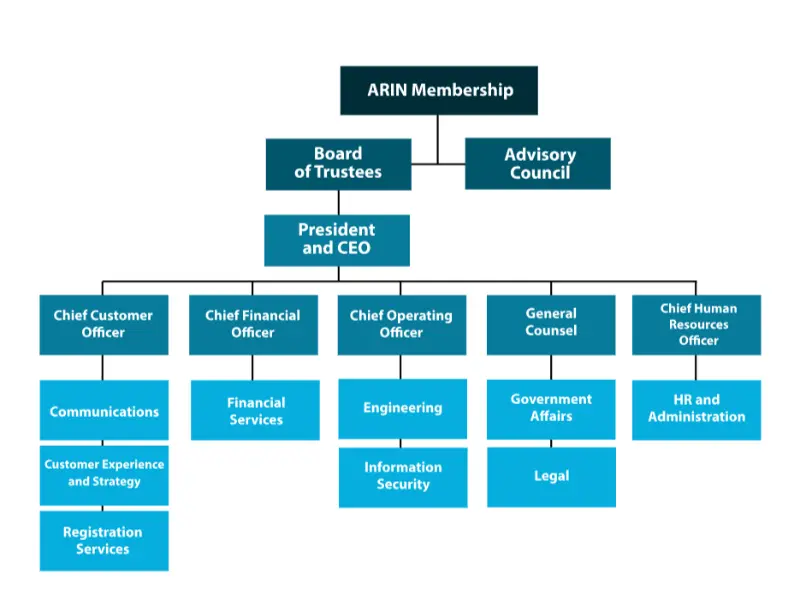
Established in December 1997 as a Regional Internet Registry, the American Registry for Internet Numbers (ARIN) is responsible for the management and distribution of Internet number resources such as Internet Protocol (IP) addresses and Autonomous System Numbers (ASNs). ARIN manages these resources within its service region, which is comprised of Canada, the United States, and many Caribbean and North Atlantic islands.
ARIN supports the operation of the Internet through the management of Internet number resources throughout its service region; coordinates the development of policies by the community for the management of Internet Protocol number resources; and advances the Internet through informational outreach. ARIN will continue to utilize an open, transparent multi-stakeholder process for registry policy development.
ARIN Bylaws – Article II, Section 2
Key Services Provided by ARIN include Registration Services, Technical Services, Organization Services.