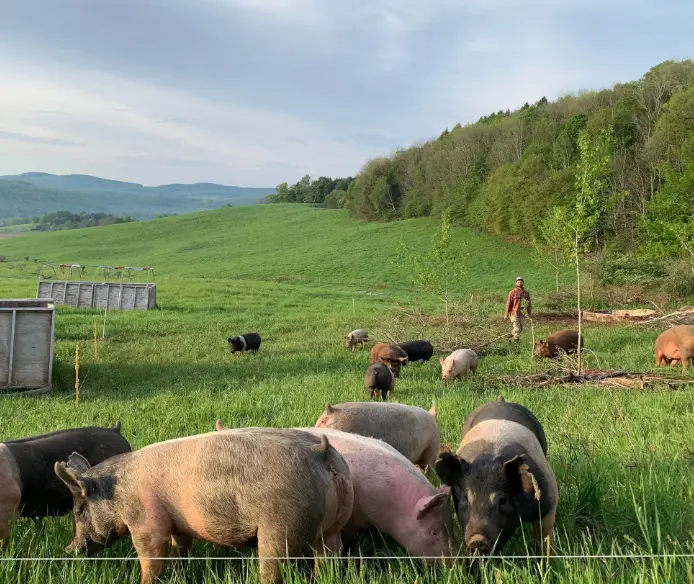
- A team of European scientists has developed a new artificial intelligence (AI) algorithm capable of interpreting pigs’ grunts and snorts, aiming to improve the welfare of farm animals.
- Scientists hope that once this algorithm is fully developed, it will not only help farmers but also label farms, thereby helping consumers make more informed choices.
What happened
A group of European scientists has created a new AI algorithm that can understand pigs’ grunts and snorts. The algorithm can alert farmers to the negative emotions of pigs, thereby improving their welfare. Scientists analyzed thousands of pig sounds recorded in different contexts, such as during play, isolation, and food competition. The study found that pigs’ grunts, oinks, and squeals can reveal their emotional states, whether positive or negative.
Elodie Mandl-Bruver, a behavioral biologist at the University of Copenhagen and co-leader of the study, said many farmers understand pigs’ welfare by watching their behavior. However, current tools mostly focus on measuring the pigs’ physical condition. She emphasized, “Animal emotions are at the core of their welfare, but we don’t measure much of that on farms.”
Moreover, the algorithm can recognize short grunts that usually show positive emotions. It can also tell when grunts are longer, which often means the pigs are uncomfortable. It can also recognize high-pitched squeals, which usually mean the pigs are stressed. Scientists used these findings to create this AI algorithm to help process and automatically classify large amounts of sound data. Research shows that pigs raised on outdoor, free-range, or organic farms make fewer stress calls. This is because they can move around freely and dig in the soil, unlike pigs in traditional farming conditions.
Also read: MANUTECH Season 2 boosts digital knowledge in agriculture
Also read: ICTforAg 2024 showcases digital innovations for boosting Philippine agriculture
Why it is important
This research on an artificial intelligence algorithm that decodes pig vocalizations allows farmers to respond more promptly to the pigs’ needs by identifying their emotional states. This, in turn, improves their living environment and welfare, which is of great significance for enhancing the overall quality of life for the animals. Understanding pig emotions can help farmers manage their herds more effectively, such as by improving the rearing environment to reduce stress and disease in pigs, thereby increasing production efficiency and economic benefits.
However, consumers are increasingly concerned about the ethics and sustainability of food sources. By labeling farms, consumers can learn about the welfare conditions of the animals. This helps build consumer trust in the brand and products. Applying artificial intelligence technology to agriculture, particularly in the field of animal welfare. It demonstrates the broad application potential of AI technology, which may inspire the development and application of more innovative technologies.