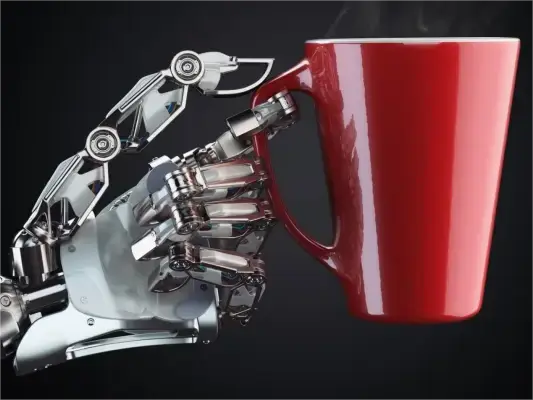
- AI and machine learning are getting involved in every aspect of coffee farming, including soil analysis, growth status detection, disease prevention and optimal watering recommendations, improving the efficiency and the whole supply chain.
- Coffee practitioners are also using AI for creative marketing to optimise the consumer experience such as AI-generated coffee daily, and the application in coffee flavour generation and evaluation highlights the strong learning ability of AI.
- Coffee lovers fear a future of apathy, with machines replacing the warmth and personal service of human baristas and the popularisation of automation and AI in the coffee industry also seems to worsen a digital divide worldwide.
Artificial Intelligence (AI) has revolutionised many aspects of our daily lives, from the way we interact with technology to the way certain tasks are performed in various sectors. The coffee industry is no exception, with major implications for the production, consumption and overall coffee experience. In this article, you may learn just how much AI is involved in the cup of coffee you’re holding.
Assess and predict: Optimising cultivation and supply chain
AI plus agriculture is not a new thing, which not only conforms to the trend of modern technology development but also greatly improves planting efficiency and economic benefits. For example, Root AI picking robots can operate in highly chaotic and complex growing environments to detect in real-time whether the planted fruits and vegetables are ripe and ready for picking.
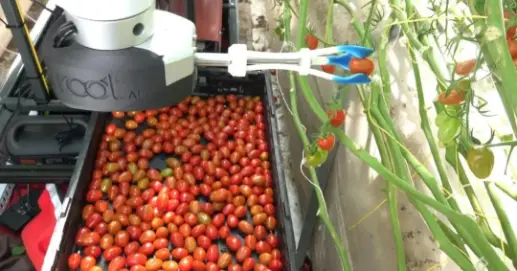
Coffee farming is also facing changes, as AI technology empowers farmers with advanced soil analysis capabilities, enabling precise assessments of nutrient levels and moisture content to achieve optimal crop health.
Deep learning techniques such as convolutional neural network (CNN) are used to segment and recognise the pre-processed images of coffee plantations captured by Equipment such as drones, satellites or ground cameras. By training the model to learn the shape, texture and other features of the coffee tree, the automatic recognition and segmentation of the coffee tree are realised.
Then, the AI algorithm will extract and analyse these characteristics to determine whether the growth of the coffee tree is good, and the growers can make management measures such as fertilisation, irrigation, and pruning more scientifically. Predictive models are also being created to help predict which plants are likely to die from disease, and can also provide planting advice, such as spacing out plants at the highest risk of disease to prevent the spread of disease when it occurs.
With machine learning algorithms, companies also can more effectively predict and manage coffee demand, allowing for more efficient ordering and production adjustments. AI can also be used to monitor and track coffee quality at all stages of the supply chain, from production to final delivery. By analysing data and detecting patterns, it is possible to identify potential quality issues and take timely corrective actions.
Also read: How are robots used in the food industry?
Personalise: AI assists coffee marketing experience
“Terracotta Warriors drinking coffee on the beach, which is impossible to do in reality, but AI can.”
Jin Yongjie, owner of Daily Coffee
The digital power of AI in traditional agriculture has boosted the industry’s efficiency, but coffee practitioners are also using AI for creative marketing to optimise the consumer experience as coffee beans are shipped from farms around the world for sale.
Jin Yongjie, an entrepreneur from Guangdong Province in China, has launched an AI-powered Coffee Daily campaign. His coffee shop offers an interesting daily coffee paper generated by Midjourney, a well-known AI that can generate images from text, as a highlight to promote customers. He showed an AI-produced daily newspaper of Chinese ancient Terracotta warriors drinking coffee by the sea, and the whole process from creative idea to AI generation to physical newspaper took less than three minutes.

Last year, Preface Coffee & Wine launched Hong Kong’s first ChatGPT-generated coffee and a generative AI exhibition at its flagship store in Causeway Bay. When ordering, customers can select a few keywords and ChatGPT generates a creative story. The barista will recommend an exclusive speciality coffee based on this story, while the AI will generate an exclusive style image and project it to the installation in the store in real-time, forming a ChatGPT art jointly created by Hong Kong citizens.
On the other side of the world, there are also many machine cafes and AI baristas at work, with robots acting as both makers and waiters, demonstrating their ability to efficiently prepare orders. Botbar Coffee is the first cafe in New York City to start using robotic baristas, with the launch in Brooklyn of ADAM, a prototype barista robot with speed and accuracy that can produce up to fifty espressos in an hour, redefining the coffee service experience. Artly Coffee has twenty-five robots in twelve locations, so customers can not only enjoy the novelty of hand-preparing their coffee with robots but also get a product with flavour and consistent quality.
Creativity: AI intervenes in coffee flavour
“Using models like ChatGPT and Copilot, AI is tasked with making coffee blends that best suit the taste of coffee lovers, pushing the boundaries of traditional flavour combinations.”
Elev, a Finnish AI consultancy
When AI brings efficiency and freshness in improving coffee sales, it’s like a good tool and partner for coffee practitioners. The application of AI in coffee flavour generation and flavour evaluation highlights the strong learning ability of AI and its ability to participate in more creative work.
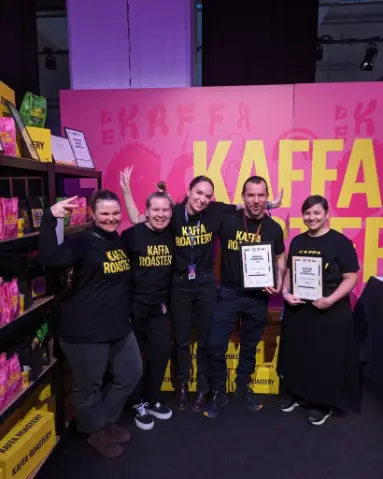
In April, Kaffa Roastery, Finland’s third-largest coffee roaster, partnered with local AI consulting firm Elev to use ChatGPt-like AI models to select coffee beans for blending. “AI-conic” is a blend of four different coffee beans, and the label says it has a “good blend of sweetness and ripe fruit.” According to the Associated Press, after the first trial roasting and blind testing, coffee experts at the plant agreed that the technology-developed blend is “perfect” and “requires no human adjustment.”
AI tools may even replace human senses to analyse, rate and price raw beans. Coffee grading needs to use various senses such as vision and touch to comprehensively evaluate the quality of coffee. Traditional coffee flavour testing is a labour-intensive, environmentally demanding process that is not entirely immune to subjective factors, one analyst might give the same coffee an 82, while another might give it an 74.
ProfilePrint is an AI coffee flavour analysis tool generated by a professional Q-Grader after a lot of training on the built model using SCA analysis parameters. “By combining AI technology with sensory analysis, we can better analyse and predict the sensory parameters of coffee through the molecular analysis of coffee samples,” said Nicolette Yeo, head of marketing at ProfilePrint, “in addition, the conclusions are more objective and the efficiency of the analysis is greatly improved, which improves the communication efficiency between buyers and sellers.”

Precision and consistency vs. uniqueness and humanity
“AI is not a replacement, it’s a complement. The emergence of AI is itself the result of human labour.”
Nicolette Yeo, head of marketing at ProfilePrint
The expertise and skill of the barista is crucial to the coffee, as they have a deep understanding of the beans, brewing techniques and foaming techniques to ensure that every cup of coffee is prepared to the taste and preference of the customer. This skill also lies in the attitude towards the customer, a genuine smile and enthusiasm can turn an ordinary cup of coffee into a pleasant networking time.
The machine has a lot of advantages in brewing time and water temperature control, AI baristas introduce accuracy and consistency that human baristas cannot guarantee, although the brews of coffee beans are too monotonous and lack surprises.
However, reliability can extend to peak hours, with robotic baristas operating without human error due to fatigue, greatly reducing wait times and the potential for order confusion. Meanwhile, AI-equipped robotic baristas also provide valuable insights into customer preferences and peak service times, enabling managers to better optimise operations.
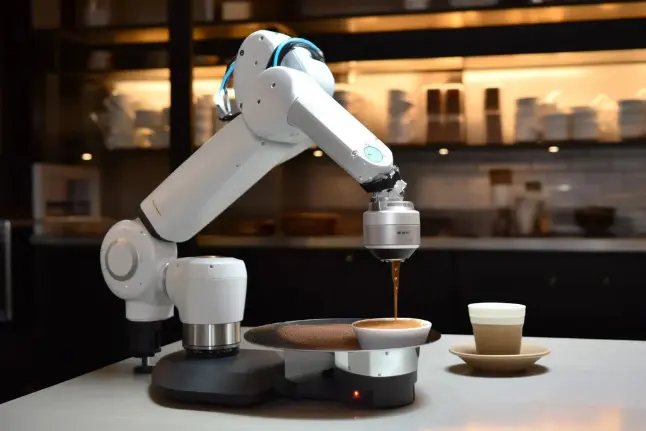
But coffee lovers and employees alike fear a future of apathy, with machines replacing the warmth and personal service of human baristas. As technology reshaping the coffee shop experience becomes a part of the past, we are inevitably witnessing the gradual disappearance of humans from the morning coffee ritual.
While the industry explores these issues, the balance between embracing technological advances and preserving a cherished coffee-house atmosphere remains a rich topic of discussion, challenging the notion that robotic efficiency should trump human warmth and connection.
What does AI mean for those working in the coffee industry?
“AI, it should also include ethical considerations.”
Rohan John Anthony, research and writing lead at A Growing Culture.
As AI technology continues to evolve and find new applications in the coffee industry, it heralds a new era in which technology and tradition merge to produce coffee of excellent quality, conscious of environmental sustainability and efficiency. With the global coffee market expected to reach $497.89 billion by 2028 and the share of AI in the food and beverage industry expected to increase by $35.2 billion over the same period, the narrative of automation in the coffee industry is a complex evolution, not just a simple replacement.
Starbucks, one of the world’s largest coffee maker, is using AI to improve the customer experience while increasing profits and operational resilience. They employ an automated system Siren that allows baristas to make coffee faster. The AI platform Deep Brew, which can be integrated into the new Mastrena super automated espresso machine, centrally records and analyses every brew, while also analysing vast amounts of data for personalised marketing and customised menu recommendations.

But for smallholder coffee farmers, lacking the capital to control new technologies, in AI planting or predictive farming, they will still be constrained by the conditions AI creates for the entire agricultural network.
Rohan John Anthony, research and writing lead at A Growing Culture, argues that AI also need to consider for AI unable to take into account the richness and complexity of the lives of coffee farmers in southern Ethiopia and that problems like low yields, pests and diseases require deeper solutions than just applying pesticides and fertilisers.
Also read: The EU AI ACT: How will it change the AI landscape?
Rohan asks some guiding questions that can help assess the impact of the new technology on coffee production, such as whether it adds value to the farmers themselves, fosters self-sufficiency or supports dependency; And whether its access is inclusive and open source.
Christophe Montagnon, CEO of RD2 Vision, is concerned that the global AI system will be based on global Northern-centric AI, at the risk of imposing non-custom solutions into localised coffee production, leading to changes in coffee pricing and distribution, and reinforcing existing power dynamics.