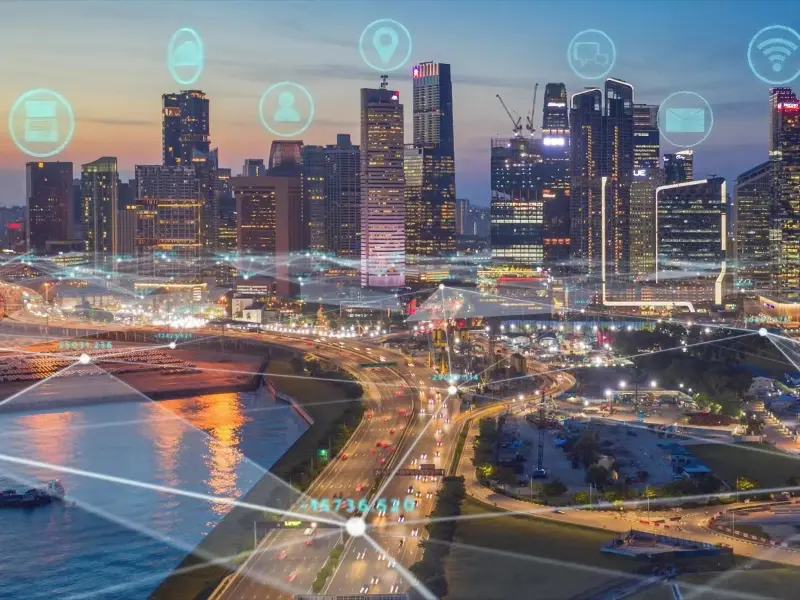
- As cities worldwide grapple with challenges like urbanisation and climate change, Singapore’s smart city model offers a promising blueprint for the future of urban living.
- By embracing technology and innovation, the city-state has enhanced public services, improved sustainability, and created a responsive and efficient urban environment.
Smart cities epitomise the fusion of urban life and advanced technology, striving to enhance residents’ quality of life through sustainable, efficient, and data-driven solutions. By utilising Internet of Things (IoT) devices, big data, and artificial intelligence (AI), these cities aim to solve urban challenges, improve public services, and create a more connected and responsive urban environment.
Singapore: A model smart city
Singapore stands as the quintessential example of a smart city, showcasing an array of innovative technologies and integrated urban solutions. Recognised globally for its comprehensive smart initiatives, Singapore demonstrates how technology can transform urban living.
Also read: Uber and BYD forge alliance to roll out 100,000 EVs worldwide
1. Smart mobility
Singapore has revolutionised transportation with its Smart Mobility 2030 initiative. The city-state employs an Intelligent Transport System (ITS) that integrates data from public transport, private vehicles, and infrastructure. Real-time traffic data, smart traffic lights, and predictive analytics are used to optimise traffic flow, reduce congestion, and enhance commuter experience. The Autonomous Vehicle (AV) trials further underscore Singapore’s commitment to pioneering future transport solutions.
Public transport in Singapore also benefits from the Contactless Smart Card system, which streamlines fare collection and provides valuable data on commuter patterns. This system supports the planning and optimisation of routes and services, ensuring efficient and reliable public transport for all residents.
2. Sustainable living
In order to ensure sustainability, the city employs smart grids to optimise energy consumption and integrate renewable energy sources. Buildings are equipped with smart sensors to monitor and manage energy use, contributing to reduced carbon emissions and operational costs. The Housing and Development Board (HDB) leverages smart technology for energy-efficient public housing, ensuring sustainability at a community level.
3. Water management
Efficient water management is critical for Singapore, given its limited natural resources. The city has implemented a Smart Water Grid, utilising sensors and real-time data analytics to monitor water quality and detect leaks promptly. This proactive approach ensures a sustainable water supply and reduces wastage.
Singapore’s commitment to water sustainability is also evident in its NEWater initiative, which treats and recycles wastewater into high-grade reclaimed water. This technology not only provides a reliable source of water but also showcases Singapore’s leadership in water management innovation.
Also read: The best smart home devices for seamless living
4. Public safety and security
Singapore prioritises public safety through a network of smart surveillance systems. These systems use advanced analytics and facial recognition technology to enhance crime detection and prevention. Additionally, emergency response systems are integrated with real-time data feeds to improve response times and coordination during crises.
The city’s Safe City Programme integrates multiple data sources, including social media and sensors, to provide a comprehensive view of urban safety. This holistic approach allows authorities to predict and mitigate potential threats, ensuring a secure environment for all residents.
5. Healthcare innovation
The city-state’s healthcare system benefits from smart technology through initiatives like telemedicine, electronic health records, and remote patient monitoring. These innovations improve healthcare accessibility, efficiency, and patient outcomes. Singapore’s National Electronic Health Record (NEHR) system ensures seamless data sharing across healthcare providers, enhancing patient care.
Singapore also leverages AI and big data analytics to predict and manage public health issues. For instance, during the COVID-19 pandemic, the city used contact tracing apps and data analytics to track and contain the virus effectively.
6. Citizen engagement and governance
Active citizen engagement is a cornerstone of Singapore’s smart city strategy. The Smart Nation Sensor Platform collects data from various sources to inform policy decisions and public services. The OneService app allows residents to report municipal issues and access government services conveniently. This fosters a participatory approach to governance and ensures that city development aligns with citizens’ needs.
Moreover, the e-government services in Singapore provide residents with seamless access to various administrative processes, from paying taxes to renewing licenses, making governance more efficient and user-friendly.