
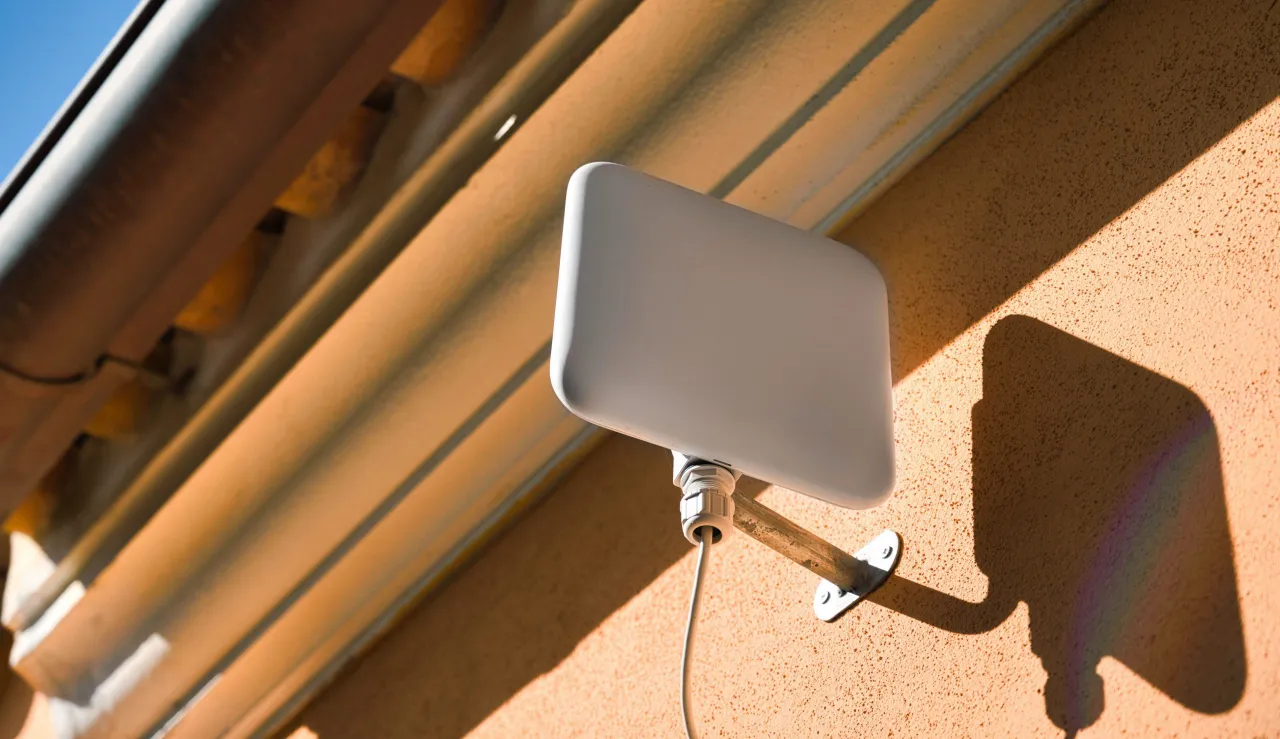
5G FWA subscriptions forecasted to more than double by 2030 is profiled by BTW Media because public-source evidence links it to internet infrastructure, governance, operational dependencies, or market visibility.
Controlled classification for comparative analysis.
Primary geography where strategy signal is most visible.
Principal area tracked in this profile.
Structured profile with operational and governance relevance.
Domain interpretation lens.
Session topic under controlled profile taxonomy.
Leadership and execution signals affect strategy timing.
| 0.90–1.00 | A | High — direct sources |
| 0.75–0.89 | A/B | Strong |
| 0.55–0.74 | B/C | Medium |
| 0.35–0.54 | C/D | Weak–medium |
| 0.10–0.34 | D | Weak signal |
| 0.00–0.09 | D | Internal monitoring |
Mixed-source
- Omdia sees 5G FWA at 150m subs by 2030, ~88% of total FWA lines.
- Ericsson expects 350m total FWA connections by 2030, 80%+ riding 5G.
What happened: Forecasts converge on strong FWA growth
Analyst house Omdia now expects 5G FWA to hit 150 million subscriptions by 2030, more than doubling from 2024. The study suggests 5G will account for the overwhelming majority of FWA lines by decade’s end.
External forecasts align with Omdia’s projections. The firm’s latest release outlines a rise from 71 million FWA subscriptions in 2024 to 150 million by 2030. Ericsson’s Mobility Report offers a similar perspective, estimating around 350 million total FWA connections across all technologies by the end of the decade, with more than 80% expected to run on 5G.
Also read: Singapore agency partners with Singtel for network slicing
Also read: Singtel and Ericsson power Singapore’s Tuas Port’s automation with 5G
Why it’s important
FWA has become the second-largest commercial 5G use case after eMBB, giving operators a way to monetise mid-band and mmWave spectrum quickly, especially where fibre build-outs are slow or costly. If Omdia’s trajectory holds, the service mix by 2030 will tilt further toward 5G-based home broadband, helped by cheaper CPE, self-install kits and Wi-Fi 7 gateways.
Yet there are caveats. Growth depends on sustained radio capacity and backhaul economics; congested cells can degrade user experience, while wholesale fibre competition can cap pricing power. National rules on usage caps and quality-of-service may also shape uptake. Investors will watch KPIs such as peak-time throughput, churn versus fibre, and the share of sites upgraded with extra carriers or carrier aggregation to support FWA loads. The wider picture is that FWA’s role varies by market: a long-term fibre complement in dense cities, and a primary broadband on-ramp in underserved suburbs and rural areas.
Core Entity Brief
- Entity: 5G FWA subscriptions forecasted to more than double by 2030
- Subject Type: Internet infrastructure institution
- Region: Asia Pacific
- Classification: Institution Type
Service Surface / Control Surface
- Public records support monitoring of governance, service, and infrastructure control surfaces.
Governance and Policy Surface
- Public-source signals support medium-impact monitoring for infrastructure visibility and dependency analysis.
- Operational criticality: Medium
- Time horizon: Quarter (30-120d)
Decision Trigger Matrix
- Monitoring focuses on verified service continuity, governance changes, and relationship signals.
Current state favours active tracking due to infrastructure relevance.
Public-source signals support medium-impact monitoring for infrastructure visibility and dependency analysis.
Long-cycle infrastructure decisions likely to remain path-dependent.
Member Unlock
Restricted Profile Intelligence
Login is required to unlock full profile briefings and deep-dive sections.
Only for Strategy Circle
Strategic Circle Access
Open to all readers. Unlock profile briefings after joining and logging in.
Join Strategic CircleOnly for Leadership Alliance
Leadership Alliance Access
For owners and management of IP-holding companies. Login required to unlock.
Join Leadership Alliance
