
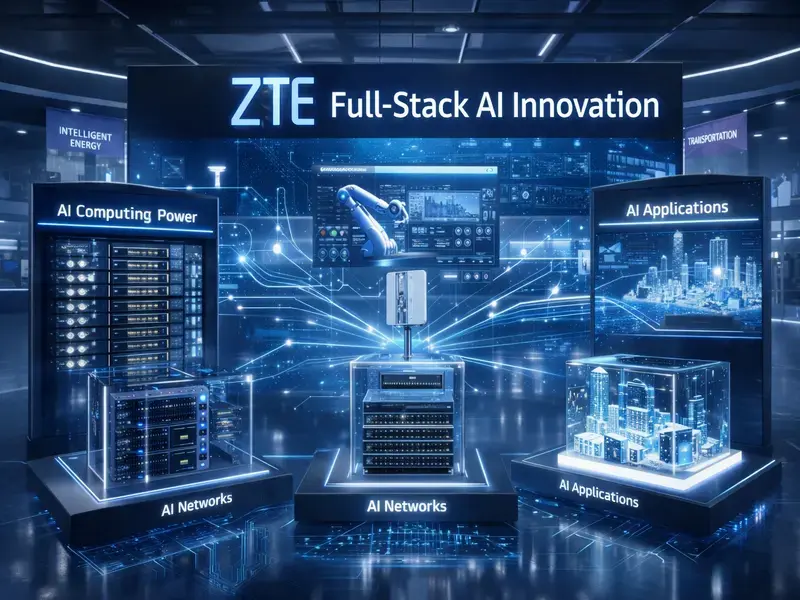
- ZTE introduces full-stack AI innovations spanning chips, networks and industry applications
- Strategy strengthens vertical integration from computing infrastructure to intelligent services
What happened: From silicon to scenarios
At Mobile World Congress Barcelona 2026, ZTE presented a range of full-stack AI innovations designed to integrate computing power, networks and applications into a unified intelligent architecture, according to the company’s official announcement, ZTE Showcases Full-Stack AI Innovations at MWC Barcelona 2026.
Founded in 1985 and headquartered in Shenzhen, ZTE is one of the world’s largest telecommunications infrastructure vendors. At this year’s event, the company positioned AI as the central driver of next-generation connectivity and industrial digitalisation.
The showcase covered AI-enabled computing infrastructure, intelligent network solutions and industry-specific applications across sectors including manufacturing, transport and energy. ZTE highlighted its capability to combine computing hardware, algorithm platforms and network intelligence into a coordinated system supporting both telecom operators and enterprise customers.
According to ZTE, its approach focuses on enabling “efficient collaboration between computing and networking resources”, allowing operators to deploy AI services closer to users through distributed infrastructure. The company also demonstrated AI-native network operations designed to automate optimisation, fault detection and service delivery.
The launch reflects a broader shift at MWC, where infrastructure vendors increasingly framed AI not as an application layer but as a foundational capability embedded across telecom architecture.
Also Read: SES demonstrates multi-orbit satellite integration at MWC 2025
Also Read: ZTE awarded top global honour for Malaysian 5G network revamp
Why it’s important
ZTE’s full-stack strategy underscores an emerging industry trend: control over AI value chains is moving towards companies capable of delivering integrated systems rather than standalone equipment.
By strengthening end-to-end capabilities — from underlying computing platforms through transport networks to industry applications — ZTE is attempting to secure a larger role in the global upgrade cycle now reshaping cloud and telecom infrastructure.
According to the company, tighter integration between AI and network layers can reduce operational complexity while improving service efficiency. From a financial standpoint, vertically integrated AI solutions may allow vendors to capture longer-term service revenues rather than one-off hardware sales, a shift investors increasingly associate with infrastructure resilience.
The announcement also highlights intensifying competition among Asian equipment suppliers seeking to define how AI workloads are deployed beyond hyperscale cloud environments, particularly in operator-led and enterprise networks.
As telecom operators transition towards AI-driven automation and intelligent services, vendors offering full-stack architectures may gain influence over both technological standards and future infrastructure investment decisions.