
Zain Kuwait and Rakuten Symphony begin 5G Open RAN pilot is tracked as a internet infrastructure institution within the internet infrastructure ecosystem.
Zain Kuwait and Rakuten Symphony begin 5G Open RAN pilot has public-source relevance to network operations, governance, dependency mapping, or market structure.
Zain Kuwait and Rakuten Symphony begin 5G Open RAN pilot is tracked as a internet infrastructure institution within the internet infrastructure ecosystem.
Public-source signals support medium-impact monitoring for infrastructure visibility and dependency analysis.
| 0.90–1.00 | A | High — direct sources |
| 0.75–0.89 | A/B | Strong |
| 0.55–0.74 | B/C | Medium |
| 0.35–0.54 | C/D | Weak–medium |
| 0.10–0.34 | D | Weak signal |
| 0.00–0.09 | D | Internal monitoring |
Several public sources
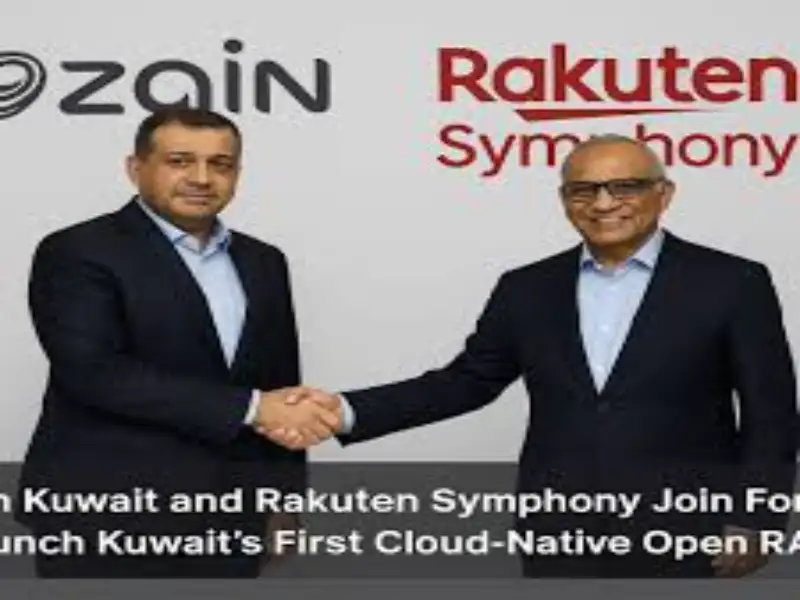
- Zain Kuwait and Rakuten Symphony have initiated the country’s first 5G Open RAN pilot to deploy cloud-native standalone 5G sites.
- The project aims to enhance network flexibility and efficiency, setting the stage for broader adoption across the Middle East and North Africa region.
What happened: Zain Kuwait and Rakuten Symphony launch country’s first 5G Open RAN pilot
Zain Kuwait has signed a Memorandum of Understanding (MoU) with Rakuten Symphony to deploy the country’s first cloud-native 5G Open Radio Access Network (Open RAN) pilot. The project will utilise Rakuten Symphony’s Open RAN and cloud portfolio, including virtualised Distributed Unit (vDU) and Centralised Unit (vCU) software, to establish standalone 5G sites. Zain Kuwait will provide the necessary cell sites, data centre infrastructure, and 5G standalone core with related transport connectivity.
This pilot aims to demonstrate the feasibility of Open RAN technology in Kuwait and is expected to pave the way for a large-scale commercial deployment across the Zain Group’s operations in eight countries throughout the Middle East and North Africa region. See also: Israel-Iran escalation turns Middle East connectivity into strategic infrastructure.
Also read: TAWAL’s shared Open RAN model cuts costs by up to 60%
Also read: Virgin Media O2 trials open RAN at Twickenham Stadium
Why it’s important
The collaboration signifies a strategic move towards more flexible and cost-effective network architectures. By adopting Open RAN, Zain Kuwait seeks to enhance network agility, efficiency, and scalability, aligning with global trends in telecom infrastructure modernisation.
Furthermore, this initiative positions Kuwait at the forefront of 5G innovation in the region, potentially accelerating the adoption of advanced mobile technologies and services.
Domain of operation
Zain Kuwait and Rakuten Symphony begin 5G Open RAN pilot is profiled by BTW Media because published evidence links it to internet infrastructure, governance, operational dependencies, or market visibility.
- Public role: Zain Kuwait and Rakuten Symphony begin 5G Open RAN pilot is framed by zain kuwait and rakuten symphony begin 5g open ran pilot is tracked as a internet infrastructure institution within the internet infrastructure ecosystem. and public technology context. Evidence basis: Zain Kuwait and Rakuten Symphony begin 5G Open RAN pilot article record; Zain Kuwait and Rakuten Symphony begin 5G Open RAN pilot article record
- Operating surface: Market and Africa provide the public context for this institution profile. Evidence basis: Zain Kuwait and Rakuten Symphony begin 5G Open RAN pilot article record; Zain Kuwait and Rakuten Symphony begin 5G Open RAN pilot article record
Timeline
- Zain Kuwait and Rakuten Symphony begin 5G Open RAN pilot public profile updated
Public coverage records Zain Kuwait and Rakuten Symphony begin 5G Open RAN pilot as a subject for role, operating context, and evidence review.
At A Glance
- Name: Zain Kuwait and Rakuten Symphony begin 5G Open RAN pilot
- Type: Internet infrastructure institution
- Base: Africa
- Profile focus: Institution
What It Does
- Public records support monitoring of its role, services, and key relationships.
Why It Matters
- Public-source signals support medium-impact monitoring for infrastructure visibility and dependency analysis.
- Operational criticality: Medium
- Time horizon: Next quarter
What To Watch
- Monitoring focuses on verified service continuity, governance changes, and relationship signals.
Track verified source updates, role changes, and current public evidence.
Public-source signals support medium-impact monitoring for infrastructure visibility and dependency analysis.
Longer-term relevance depends on verified operating, policy, and relationship changes.
Member Briefing
Deeper Profile Context
Login is required to unlock the full profile briefing and source notes.
Only for Strategy Circle
Strategic Circle Access
Open to all readers. Unlock profile briefings after joining and logging in.
Join Strategic CircleOnly for Leadership Alliance
Leadership Alliance Access
For owners and management of IP-holding companies. Login required to unlock.
Join Leadership AlliancePublic View
The public read of Zain Kuwait and Rakuten Symphony begin 5G Open RAN pilot is limited to visible role, operating context, and relationship evidence.
Watchpoints
- New public role, affiliation, product, policy, or market disclosures.
- Verified relationship changes involving named organizations or people.
Caveats
- Private or unverified claims are excluded from this public view.
FAQ
Why is Zain Kuwait and Rakuten Symphony begin 5G Open RAN pilot included?
Zain Kuwait and Rakuten Symphony begin 5G Open RAN pilot has public evidence that makes the institution relevant to BTW's coverage of digital infrastructure, governance, or markets.
What is public about this profile?
The public layer covers visible role, operating context, linked organizations, and evidence-backed watchpoints.
What should readers watch next?
Readers should watch for source-backed role changes, new partnerships, regulatory exposure, operating expansion, or evidence that changes the public assessment.


