
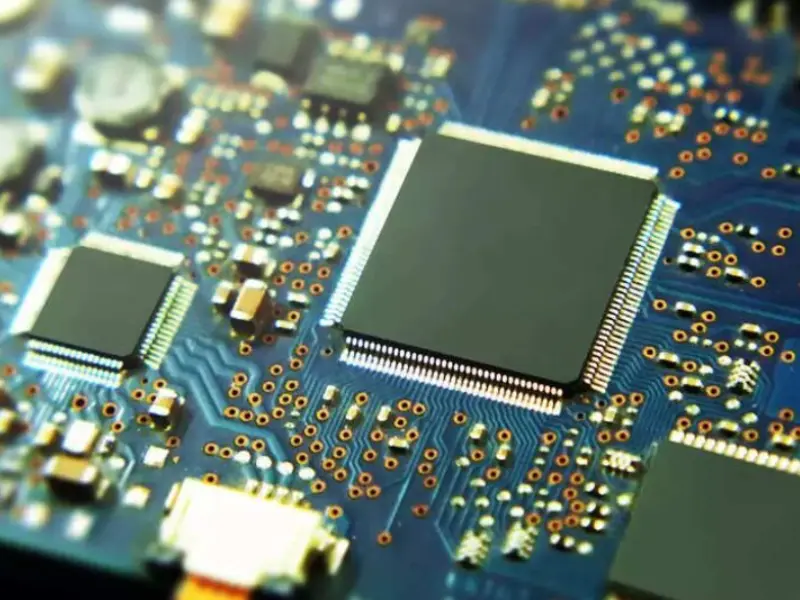
- Silicon is a semiconducting material, which means that it is both conductive and insulating under certain conditions. In computer chips, the semiconducting properties of silicon are critical.
- Silicon has good chemical stability and reliability, maintains its semiconductor properties at high temperatures, and has a long service life.
- Silicon is stored in large quantities in nature and is a clean energy source.
Silicon, as a semiconductor material, is uniquely suited for computer chip fabrication; its semiconducting properties, chemical stability, cost-effectiveness, and the controllability and repeatability of the fabrication process make it an ideal choice for manufacturing computer chips.
Semiconductor properties
Silicon is a semiconductor material, which means that it can be both conductive and insulating under certain conditions. In computer chips, the semiconducting properties of silicon are critical.
The transistors in a chip are made of silicon, and transistors are the basic building blocks of a computer chip. The switching characteristics of the transistors determine the logic computing power of the computer chip.
The evolution of silicon fabrication processes has enabled the creation of smaller transistor sizes, allowing for higher transistor density on a chip and increased processing speeds.
Silicon performs logic functions by controlling the flow of electric current, which allows computers to perform complex operations and process data. The semiconducting properties of silicon make it one of the ideal materials for computer chips.
Also read: Automotive computer chip maker NXP launches new platform S32 CoreRide
Chemical stability and reliability
Silicon has good chemical stability and reliability, maintains its semiconducting properties at high temperatures, and has a long service life. In computer chips, silicon needs to be able to operate stably at high temperatures and maintain its performance and reliability.
The chemical stability of silicon allows it to withstand such high temperatures without degradation or damage, thus ensuring the stability and reliability of the computer chip.
Abundant and cost-effective
Silicon is one of the most abundant elements in the earth’s crust, accounting for approximately 27.7% of the earth’s crustal mass. Its abundance in nature makes silicon relatively inexpensive and readily available.
Silicon can be used to make computer chips at a lower cost, reducing the cost of chip manufacturing and therefore the overall cost of computer products. Silicon is more cost-effective compared to other materials, making it one of the preferred materials for computer chip manufacturing.
Also read: Apple plans to use AI-focused M4 chip to change production lines
Controllability and repeatability of manufacturing processes
The physical and chemical properties of silicon make it easy to perform precise processing and manufacturing. Silicon can be prepared into high-purity crystals by a variety of methods and can be processed into the desired device structure by chemical vapour deposition, ion implantation, photolithography and other processes.
These fabrication processes are highly controllable and reproducible, which can ensure stable quality and performance of the chip. Silicon has become one of the preferred materials for computer chip fabrication and is widely used and recognised.
Advancements in silicon processing techniques, such as photolithography and doping methods, have further enhanced the performance of computer chips. These innovations have paved the way for the development of increasingly powerful and energy-efficient computing devices.