
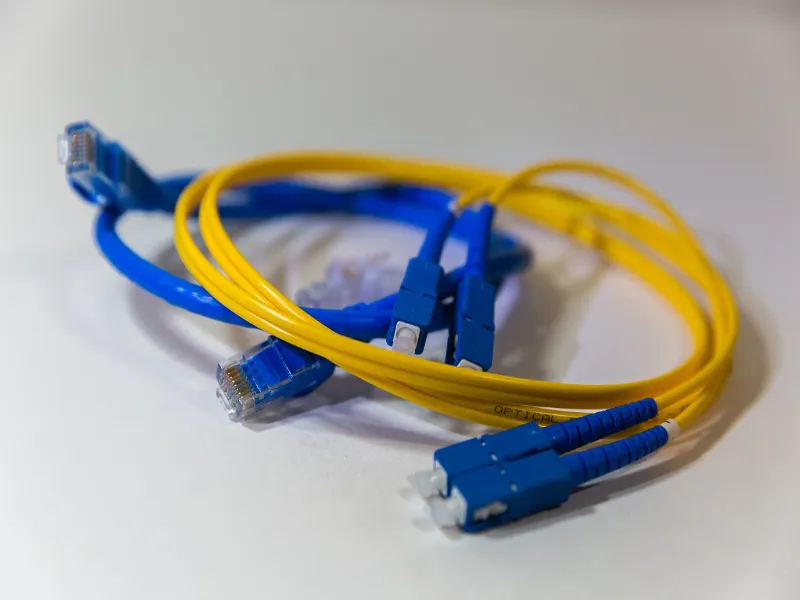
In the intricate world of fibre optics, two terms frequently surface: single-mode and multimode fibre. Understanding the nuances between these two types can significantly influence network performance and installation choices. Whether you’re a tech enthusiast or a professional tasked with upgrading your organisation’s infrastructure, grasping these differences is essential.
Unpacking multimode fibre
Multimode fibre can be thought of as a versatile transportation system. With a core diameter ranging from 50 to 62.5 microns, it accommodates multiple light paths, enabling various signals to traverse the network concurrently. This feature makes it particularly suited for short-distance applications, such as data centres and local area networks (LANs), where speed and efficiency are crucial.
Also read: Verizon uses AI to prevent underground fiber damage
However, while multimode fibre thrives in local scenarios, it generally faces limitations when it comes to distance. Typically effective for runs of less than 2 kilometres, it excels in environments that prioritise high-speed data transmission over shorter spans. This balance of performance and cost makes multimode fibre an attractive option for businesses that need reliable connectivity without extensive infrastructure investment.
Comparing multimode fibre with single mode
The differences between multimode and single-mode fibre are stark and impact their respective use cases:
- Core size and transmission paths: The core size is perhaps the most defining characteristic. Single-mode fibre, with a much narrower core—around 8-10 microns—restricts light to a single path. This design minimises signal degradation and allows for long-distance transmission, making it ideal for telecommunications that span cities and beyond. Conversely, multimode fibre’s broader core facilitates multiple light paths, making it adept at managing high data traffic over shorter distances but prone to signal dispersion over longer runs.
- Distance capabilities: When considering distance, multimode fibre shines in local applications but falters beyond a couple of kilometres. Single-mode fibre, however, is designed for the long haul. Its ability to transmit signals over vast distances with little loss means it is indispensable for intercity and international connections.
- Bandwidth and data transfer rates: The capacity for bandwidth is crucial in today’s networked environment. Single-mode fibre offers superior bandwidth capabilities, making it the preferred choice for high-capacity networks. However, multimode fibre holds its own in scenarios where high speeds are essential, provided the distances remain short.
- Cost considerations: Cost often plays a pivotal role in decision-making. Generally, multimode fibre is less expensive to install, including its transceivers, which makes it appealing for organisations establishing local networks. Yet, while single-mode fibre may demand a higher initial investment, its long-term savings and performance advantages can justify the expense, especially for those planning future expansions.
Also read: Fiber vs. microwave backhaul: A comprehensive comparison
Making the right choice
Choosing between multimode and single-mode fibre should be a strategic decision informed by your specific needs. For instance, in environments where rapid data transfer is essential and distances are relatively short, multimode fibre emerges as the practical choice. Sectors such as healthcare and education frequently rely on it for its reliability and cost-effectiveness.
On the other hand, if your organisation aims to connect distant locations or is preparing for growth, single-mode fibre could be the better investment, offering the clarity and range necessary for expansive networks.
Also read: Understanding the components of a wide area network
Conclusion
Both multimode and single-mode fibres present distinct advantages and limitations, each serving its purpose in the fibre optic landscape. Multimode fibre, with its capacity for high-speed connections over short distances, stands as a robust solution for local networking needs. In contrast, single-mode fibre is the backbone for long-distance communication, ensuring that signals travel across miles without compromise. By understanding these differences, you can make informed choices that enhance your organisation’s tech infrastructure in an ever-evolving digital world.