
Institution Profiling / Internet infrastructure institution

UK mobile users turn to eSIM for traveling

UK mobile users turn to eSIM for traveling is tracked as a internet infrastructure institution within the internet infrastructure ecosystem.

UK mobile users turn to eSIM for traveling

Evidence Pack

Source records grounding the claims in this article.

CategoryInstitution Type

UK mobile users turn to eSIM for traveling is tracked as a internet infrastructure institution within the internet infrastructure ecosystem.

RegionEurope and Middle East

UK mobile users turn to eSIM for traveling has public-source relevance to network operations, governance, dependency mapping, or market structure.

Signal FocusInternet infrastructure institution

UK mobile users turn to eSIM for traveling has public-source relevance to network operations, governance, dependency mapping, or market structure.

Content TypeProfile

UK mobile users turn to eSIM for traveling is tracked as a internet infrastructure institution within the internet infrastructure ecosystem.

Primary DomainMarket

Public-source signals support medium-impact monitoring for infrastructure visibility and dependency analysis.

TopicInternet infrastructure institution

UK mobile users turn to eSIM for traveling is profiled by BTW Media because public-source evidence links it to internet infrastructure, governance, operational dependencies, or market visibility.

ImpactMedium

Public-source signals support medium-impact monitoring for infrastructure visibility and dependency analysis.

Confidence?Confidence Grade
0.90–1.00AHigh — direct sources
0.75–0.89A/BStrong
0.55–0.74B/CMedium
0.35–0.54C/DWeak–medium
0.10–0.34DWeak signal
0.00–0.09DInternal monitoring
C · 0.72

Mixed-source

UK mobile users turn to eSIM for traveling is profiled by BTW Media because public-source evidence links it to internet infrastructure, governance, operational dependencies, or market visibility.

  • Awareness of eSIM technology among UK mobile users has jumped sharply, with over 70 % considering its use for international trips.
  • The trend signals a shift away from traditional roaming towards more flexible, digital-first connectivity options.

What happened: Rising UK interest in eSIM travel connectivity

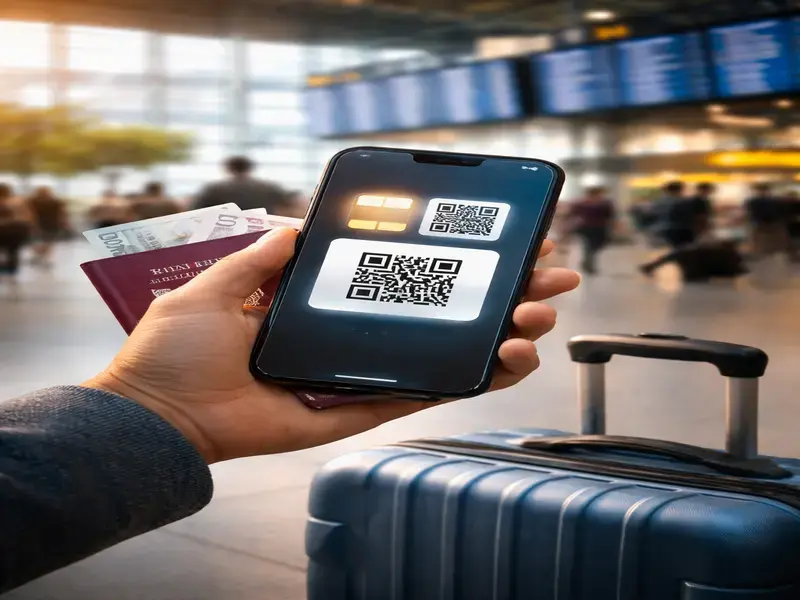
Awareness and intention to use embedded SIM (eSIM) services has climbed significantly in the UK, according to recent research from analyst firm CCS Insight. Over 70% of respondents said they would consider using an eSIM on their next overseas trip, a marked increase from just 27% who were aware of eSIMs in 2022.

About a third of those surveyed have already used a travel eSIM with a UK provider, with Apple iPhone users leading adoption thanks to broad device support. This includes devices like the latest iPhone Air, which has eSIM-only configurations. The shift is not purely anecdotal: global revenue from travel eSIM packages nearly doubled from 2024 to 2025, approaching $1.8 billion, reflecting strong consumer and provider momentum.

Users cite convenience and potential cost savings versus traditional roaming as key drivers, with travel eSIMs allowing data plans to be activated digitally before departure and eliminating the need to swap physical SIM cards abroad.

Also Read: Three eSIM trial for businesses launches in Birmingham and Bristol
Also Read: BICS launches eSIM Hub to streamline global IoT connectivity

Why it’s important

The accelerating adoption of eSIM technology among UK travellers is more than a consumer trend – it underlines a structural shift in mobile connectivity. Traditional roaming plans, historically a reliable revenue stream for operators, are increasingly viewed as expensive and cumbersome, especially against the backdrop of user expectations for seamless, flexible services.

For mobile network operators (MNOs) and mobile virtual network operators (MVNOs), this shift presents both opportunity and pressure: those able to offer compelling travel eSIM packages or integrate eSIM services directly into broader digital offerings (such as travel or fintech ecosystems) may gain market share, while others risk ceding ground.

From a financial perspective, the migration towards eSIM for travel could erode traditional roaming margins unless operators adjust pricing structures or innovate with value-added services. The broader industry context suggests that by 2030 eSIM connections could represent a majority of smartphone links worldwide, reinforcing that this is not a niche innovation but a mainstream connectivity evolution.

Core Entity Brief

  • Entity: UK mobile users turn to eSIM for traveling
  • Subject Type: Internet infrastructure institution
  • Region: Europe and Middle East
  • Classification: Institution Type

Service Surface / Control Surface

  • Public records support monitoring of governance, service, and infrastructure control surfaces.

Governance and Policy Surface

  • Public-source signals support medium-impact monitoring for infrastructure visibility and dependency analysis.
  • Operational criticality: Medium
  • Time horizon: Quarter (30-120d)

Decision Trigger Matrix

  • Monitoring focuses on verified service continuity, governance changes, and relationship signals.
NowMedium priority

Current state favours active tracking due to infrastructure relevance.

QuarterMedium policy sensitivity

Public-source signals support medium-impact monitoring for infrastructure visibility and dependency analysis.

YearQuarter (30-120d) continuity dependency

Long-cycle infrastructure decisions likely to remain path-dependent.

Member Unlock

Restricted Profile Intelligence

Login is required to unlock full profile briefings and deep-dive sections.

Only for Strategy Circle

Strategic Circle Access

Open to all readers. Unlock profile briefings after joining and logging in.

Join Strategic Circle

Only for Leadership Alliance

Leadership Alliance Access

For owners and management of IP-holding companies. Login required to unlock.

Join Leadership Alliance
← BackAll Companies