
Institution Profiling / Internet infrastructure institution

Samsung’s new foldables start at $1,079, top out at $2,749

Samsung’s new foldables start at $1,079, top out at $2,749 is tracked as a internet infrastructure institution within the internet infrastructure ecosystem.

Samsung’s new foldables start at $1,079, top out at $2,749

Evidence Pack

Primary-source references used for classification and impact scoring.

CategoryInstitution Type

Controlled classification for comparative analysis.

RegionGlobal

Primary geography where strategy signal is most visible.

Signal FocusInternet infrastructure institution

Principal area tracked in this profile.

Content TypeProfile

Structured profile with operational and governance relevance.

Primary DomainTechnology

Domain interpretation lens.

TopicInternet infrastructure institution

Session topic under controlled profile taxonomy.

ImpactMedium

Leadership and execution signals affect strategy timing.

Confidence?Confidence Grade · doctrine v2 §8 / SOP §2
0.90–1.00AHigh — direct sources
0.75–0.89A/BStrong
0.55–0.74B/CMedium
0.35–0.54C/DWeak–medium
0.10–0.34DWeak signal
0.00–0.09DInternal monitoring
C · 0.72

Mixed-source

Samsung’s new foldables start at $1,079, top out at $2,749 is profiled by BTW Media because public-source evidence links it to internet infrastructure, governance, operational dependencies, or market visibility.

  • Galaxy Z Fold 7 starts at $2,299, with no battery upgrade
  • Foldable phone shipments expected to fall in 2025, says Counterpoint

What happened: Samsung’s new foldables stay expensive

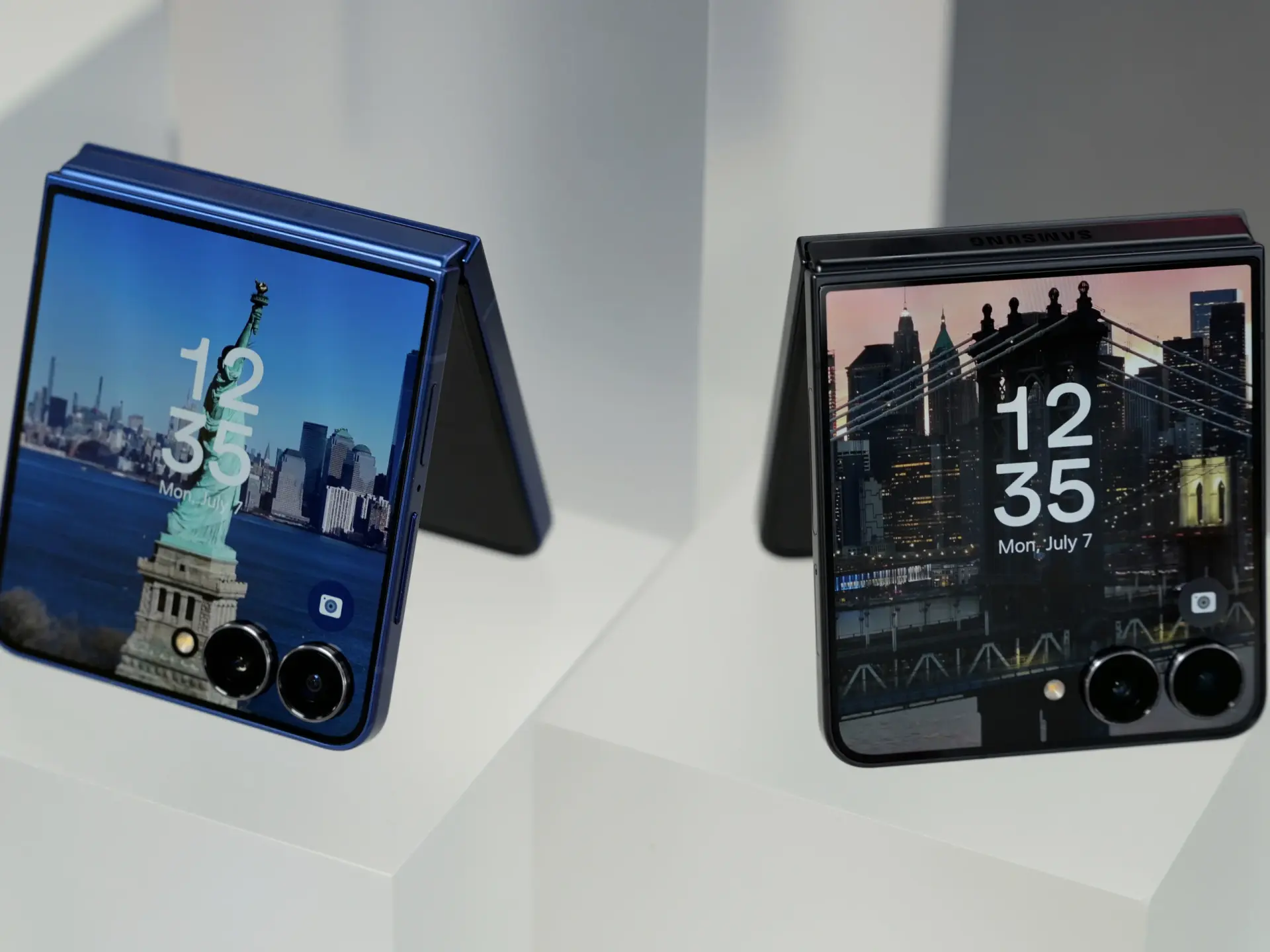
Samsung has released two new foldable phones: the Galaxy Z Fold 7 and the Galaxy Z Flip 7. The Fold 7 is thinner than before. It features a larger and sharper display, as well as improved cameras. It runs on the Snapdragon 8 Elite chip, one of the fastest currently available. It also comes with the latest Android system and Samsung’s usual set of pre-installed apps. But the battery is still 4,400 mAh, which is the same as the last model. The price starts at $2,299, and the top version costs $2,749. The base model still has 12 GB RAM and 256 GB of storage. Even if buyers pay monthly over two years with no interest, that adds up to around $115 a month, not including any mobile plan.

The Flip 7 also gets some updates. The screen is slightly bigger, and the battery is now 4,300 mAh instead of 4,000 mAh. But Samsung chose not to use the same top chip as the Fold 7. Instead, it put in its own Exynos 2500 chip. This chip is built using the same 3nm process and has the same number of cores, but it does not perform as well. The tech site NanoReview said the Exynos chip uses more battery. Still, the Flip 7 keeps the same price as last year: $1,339. Samsung also launched a cheaper version, the Flip 7 FE, which uses older parts and a smaller screen and battery. It looks more like last year’s Flip 6 and costs $1,079. It is cheaper, but it may not interest people who want the newest model.

Also read: Samsung’s Q1 profit rises on Galaxy S25 sales, but chip division struggles​
Also read: Samsung edges out rivals in global smartphone shipments

Why it’s important

Foldable phones have been sold for more than six years, but prices remain high. Even the new budget model costs over $1,000. This stops many people from buying them. Counterpoint Research said the global foldable phone market dropped for the first time in the third quarter of 2024. Samsung’s sales fell by 21%, and that fall dragged down the whole market since it sells the most foldables.

Counterpoint also expects 2025 to be the first full year when foldable sales go down. Chinese brands like OPPO are making fewer of their cheaper models. This shows that fewer people want to buy foldables right now. Price is the main reason. Many regular smartphones cost less and still do most of the same things. Samsung says its new foldables offer better AI features, but many users still do not see how that helps them. Some also worry about what these AI tools do with their data.

Core Entity Brief

  • Entity: Samsung’s new foldables start at $1,079, top out at $2,749
  • Subject Type: Internet infrastructure institution
  • Region: Global
  • Classification: Institution Type

Service Surface / Control Surface

  • Public records support monitoring of governance, service, and infrastructure control surfaces.

Governance and Policy Surface

  • Public-source signals support medium-impact monitoring for infrastructure visibility and dependency analysis.
  • Operational criticality: Medium
  • Time horizon: Quarter (30-120d)

Decision Trigger Matrix

  • Monitoring focuses on verified service continuity, governance changes, and relationship signals.
NowMedium priority

Current state favours active tracking due to infrastructure relevance.

QuarterMedium policy sensitivity

Public-source signals support medium-impact monitoring for infrastructure visibility and dependency analysis.

YearQuarter (30-120d) continuity dependency

Long-cycle infrastructure decisions likely to remain path-dependent.

Member Unlock

Restricted Profile Intelligence

Login is required to unlock full profile briefings and deep-dive sections.

Only for Strategy Circle

Strategic Circle Access

Open to all readers. Unlock profile briefings after joining and logging in.

Join Strategic Circle

Only for Leadership Alliance

Leadership Alliance Access

For owners and management of IP-holding companies. Login required to unlock.

Join Leadership Alliance
← BackAll Companies