
Summary
- Samsara’s 19 August launch combines fuel-spend analysis, preferred-station routing and Coast card controls in one management experience.
- The commercial gain comes from shortening the distance between information and action. A possible saving, a suspicious transaction and a payment decline still require different decisions.
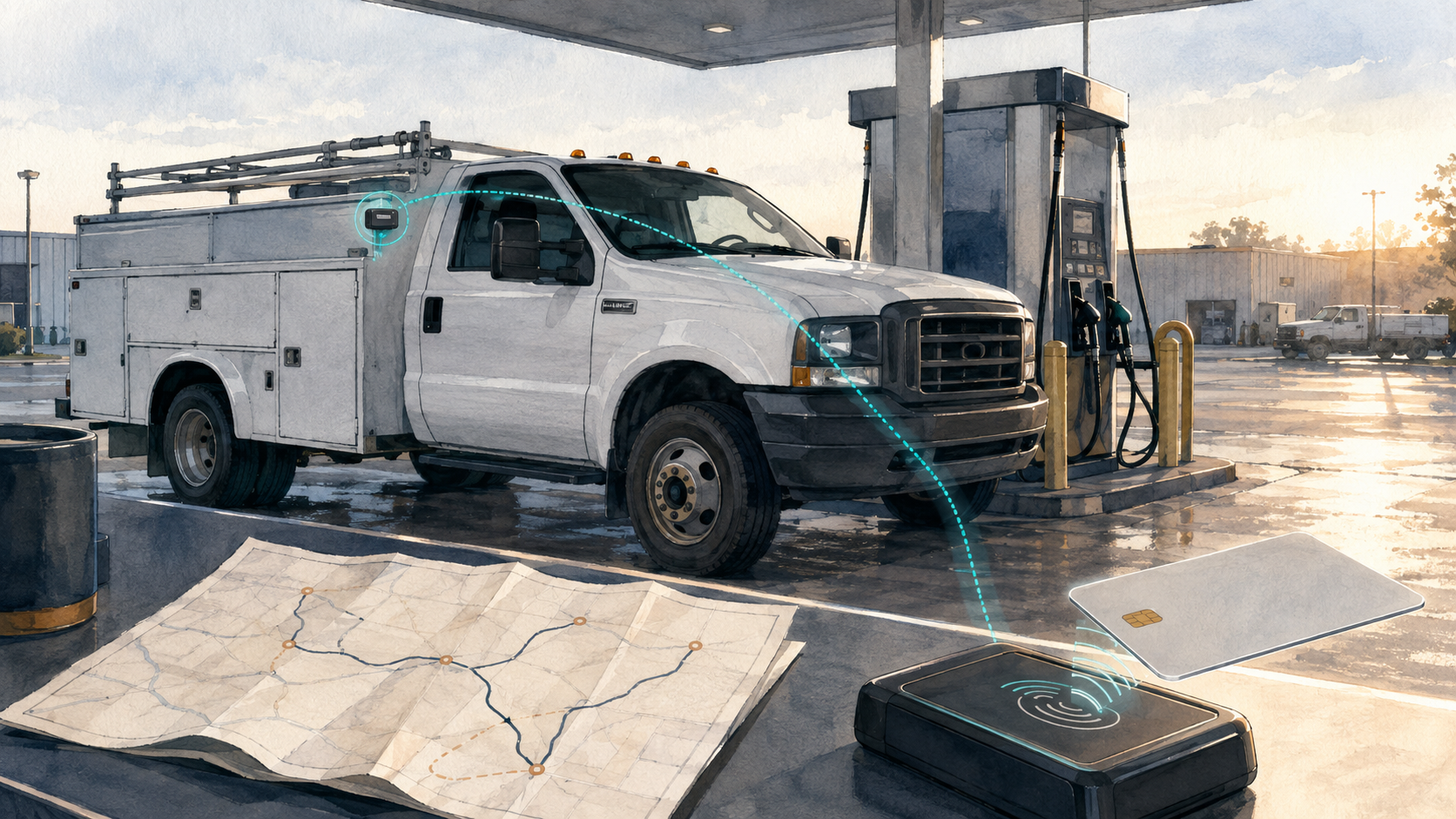
At a fuel pump, software stops being merely a report when it can prevent a card from paying. That is the sharpest edge of Samsara’s Fuel Command Center, launched on 19 August. The product brings analysis and operational controls together, but the power to recommend a cheaper stop is not the same as the power to reject a purchase.
The launch announcement combines a view of total and potentially recoverable fuel spend with preferred-stop recommendations in Commercial Navigation and Coast fuel-card controls. A manager can act on an idling problem, add preferred fuel vendors or set purchasing policies from a more unified working environment. For a fleet’s finance and operations teams, the attraction is fewer hand-offs between noticing a cost and doing something about it.
Four actions behind one screen
The first action is estimation. Samsara says its internal data identified roughly US$2bn in potential fuel-spend savings for US customers in the first six months of 2026. That is an opportunity estimate, not money already recovered, and it predates the August launch. A total assembled from possible improvements cannot establish what the new product has actually saved.
The second is guidance. Commercial Navigation incorporates preferred fuel stops into routes and accounts for negotiated rates, according to the announcement. A recommendation helps a driver choose; it does not itself prevent payment at another station. Its value depends on the resulting work, including whether the stop fits the route.
The third is investigation. A purchase that does not fit vehicle data, or an unexpected change in fuel level, can prompt review. The fourth is enforcement: the Samsara marketplace description of Coast says Coast applies configured controls at the pump, using vehicle location and tank-capacity information to decline specified purchases. A common interface connects these actions without making them interchangeable.
The party enforcing the rule matters
Coast’s own integration page describes GPS protection that declines transactions far from the assigned vehicle. It separately describes tank-level alerts and the matching of odometer information with fuel purchases. Those are different stages of control, not evidence that every imported fuel record automatically gains a payment-blocking function.
Coast is a financial-technology company, not a bank; its page identifies Celtic Bank as the issuer of the Coast Visa Commercial Card. The useful operational distinction is that Samsara supplies the fleet context and management surface while Coast describes enforcement of the card policies. The announcement does not disclose a universal authorisation radius, false-decline rate or rule for every case of unavailable vehicle data.
A buyer consequently needs more than a list of supported integrations. It needs to know which configured policy can decline a payment, which feature only creates an alert, and who can deal with a legitimate exception. Otherwise, centralising the screen can leave the decision itself split between teams.
A mismatch has more than one explanation
Samsara’s developer guidance for fuel-card integrations describes correlating a transaction’s time and location with historical vehicle positions, driver assignments and fuel-system data. It also explains why the evidence can be incomplete. Fuel-level history depends on sensor data, and a post-fill reading may not arrive until the ignition is turned on again. A wrong vehicle identifier or missing location record can require attention without proving fuel theft.
The guidance is a general integration example, not a specification of Coast’s live authorisation logic. A tolerance used to associate a recorded purchase with a vehicle cannot simply be promoted into the threshold for declining a card. One decision reconstructs an event; the other can stop an event from happening.
Nor is all running time waste. Samsara’s May 2025 fuel-management announcement already discussed proximity checks, fuel-level-rise checks and idling analysis that considers equipment use, temperature and location. Necessary engine operation must be distinguished from avoidable idling. The August news is consolidation and a closer connection to action, not the invention of every underlying detection capability.
The result could be a more useful purchasing system: finance sees the cost, operations has context, and defined card rules can act before money is spent. Whether that becomes lower cost with reliable service depends on configuration, data and the handling of exceptions—not on the size of the savings number displayed.
Evidence and scope
This report uses five primary pages from Samsara and Coast, two commercial partners. Their product descriptions are not independent tests of savings or fraud prevention. No private fleet transactions, customer contract or field trial was examined.
Member Briefing
Deeper Profile Context
Sign in with the right membership level to unlock the full briefing and source notes.
Only for Strategic Circle
Strategic Circle
Open to all readers. Unlock profile briefings after joining and signing in.
Join Strategic CircleOnly for Leadership Alliance
Leadership Alliance
For qualified IP-asset owners and management; sign in to unlock alliance briefings.
Join Leadership Alliance