
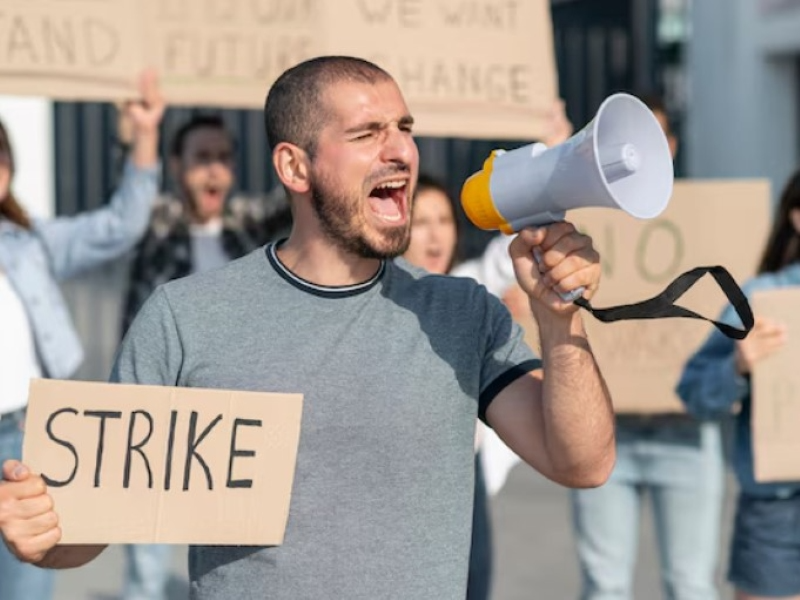
- The strike was called by the Screen Actors Guild-American Federation of Television and Radio Artists (Sag-Aftra) after negotiations between video game companies and the union failed to address AI protections in the contract.
- Despite reaching agreements on some issues like wages and job safety, the lack of clear and enforceable language protecting performers from AI exploitation is also a significant obstacle.
OUR TAKE
With the increasing use of AI in entertainment, establishing robust AI protections is essential to ensure AI protections in the entertainment industry, particularly in video games, and safeguard the rights of performers. It reflects the need for industry standards that prioritise the well-being and rights of actors.
-Lia XU, BTW reporter
What happened
Due to concerns over the use of artificial intelligence in video games, Hollywood performers, represented by the Screen Actors Guild-American Federation of Television and Radio Artists (Sag-Aftra), went on strike against major video game companies like Activision, Warner Bros, and Walt Disney.
The performers are concerned about gaming studios using generative AI to replicate their voices and physical appearances in video game characters without providing fair compensation. Because key issues like wages and job safety were agreed upon, but protections related to AI technology remained a major hurdle.
“Our offer is directly responsive to Sag-Aftra’s concerns and extends meaningful AI protections that include requiring consent and fair compensation to all performers working under the ‘Interactive Media Agreement’” Audrey Cooling said, a spokesperson for the 10 video game producers.
According to the entertainment industry publication Deadline, these kinds of strikes and actions severely disrupted film and TV production and cost California’s economy more than $6.5 billion.
Also read: Microsoft enhances Bing Search with AI-generated answers
Also read: AI tools revolutionise accessibility for the visually impaired
Why it’s important
The strike highlighted the importance of addressing AI protections in the entertainment industry to safeguard performers’ rights. Besides, it also ensures fair compensation and upholds ethical standards.
Meanwhile, the video game studio also responded to disappointment over the union’s decision to walk away from the negotiation table despite being close to reaching a deal, showcasing the differing perspectives between the two parties on the issue of AI protections for performers.
Through the strike, people can recognise the significance of AI protections in negotiations. It reflects the evolving nature of the entertainment sector. It necessitates updated contractual terms to protect the interests of performers and adapt to changing industry landscapes. Furthermore, it emphasises the importance of including AI protections in the new contract to address the evolving landscape of AI technology in the entertainment industry.