
Summary
- PASHA Technology was established in 2018 to provide IT, cloud, cybersecurity and data-centre services to PASHA Holding companies. It now presents itself as a supplier to the wider Azerbaijani market, but it does not disclose the share of revenue earned outside its shareholder group.
- PASHA Holding says 2023 revenue increased 93% to more than AZN 24 million and net profit reached AZN 2 million, the first profit disclosed in the company's recent history. That implies a net margin below 8.3%; with assets above AZN 38 million, profit was less than 5.3% of year-end assets.
- The physical and network footprint is real. Uptime Institute lists Tier III design and constructed-facility certification for both the Baku Main Data Center and the Goychay Disaster Recovery Site. Public routing evidence shows four IPv4 prefixes and two upstreams, Delta Telecom and AzerTelecom.
- Resource control is narrower than the company's service catalogue. The network has 1,024 originated IPv4 addresses and no visible IPv6 prefix, while Azerbaijan's official register describes PASHA Technology as a hosting provider. Those facts support a data-centre and enterprise-service operation, not a claim that it owns national or cross-border transmission.
- The central strategic risk is utilisation. Power, cooling, staff, hardware refresh, security, software and redundant connectivity are largely committed before the next customer arrives. Anchor demand from PASHA companies reduces launch risk but can conceal customer concentration and transfer-pricing weakness.
- The judgment is cautiously positive but incomplete. A second profitable year, external-customer revenue, occupied power and rack data, cloud retention, cash flow after maintenance investment, service performance and customer concentration would show whether local control earns more than its replacement cost.
Geography makes resilience valuable and scale unforgiving
PASHA Technology's economic problem begins with the map. Azerbaijan had about 10.23 million people in March 2025, according to the State Statistical Committee, and 54.4% were urban residents. The World Bank put 2024 gross domestic product at $74.32 billion. This is not a negligible economy, and its banks, insurers, retailers, hotels, government services and energy companies need secure computing and dependable connectivity. It is nevertheless a limited home market for infrastructure whose costs are measured in buildings, power systems, chillers, generators, network equipment and specialist labour.
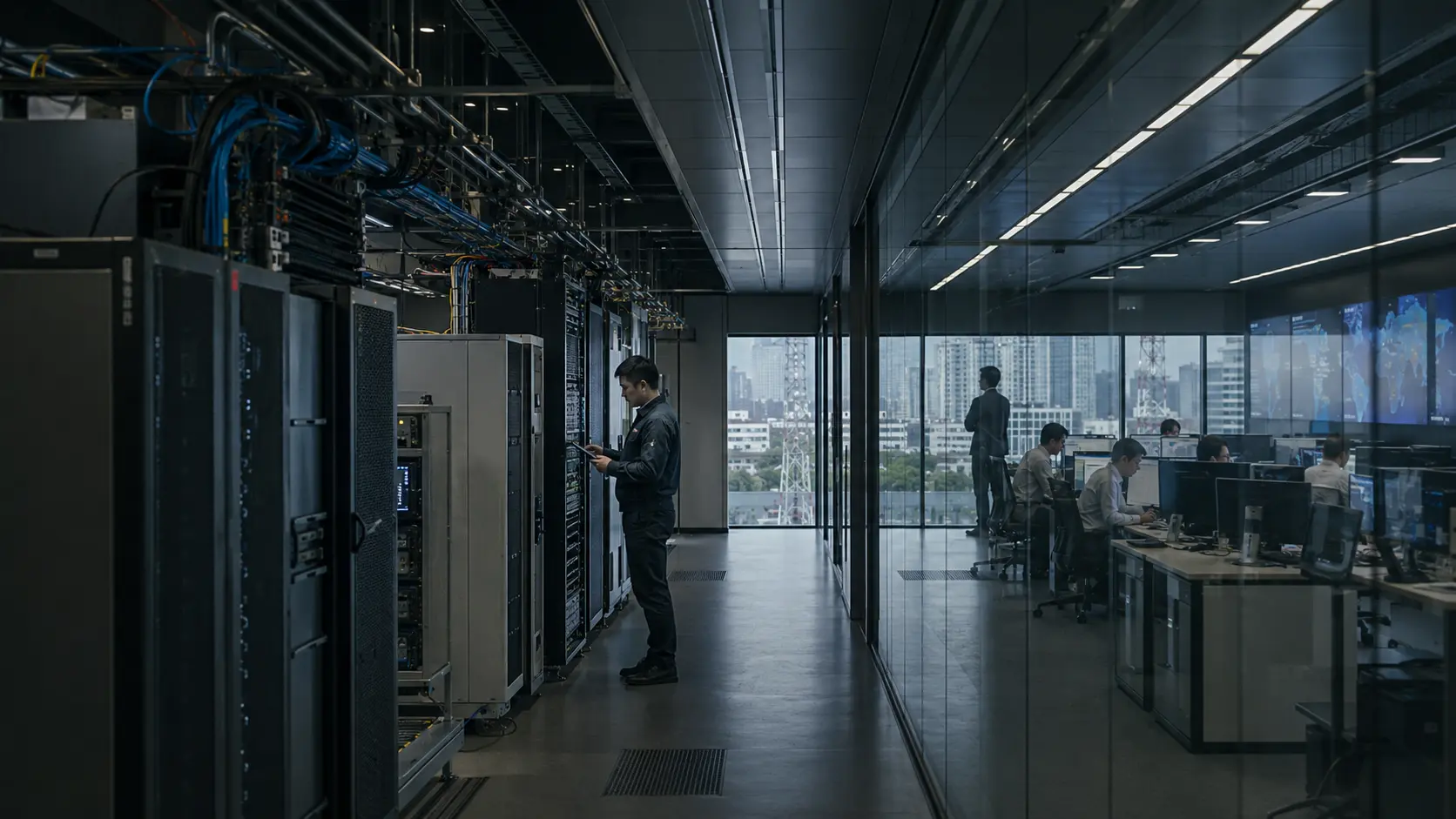
The company's answer is a two-site operating boundary. The Baku Main Data Center sits in the capital, close to the country's densest cluster of corporate demand. The Goychay Disaster Recovery Site separates backup capacity from the main commercial centre. PASHA Holding says both facilities meet Uptime Institute's Tier III concurrently maintainable criteria. Uptime Institute's own awards register is stronger evidence than the marketing description: it lists Tier III Certification of Design Documents and Tier III Certification of Constructed Facility for each site.
The pairing is economically sensible. Baku is where low latency, customer access and technical labour are most useful. A recovery site outside the capital reduces the chance that one local disruption affects both primary and standby infrastructure. Yet geography does not create revenue by itself. The second site duplicates some power, cooling, monitoring, connectivity, security and staffing obligations. Much of that capacity is deliberately idle in normal conditions because its purpose is to be available when Baku is impaired.
That idle capacity is the product and the cost. A bank values a recovery environment because the downside of losing payments, records or customer access can be much larger than the monthly service bill. PASHA Technology carries the expense continuously; the customer sees the benefit mainly during tests, maintenance or failure. To recover capital, the company must sell that avoided loss at a price above the long-run cost of the reserve systems. If it prices merely against raw server capacity, it gives away the most expensive part of its proposition.
Scale adds a second constraint. A global cloud platform can spread software engineering, hardware procurement and service development across many regions and customers. An Azerbaijani operator must recover its local facilities and team from a much smaller pool. Locality helps where latency, support, payment in manat, regulatory comfort or physical access matter. It hurts where buyers want the broadest service catalogue or the lowest unit price for standard compute and storage.
The correct comparison is therefore not local infrastructure against no infrastructure. It is PASHA Technology's two-site bundle against four realistic alternatives: a customer's own server room; colocation with another Azerbaijani provider; a local public or private cloud such as AzInCloud; and remote use of AWS, Microsoft Azure or Google Cloud. Each shifts capital, operating complexity, jurisdiction, latency and supplier dependence differently. PASHA Technology creates value only where its combination is cheaper or safer after all of those costs are counted.
The company began as a group utility, not a mass-market carrier
Identity and boundary matter because the category can otherwise mislead. PASHA Holding's profile says PASHA Technology was established in 2018 as an IT service provider. Its stated purpose was to provide IT services, cloud computing, cybersecurity operations and data-centre management for PASHA Holding subsidiaries. The group structure published as of March 2025 places PASHA Technology alongside businesses in banking, insurance, payments, retail, property, hospitality, agriculture and investments.
This origin gives the company an advantage that an independent start-up would struggle to reproduce. A diversified shareholder group can supply anchor workloads before an external sales organisation is mature. Banks and insurers require continuity, security and audit discipline. Retail and payments generate transaction workloads. Hotels, property and agriculture add distributed operating locations. Aggregating those demands can replace duplicated server rooms, support teams and procurement contracts with shared infrastructure and specialist staff.
The value proposition to the group is not simply lower IT spending. Centralisation can standardise security controls, recovery procedures, monitoring and vendor management. It can also concentrate expertise that individual subsidiaries would find expensive to hire. PASHA Technology's LinkedIn profile describes end-to-end infrastructure and end-user services, group-wide standardisation, sourcing strategy and human-capital development as focus areas. Its 2025 integrated management policy addresses Infrastructure as a Service, cloud backup and restoration, information security, service management and business continuity.
The same structure creates a measurement problem. Revenue from related group companies is not automatically market validation. If a subsidiary is directed to buy from PASHA Technology, the provider may have recurring revenue without proving that an independent customer would accept the same price. If internal rates are set too low, the technology company can appear busy while shareholders subsidise the facilities through under-recovery. If rates are set too high, profit may simply move from one group company to another without improving consolidated value.
The commercial transition is visible but not quantified. In a December 2023 interview published by PASHA Holding, chief executive Amir Valibayov said the company had originally been created for affiliated companies, had completed large projects for them and had developed the capacity to serve other companies in the local market. In January 2025, PASHA Holding said PASHA Technology had become a resident of Pirallahi High-Tech Park and received a certificate to conduct system-integration activity outside the park. These are credible signs of external ambition.
They do not reveal the operating boundary investors and customers need. PASHA Technology does not publish the number of external customers, their industries, annual contract value, renewal rate or share of revenue. It does not separate group migration work from recurring cloud, colocation, connectivity or managed-service income. The difference is decisive. An internal migration can produce rapid one-time growth; a well-utilised platform produces recurring cash after the migration finishes.
The company is therefore best understood as a captive infrastructure platform trying to become a broader enterprise supplier. It is not a national fixed-access network, and the public evidence does not establish a consumer internet business. Azerbaijan's official list of registered operators and providers identifies PASHA Technology as a hosting provider and lists hosting as its registered service. The company and its parent also advertise connectivity and internet bandwidth, but the registration evidence does not support treating it as a full national carrier.
The 2023 figures show a turn, not yet a full return
PASHA Holding provides the most useful financial evidence. It says PASHA Technology's 2023 revenue increased 93% and exceeded AZN 24 million. Net profit was AZN 2 million, described as the first profitability in the company's recent history. Assets exceeded AZN 38 million and total capital was AZN 12.6 million.
Those numbers mark a genuine operating turn. A 93% revenue increase implies that the prior-year base was roughly AZN 12.4 million if the reported AZN 24 million threshold is used as the approximation. Moving from loss or break-even to AZN 2 million of net income suggests that new volume absorbed part of the fixed cost base. In an infrastructure business, that is the expected shape: early customers pay for operations, while later customers contribute more strongly once facilities and teams already exist.
The same figures impose discipline on the growth story. Because revenue was more than AZN 24 million, AZN 2 million of profit represents a net margin below 8.3%. Because assets were more than AZN 38 million, profit was less than 5.3% of year-end assets. The simple profit-to-equity ratio is about 15.9% using the disclosed AZN 12.6 million of capital, but that is not a return-on-equity calculation without average equity, financing detail and a complete statement of income.
The asset comparison matters most. Data-centre assets are long lived, but servers, storage, network equipment, batteries and software platforms refresh on much shorter cycles. Accounting profit after one year of fast growth does not reveal how much cash must be reinvested to preserve capacity, security and vendor support. Nor does a year-end asset balance disclose original construction cost, depreciation policy, debt, leases, grants, tax benefits or whether group assets were transferred at book value.
Visible growth can therefore diverge from value creation in several ways. Revenue can rise because group companies complete a migration at prices that do not recur. Profit can improve while maintenance investment is deferred. A new external contract can add headline sales but require dedicated equipment and support that earns a poor return. Cloud usage can increase while unit prices fall faster. Colocation occupancy can look high by rack count while contracted power, the scarcer resource, remains underused.
The 2023 result passes a first test: the platform was no longer merely consuming shareholder capital. It does not pass the whole capital-recovery test. The company has not published 2024 or 2025 standalone revenue, profit, operating cash flow or investment. There is no bridge between earnings and free cash, no segment split, and no measure of return on invested capital.
The facts needed are straightforward. Revenue should be separated into related-party and external sales, then into colocation, cloud, connectivity, cybersecurity, software and project work. Gross margin should be shown for each service family. Capital spending should be divided between expansion and maintenance. Depreciation, leases, working capital and tax should reconcile profit to operating and free cash flow. Until then, 2023 is evidence of improving utilisation, not proof that the facilities have earned their cost of capital.
Two facilities create a product only if customers pay for separation
The facilities are the clearest physical evidence. Uptime Institute records constructed-facility as well as design certification for Baku and Goychay. That distinction is important: a certified design alone says what drawings intended, while constructed-facility certification tests the installed topology against the Tier objective.
Tier III has a precise but limited meaning. Uptime Institute says each capacity component and distribution path can be removed on a planned basis for maintenance or replacement without affecting operations. It also warns that a Tier III site remains exposed to equipment failure or operator error. Certification does not guarantee that an application is well architected, that the wide-area route is diverse, that backup data can be restored, or that staff will execute a recovery correctly.
PASHA Technology's two-site proposition must therefore be tested in layers. The first is facility continuity: power, cooling, fire systems, security and maintenance within each building. Certification supports this layer. The second is computing continuity: replication, backup integrity, recovery point and recovery time. The company's policy commits to backup and restore capability, but public test results are absent. The third is network continuity: customers, staff and applications must still reach Goychay if Baku is unavailable.
Public routing evidence shows supplier diversity at the company level, but not physical path diversity to each site.
The fourth layer is operational independence. A shared monitoring platform, identity service, software licence, vendor account or small group of administrators can become a common failure even when the buildings are separate. The fifth is customer architecture. If a customer places both live and standby systems in one logical cluster, one software defect can defeat the geographic design.
PASHA Technology should be able to charge for solving these layers because the avoided losses can be large. The difficulty is demonstrating the solution without revealing sensitive customer details. It could publish aggregated recovery-test success, median restore times, service availability, incident counts, change-failure rates and the share of protected workloads tested during the year. It could disclose whether primary and recovery traffic use separate physical corridors and whether both upstreams are available at both sites.
Capacity disclosure is equally important. The company does not publish reliable current figures for saleable racks, critical power, occupied power, cloud compute, storage, reserved recovery capacity or expansion headroom. Third-party data-centre catalogues provide estimates, but their definitions and sourcing are unclear. Contractor and catalogue figures also use different concepts of floor area. Those numbers should not carry an investment judgment.
The useful denominator is not building size. It is contracted and billed capacity relative to usable capacity, adjusted for reserves that cannot be sold twice. A disaster-recovery customer may pay to reserve equipment or power that sits quiet. A cloud customer may consume little average compute but create a sharp peak. A colocation customer may occupy a rack with low power density. Each affects economics differently.
The two sites create strategic value if PASHA Technology can pool those uneven demands while honoring every commitment. They destroy value if each customer receives bespoke idle equipment or if the recovery site remains lightly used without reservation fees. Geography makes the offer credible; utilisation and contract design determine whether it pays.
The internet footprint is useful, modest and genuinely diversified
The RIPE NCC evidence gives PASHA Technology a real network identity. The member page lists the legal company in Baku with service area Azerbaijan. The RIPE registration behind the network identifies organisation ORG-TL551-RIPE and AS209700, created in December 2018. The registered policy imports routes from Delta Telecom and AzerTelecom.
Current public observation is consistent with that policy. BGP.tools showed AS209700 active with four IPv4 prefixes, 1,024 originated addresses and no originated IPv6 prefix in June 2026. It identified both Delta Telecom and AzerTelecom as upstreams and Aztelekom as an additional peer. All four visible prefixes have valid route-registration evidence.
This is a positive operational signal. Two upstreams are better than one because PASHA Technology can reduce dependence on a single commercial supplier and has a basis for route failover. The 2025 DDoS attack against Delta Telecom, which Azerbaijan's Ministry of Digital Development and Transport said temporarily disrupted several operators and providers, shows why supplier diversity matters. If one backbone is impaired, traffic should be able to move to the other.
The scale should not be exaggerated. Four /24 IPv4 blocks are enough for a meaningful enterprise, hosting or cloud operation, but they do not indicate a national access network. No current IPv6 origin is a strategic gap, particularly for a company presenting modern cloud services. The routing view does not disclose traffic volume, paid capacity, route quality, private links or whether the two upstreams enter the facilities through separate ducts and equipment.
The upstream market also limits independence. Azerbaijan's official provider register describes AzerTelecom as an operator offering wholesale internet and international transit. It describes Delta Telecom as an operator, internet provider and hosting provider offering wholesale internet and international transit. PASHA Technology controls its own routing policy and addresses, but it still buys the decisive cross-border reach from larger national backbone companies that also sell overlapping enterprise services.
That relationship is both competitive and complementary. Owning a national or international backbone would require much more capital than PASHA Technology's address footprint suggests. Buying from two specialists is rational if the contracts deliver diversity and acceptable unit economics. The company can focus investment on facilities, cloud, security and customer support, where it may have more differentiation.
The risk is false diversity. Two invoices do not guarantee two failure paths. The circuits may share a local duct, exchange, power supply, border route or distant carrier. PASHA Technology needs route and physical-path audits, active failover tests, sufficient spare capacity and service terms that survive a large traffic shift. Customers buying recovery service should know whether their primary and backup connections share any material segment.
Future regional projects may improve the option set. AzerTelecom is developing the Trans-Caspian fibre project as part of the Digital Silk Way initiative, and the company describes itself as a backbone operator connecting Azerbaijan internationally. Additional corridor capacity could lower wholesale prices or improve path diversity. It could also strengthen the upstream supplier more than the retail customer if savings are not passed through.
Network resources therefore support PASHA Technology's business model but do not define it. The company is an enterprise infrastructure operator with its own internet identity, two upstreams and a small address estate. It is not independent of national carriers, and it does not need to be. It must show that bought connectivity is redundant, competitively priced and packaged into services customers value more highly than raw bandwidth.
The cost base arrives before the next contract
Infrastructure economics are governed by committed cost. Buildings, electrical distribution, uninterruptible power, generators, cooling, fire protection, monitoring, physical security and network platforms must be available before a customer signs. A recovery site must be maintained even when no disaster occurs. Security and operations teams must cover nights, weekends and holidays. Hardware reaches end of support whether utilisation is high or low.
PASHA Holding says PASHA Technology uses solar systems and free cooling on chillers for non-critical facility infrastructure. These measures can reduce grid consumption, but they do not remove power as a major operating input. Azerbaijan's energy regulator lists non-residential electricity at 10.6 gapik per kilowatt-hour for industry and agriculture and 12.5 gapik for other users, including value-added tax. The applicable category for each PASHA site is not public.
An illustrative continuous one-megawatt facility load would consume 8.76 million kilowatt-hours a year. At the two published non-residential rates, that would cost roughly AZN 929,000 to AZN 1.095 million before any fixed charge. This is not an estimate of PASHA Technology's load; the company does not disclose it. It shows the sensitivity. Every continuous megawatt would absorb about 3.9% to 4.6% of the AZN 24 million revenue threshold reported for 2023.
The facility load also exceeds the servers' useful work. Cooling, power conversion, lighting and other systems create overhead. PASHA Technology does not publish power usage effectiveness, so there is no basis for estimating that overhead. Solar supply to non-critical loads may improve the ratio of grid energy to revenue, while free cooling depends on weather and equipment configuration.
Labour is the second fixed input. LinkedIn classifies the company at 51 to 200 employees and displayed 85 associated profiles when accessed. This is not an audited headcount, but it is consistent with a specialist operation rather than a large national carrier. The company needs facility engineers, cloud and storage specialists, network operators, security analysts, software engineers, service managers, sales staff and customer support.
Talent scarcity raises the price. Valibayov's 2023 interview identified brain drain and more attractive compensation abroad as a major issue for Azerbaijan's IT sector. Remote work makes the comparison international: a cloud engineer in Baku can sell skill to an overseas employer without moving. Training and certification can improve delivery, but also make employees more mobile. PASHA Technology must recover retention, on-call and development costs in its service rates.
Imported technology adds currency and replacement risk. The chief executive said manufacturing and order delays had sometimes extended to a year and remained a concern as sector demand grew. Servers, storage, network equipment, batteries, cooling components and security products may be priced in foreign currency even when customers pay in manat. Azerbaijan's currency stability does not eliminate vendor price changes, licence inflation, shipping delays or export restrictions.
Software creates another recurring layer. A local cloud can avoid some hyperscaler spending, yet it still depends on virtualisation, container, backup, database, monitoring and security technologies. A 2025 vacancy for PASHA Technology's cloud applications leadership referred to AWS, Google Cloud, Azure and open platforms such as OpenStack and CloudStack. The listing is evidence of the skills being sought, not proof of the platform now deployed. It does show that the company must compare licensed and open technology while preserving compatibility with external clouds.
The operating leverage is powerful in both directions. Once power, facilities, software and staff are committed, a new standard cloud workload can carry high incremental margin. If demand stalls, the same costs remain. Management should therefore optimise occupied power, storage and support effort rather than chase revenue that requires new bespoke assets.
Pricing power depends on avoided complexity, not local ownership alone
PASHA Technology does not publish current price cards for cloud, colocation, recovery, cybersecurity or managed services. The absence is understandable for enterprise contracts, but it prevents direct comparison of revenue per unit. The business can still be assessed through the sources of possible pricing power.
The first source is avoided capital. A customer can use PASHA Technology instead of building a server room, buying generators and cooling, and hiring a round-the-clock team. Colocation converts part of that capital into recurring operating expense. Cloud converts more of it into consumption. The customer benefits only if the service fee plus migration and connectivity costs are below the risk-adjusted cost of ownership.
The second is local support. A global platform offers enormous product depth, but the buyer still needs architecture, security, cost control and incident response. PASHA Technology can combine local language, on-site access, system integration, network service and responsibility under one contract. That is worth a premium when it shortens restoration or eliminates coordination among vendors.
The third is continuity. A bank or payments company may pay more for a tested Baku-Goychay recovery design than for undifferentiated virtual machines. The provider must tie the fee to recovery objectives, test frequency, reserved resources and service credits. Otherwise the customer will compare only processor, memory and storage prices.
The fourth is regulatory and commercial familiarity. Local billing in manat avoids some foreign-exchange and card friction. Domestic hosting can make data-location discussions easier, although PASHA Technology must still prove legal and security compliance for each workload. The company's ISO/IEC 27001, ISO/IEC 20000-1, ISO/IEC 22301 and PCI DSS statements strengthen the sales case. Certification reduces due-diligence cost; it does not remove the need to examine scope, validity and service performance.
Customer bargaining power is substantial. PASHA Holding companies are sophisticated buyers even if they are related parties. Banks and insurers can quantify downtime, demand audit evidence and compare global vendors. Large external customers can tender connectivity, colocation and integration separately. They can use multiple providers to avoid concentration. Small and medium businesses may prefer one supplier but are more price sensitive.
The company should resist two pricing errors. The first is charging an external customer the marginal cost of spare capacity while ignoring replacement capital and future congestion. That fills the platform but locks in poor returns. The second is pricing every service as a premium bespoke solution. That protects unit margin but leaves capacity idle and makes self-service competitors more attractive.
A disciplined model would divide services by resource driver. Colocation should price reserved power, space, connectivity and support. Cloud should price committed and burst compute, storage, data transfer, backup and licences. Recovery should price reservation, replication, testing and recovery objectives. Managed security should price monitored assets, event volume, response scope and specialist time. Project work should recover engineering labour without disguising one-time income as recurring platform growth.
The public accounts need not reveal each contract. They should reveal enough to test the model: average revenue per occupied kilowatt or rack, cloud gross margin, committed versus on-demand usage, renewal, external sales growth and service credits. Without those measures, pricing power remains a plausible advantage rather than an observed one.
Anchor customers lower launch risk and increase concentration risk
PASHA Technology's founding customer set is unusually valuable. PASHA Holding controls businesses for which continuity is economically important and technology spending is recurring. The group's published structure includes banks in Azerbaijan, Georgia and Turkey, insurers, a payments and retail ecosystem, property and hospitality businesses, and other investments. These customers can provide workloads, references and a test environment for shared services.
The downside is correlated concentration. Several group companies may depend on the same PASHA Technology facilities, network team, cloud platform and security operation. A common incident can affect many subsidiaries at once. The revenue can also be concentrated in a few strategic assets even if the number of user accounts is large.
Related-party concentration changes incentives. A group company may accept a migration because it aligns with shareholder strategy. An external customer needs a commercial reason. Internal buyers may receive custom integration that is hard to standardise. They may also impose exceptional security or recovery requirements that improve capability but raise cost for the technology company.
The expansion outside the group is therefore more than a growth opportunity. It is a test of product-market fit and a way to diversify fixed costs. External customers can validate pricing, widen sector knowledge and improve facility utilisation. They can also introduce credit risk, sales expense, onboarding complexity and conflicts over priority during a broad incident.
PASHA Technology should disclose related-party revenue as a percentage of total revenue and the ten largest customers' share. It should distinguish contracted recurring revenue from migrations and integration projects. It should report renewal and expansion by cohort. A company can grow 93% while becoming more concentrated if one group migration dominates the year.
The group relationship also affects who carries downside. PASHA Holding ultimately finances capacity if the technology company cannot. Subsidiaries carry operational risk when they consolidate infrastructure. External customers carry service risk but can leave at renewal. PASHA Technology carries staffing, vendor and utilisation risk. A good contract allocates these risks explicitly through minimum commitments, service levels, recovery terms and exit assistance.
There is a strategic temptation to treat the shareholder group as permanent base load and build ahead of external demand. That can be rational, especially for recovery capacity. It should still be governed by capital thresholds. Every expansion should identify committed customers, expected occupied power, incremental operating cost, payback and the alternative of leasing capacity from another provider.
Competition comes from local capacity, public cloud and the customer's own inertia
PASHA Technology faces more competition than the label "local data centre" suggests. Uptime Institute's Azerbaijan register lists certified facilities for AzInTelecom, Delta Telecom, the Central Bank, the State Customs Committee and Azerconnect as well as PASHA Technology. Not every facility is open to commercial customers, but Tier III is not unique in the country.
AzInTelecom is the clearest direct substitute. Its AzInCloud platform launched publicly in November 2024 with self-service infrastructure, storage, cybersecurity, monitoring, a marketplace, 24-hour support and pay-as-you-go billing. AzInCloud says more than 100 state institutions and about 100 private organisations use products delivered through AzInTelecom data centres. It also describes a white-label relationship with Gcore.
That offer attacks PASHA Technology on simplicity. A customer can register online and create resources without negotiating a bespoke infrastructure project. The state-backed provider also operates certified sites in Baku and Yevlakh and serves the Government Cloud. PASHA Technology must differentiate through enterprise integration, account service, recovery design, group experience or price; local hosting and Tier III credentials alone are insufficient.
Delta Telecom competes in hosting and connectivity while supplying PASHA Technology's upstream access. AzerTelecom supplies the other upstream and markets international and domestic network services. The official provider register contains many hosting and internet suppliers. This supplier-competitor structure limits gross margin but lets PASHA Technology avoid building a national backbone.
Global platforms are both substitutes and complements. AWS's current region list includes nearby broader geographies such as Tel Aviv, Bahrain and the United Arab Emirates but no Azerbaijan region. Microsoft's published geographies include Israel, Qatar, the UAE and Saudi Arabia, not Azerbaijan. Google Cloud's location catalogue likewise does not show an Azerbaijani region. A customer can still run workloads remotely, gaining a vast service catalogue and multi-zone design at the cost of cross-border latency, data transfer, foreign-currency billing and dependence on international routes.
PASHA Technology cannot match hyperscalers service by service. It can help customers combine them. Hybrid management, private connectivity, backup, local recovery, identity integration and cost governance may be more defensible than a small clone of global cloud. The 2025 cloud leadership vacancy's references to global and open platforms point in that direction, though a job specification is not a delivered product.
The customer's own server room is the most persistent substitute. Existing equipment is a sunk cost, staff know it, and migration creates visible risk. The in-house room may be inefficient but appear cheap because power, space and labour are spread across budgets. PASHA Technology must expose the full cost: refresh, downtime, security, backup, audits and scarce staff. It must also make exit and migration credible so buyers do not replace one lock-in with another.
Managed-service companies can assemble another alternative without owning facilities. They can rent local colocation, buy global cloud and provide support. This model has less capital at risk and can change suppliers. PASHA Technology's response is tighter control of the facility-network-support chain. That control is valuable only when it produces faster resolution, clearer accountability or lower total cost.
Competition will probably compress raw compute, storage and bandwidth prices. Value should migrate toward migration skill, regulatory assurance, recovery, security operations and application management. PASHA Technology's capital should follow that logic. Adding undifferentiated capacity without contracted demand would invite a price contest with larger or state-backed platforms.
Regulation raises the value of competence and the cost of failure
PASHA Technology operates in a regulated and increasingly security-conscious environment. Its official registration as a hosting provider establishes a legal service category but does not disclose licence conditions, customer rights or detailed scope. High-Tech Park residency and the system-integration certificate broaden its commercial position, subject to the relevant terms.
Cybersecurity oversight is developing. Azerbaijan established a National Cybersecurity Agency in June 2026 with responsibilities for regulation, supervision, resilience, threat coordination and personal-data protection. Existing critical-information-infrastructure rules require designated subjects to organise security, monitoring and incident reporting. PASHA Technology's financial-sector customers make these obligations commercially important even where the company itself is not the regulated subject for every workload.
Compliance can support pricing power. A customer may pay more for documented controls, audited service management and tested continuity than for an unmanaged server. PASHA Holding said in 2024 that PASHA Technology had completed ISO/IEC 27001:2022 certification and annual audits extending ISO/IEC 20000-1 and ISO/IEC 22301, and had held PCI DSS compliance for colocation from 2023. Buyers should verify the exact certified entities, sites, services and dates.
The cost is continuous. Security staff, logging, vulnerability management, audits, access controls, incident response, training and evidence retention are recurring expenses. Regulation can force upgrades before an asset is fully depreciated. A serious incident can create remediation cost, contractual liability and customer loss even when a facility remains powered.
The August 2025 attack on Delta Telecom illustrates system-level exposure. The ministry said several operators and providers had temporary disruptions after a large DDoS attack against one main backbone. PASHA Technology's second upstream is an important defence, but a customer needs evidence that failover worked, capacity was sufficient and routes did not share the same affected dependency.
Geopolitics enters through cross-border connectivity and imported technology. Delta Telecom describes international channels in several directions and equipment in European data centres, with links to international and Russian operators. AzerTelecom describes connections to operators in Russia, Georgia and Iran for its international network. PASHA Technology does not control the law, border infrastructure, carrier relations or sanctions exposure along every path.
The appropriate response is diversity and inventory, not prediction. The company should know the physical and legal route of critical circuits, maintain alternative suppliers, hold spares for long-lead equipment, and identify software or hardware whose support could be interrupted. Customers should understand which dependencies remain outside the local facilities.
Unofficial signals suggest capability, not yet market power
Weak evidence can still identify questions when it is labelled correctly. PASHA Technology's LinkedIn page had more than 10,600 followers and displayed 85 associated employee profiles in July 2026. The company has advertised roles in cloud applications and software engineering. These signals support an active employer and continuing capability build. They do not establish audited headcount, customer growth or profit.
An anonymous 2021 Glassdoor review attributed to a chief executive described the company as having migrated PASHA Holding's strategic assets, operating security, network and data-centre monitoring, and shifting toward external customers. The account aligns with later official statements, but it remains an unverified, self-selected review and may reflect management's perspective. It cannot prove service quality or commercial traction.
A small 2022 Reddit discussion about open source and cloud in Azerbaijan included a comment that PASHA Technology had data-storage servers. The exchange shows that the brand had some recognition among technically interested users. It offers no reliable measure of adoption, price or performance. Other generic review sites contain repetitive praise from users with no verifiable Azerbaijani context and should not be treated as evidence.
The absence of a rich independent customer record is itself informative. Enterprise infrastructure contracts are not usually reviewed like consumer broadband, and confidentiality limits public case studies. Still, a company seeking the external market would benefit from named customer references, architecture descriptions, measured outcomes and renewal evidence approved by clients.
Market signals should be used as leads. Job openings raise questions about which services are being built. Employee profiles can show skill categories. customer comments can identify support or migration issues to investigate. None should substitute for contracts, audited accounts, route observation, certification or service metrics.
The current unofficial picture is neither alarming nor decisive. It suggests a real technical organisation moving beyond its original group mandate. It does not show that PASHA Technology has become a preferred national supplier or can command a premium outside PASHA Holding.
Capital should follow contracted demand, not infrastructure prestige
The strategic alternatives are more useful than a generic expansion plan. The first option is to deepen the captive platform. PASHA Technology can consolidate more group workloads, standardise cloud and security, and improve recovery. This offers predictable demand and operational learning. It also increases concentration and eventually reaches a ceiling.
The second is external enterprise growth. The company can sell colocation, cloud, recovery, connectivity, security and integration to Azerbaijani banks, retailers, hotels, energy companies and smaller businesses. This improves utilisation and diversification. It requires a product catalogue, sales capability, onboarding discipline and proof that group service levels transfer to independent customers.
The third is hybrid orchestration. Instead of competing directly with AWS, Azure, Google Cloud and AzInCloud on every unit of compute, PASHA Technology can manage local and remote environments, keep sensitive or latency-critical workloads in Azerbaijan, and place elastic or specialist services elsewhere. This is less dependent on filling owned compute but more dependent on scarce engineering talent.
The fourth is wholesale partnership. PASHA Technology can lease more transmission, software or facility capacity rather than owning every layer. Two upstreams already show this logic. Leasing protects capital but gives suppliers bargaining power. The company should own layers where local operational control creates a premium and rent layers where larger providers have structural scale.
The fifth is selective capacity expansion. New power, racks or cloud hardware should follow contracted demand and measured demand backlog. The threshold should include maintenance investment and the risk that prices fall before the asset is full. A facility expansion that produces revenue growth but earns below the cost of capital is not strategic success.
Management should rank projects by risk-adjusted return. A second physically diverse route may be more valuable than more servers if connectivity is the bottleneck. Automation that reduces support effort may beat a new service label. IPv6 deployment may remove a future constraint at modest cost. Recovery testing may support higher prices more effectively than extra floor space.
PASHA Technology's 2023 turn suggests operating leverage is beginning to work. The correct response is not automatic acceleration. It is to identify which customers and services created the improvement and allocate the next manat there. Strategy without a resource-allocation test is marketing.
What would change the judgment
The first fact would be a current financial series. Standalone 2024 and 2025 revenue, gross profit, operating profit, net income, operating cash flow and capital spending would show whether 2023 was a durable turn. A reconciliation of profit to cash after maintenance investment would answer the capital-recovery question more directly than another year of revenue growth.
The second would be revenue quality. Related-party and external sales should be separated, with recurring platform revenue distinguished from projects and hardware resale. External growth, renewal, remaining contract value and customer concentration would show whether the company has crossed from group utility to competitive supplier.
The third would be utilisation. PASHA Technology should disclose saleable and contracted critical power, occupied racks, cloud compute and storage use, recovery reservations and headroom by site. Definitions should remain consistent over time. A rising utilisation rate with stable service quality would support margin expansion; large new capacity without commitments would weaken the case.
The fourth would be unit economics. Revenue and gross margin per occupied kilowatt, cloud workload, storage unit or managed customer would show whether growth contributes to fixed-cost recovery. Customer-acquisition cost, onboarding expense and payback would test external expansion. Price reductions should be compared with equipment and power efficiency.
The fifth would be network proof. The company already has two visible upstreams, which is favourable. Physical-path maps, failover-test summaries, contracted capacity, peak utilisation and IPv6 deployment would show whether routing diversity translates into service resilience. A stable IPv6 announcement would remove one visible gap.
The sixth would be service evidence. Aggregated availability, incident frequency, restore success, recovery times, service credits, security response and customer retention would show whether certified infrastructure produces an economic advantage. Tier III certification is valuable; operational performance determines whether customers renew.
The seventh would be capital detail. Construction cost, asset age, depreciation, debt, leases, hardware-refresh obligations and planned expansion would allow a proper return calculation. The company should state its hurdle rate and explain why owning is superior to leasing for each major project.
The eighth would be customer validation. Named external references, independently measured outcomes and repeat contracts would carry more weight than awards or follower counts. A customer that renews after a tested recovery event provides especially strong evidence.
Several negative facts would change the view quickly: a return to losses after 2023; heavy investment without higher occupied capacity; dependence on one group customer; persistent free cash outflow; failure of dual-upstream routing during an incident; a material security breach; or external prices that do not recover power, licences, support and replacement capital.
The conclusion: local control has begun to pay, but has not finished paying back
PASHA Technology has more substance than a registration or a broad technology label. It operates two independently located data-centre sites with verified Tier III design and constructed-facility awards. It has an active internet identity, four IPv4 prefixes and two visible upstreams. It provides cloud, colocation, connectivity, software and security services, and it has a demanding shareholder group capable of supplying anchor workloads.
The 2023 result is the strongest positive fact. Revenue nearly doubled, exceeded AZN 24 million and produced AZN 2 million of net profit after a period without disclosed profitability. That is evidence that utilisation and operating leverage can work. It is not enough to establish full-cycle value creation. The margin was below 8.3%, profit was less than 5.3% of year-end assets, and later standalone cash results are absent.
Who pays? PASHA Holding and its subsidiaries funded the initial platform through capital and anchor demand. External customers now need to pay enough for locality, continuity and support to cover the next refresh. Employees carry the burden of round-the-clock operations and scarce skills. National carriers provide cross-border reach and take a share of the connectivity margin.
Who benefits? Group companies avoid duplicating facilities and specialist teams. External customers can replace their own server rooms and vendor coordination with a local accountable supplier. PASHA Technology benefits when standard services add revenue without proportional cost. The national market gains another certified infrastructure option and an enterprise network with two upstreams.
Who carries the downside? Shareholders carry underutilised capital. Customers carry immediate outage and migration risk. PASHA Technology carries churn, service credits, security exposure and obsolete equipment. The small Azerbaijani market limits how easily spare capacity can be filled if demand disappoints.
The realistic judgment is cautiously favourable. PASHA Technology appears to have crossed from investment phase into operating profit and controls enough local infrastructure to offer a credible enterprise service. Its dual upstreams are a stronger position than single-supplier dependence. Its group base supplies useful scale.
The judgment remains conditional because the public figures stop at the moment the harder test begins. Growth inside a shareholder group is not the same as external pricing power. Tier III facilities are not the same as occupied, cash-generating capacity. A local cloud is not automatically superior to AzInCloud, global platforms or a managed hybrid design.
PASHA Technology should not try to win by owning every layer. It should use two certified sites, local support and group experience where those attributes reduce customer risk; buy diversified backbone reach where national carriers have scale; and integrate global platforms where their catalogues are superior. Every expansion should show committed demand, margin after support and cash recovery after replacement investment.
The capital recovery test has started to produce a positive answer. It has not yet produced a complete one. Another year or two of external recurring growth, rising utilisation and free cash after maintenance would show that the resource footprint earns its keep. Without those facts, PASHA Technology remains a promising local-control platform whose 2023 profit proves viability more clearly than it proves durable value.