Summary
- Movistar says mobile voice, data and SMS are available across all 11 parishes of La Guaira after it reactivated 52 telecommunications sites.
- Eleven of the recovery sites in the worst-hit area remain visibly provisional: nine use Starlink for transmission and two are mobile units.
- The milestone closes the operator's broad geographic outage claim, not the region's reconstruction: no independent service-quality data were published, other operators are still repairing networks, and a damaged submarine cable remains a separate constraint.
A coverage map can turn green before the underlying network has returned to normal.
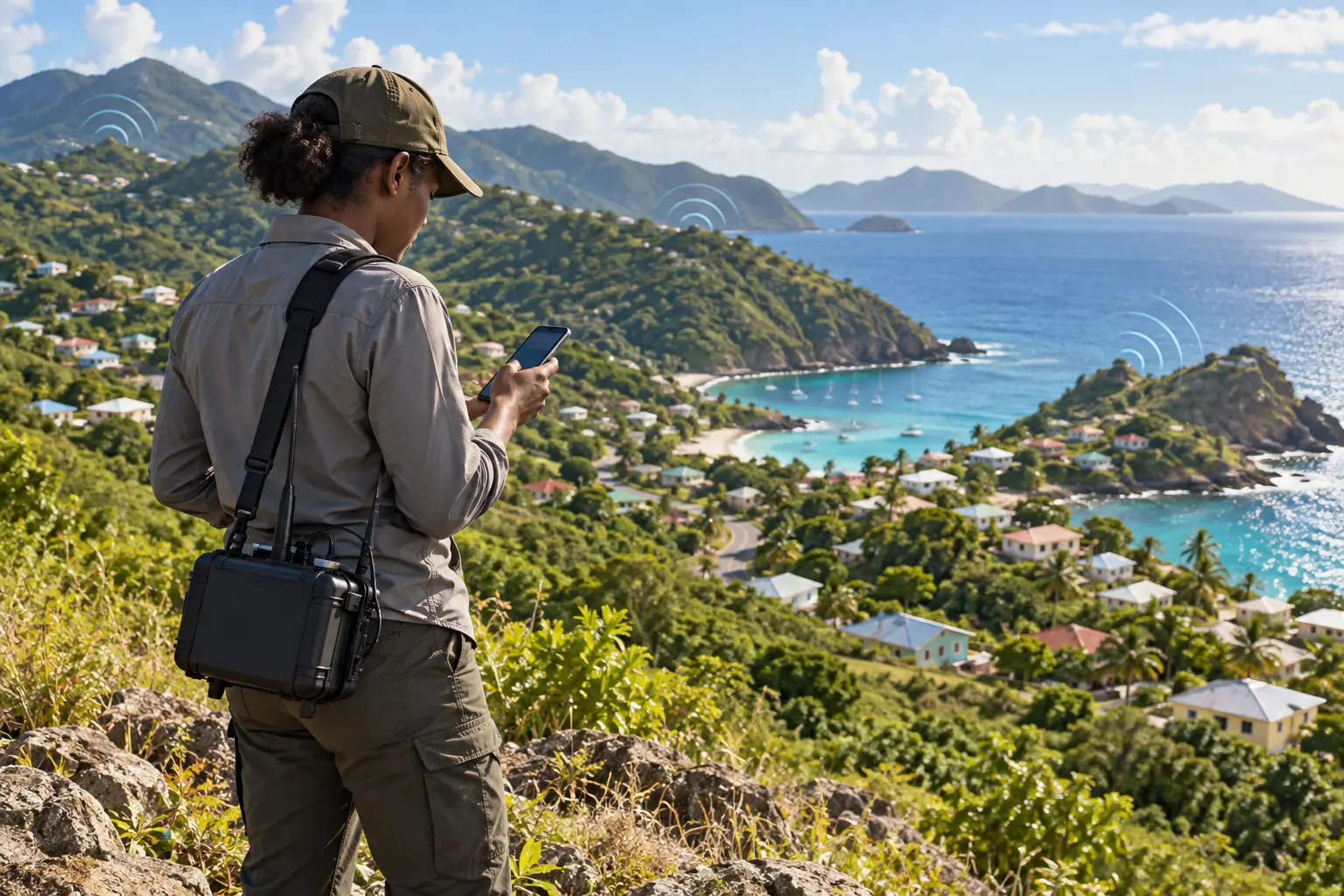
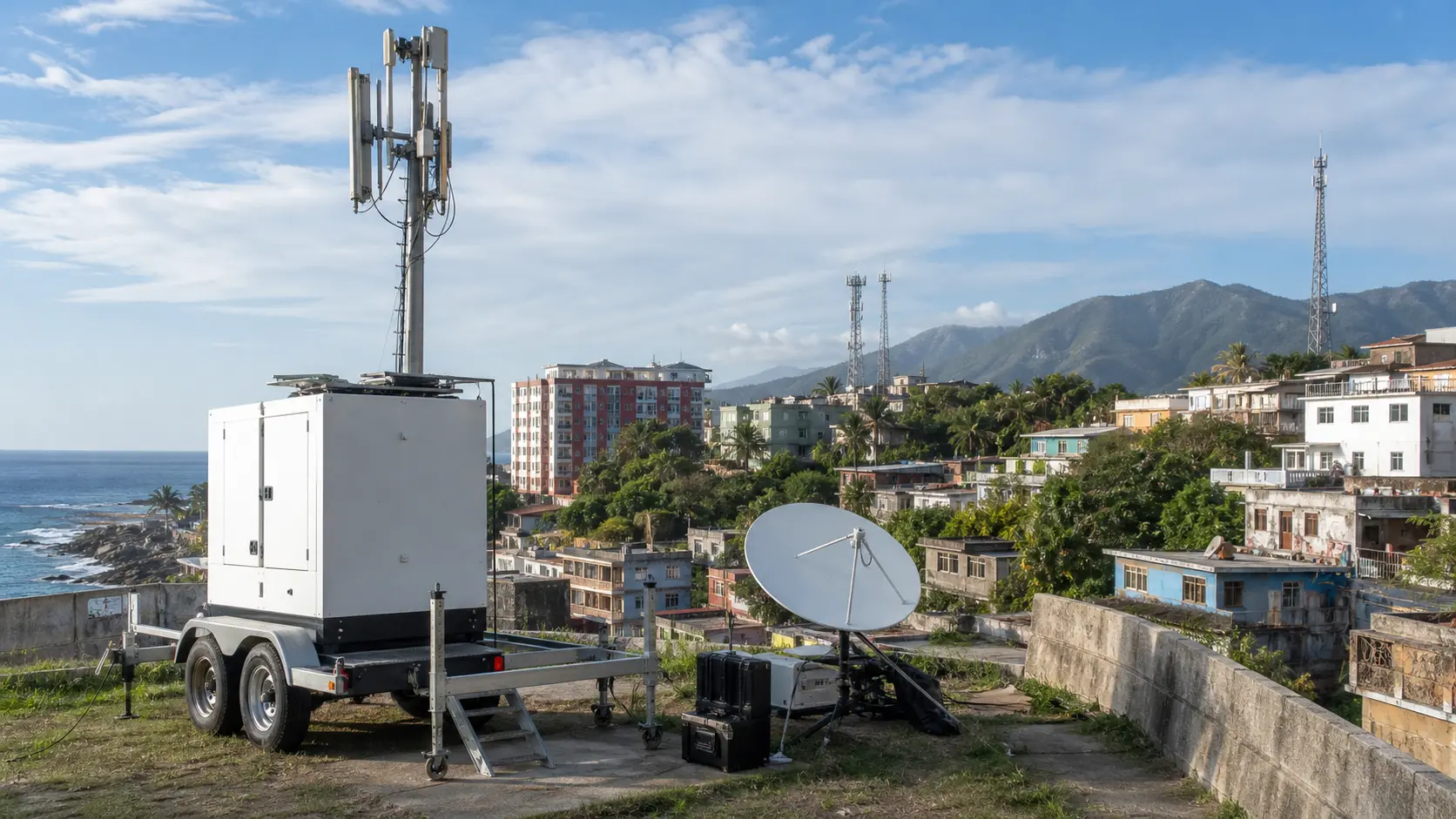
Movistar Venezuela says voice, mobile data and text messaging are again available in all 11 parishes of La Guaira, the coastal state whose telecom infrastructure was damaged by the June 24 earthquakes. The operator reported 52 reactivated sites. In the area it calls the disaster's “Zone Zero”, 11 recovery stations carry the clearest sign of the network's interim state: nine use Starlink satellite links for transmission and two are mobile units.
That is a material step beyond Movistar's previous public update. On July 7, Telefónica Venezuela said a third Starlink-backed base station was due to be switched on, naming Playa Grande and Caraballeda as served areas and Catia La Mar as next. The July 17 account moves the claim from a limited emergency deployment to state-wide availability across every parish and supplies a total site count.
It should still be read as an operator milestone, not an independent performance test. Movistar did not publish traffic volumes, availability measurements, speeds, congestion levels or a parish-by-parish coverage map. The number 52 describes sites the company says it reactivated; it does not establish that every pre-earthquake asset is permanently repaired or that every user receives the same quality of service.
Satellite backhaul bought recovery time
The emergency design separates the radio service a handset sees from the terrestrial transport that normally carries its traffic onward. Where damaged fibre or microwave paths could not be restored quickly, Starlink terminals supplied transmission for nine base stations. Mobile units filled two further gaps. Movistar also said it strengthened backup power and continues monitoring and optimisation work.
The distinction matters. Satellite backhaul can restore reach without waiting for every terrestrial route, tower site or power connection to be rebuilt. That makes it valuable after a disaster, especially for calls, messaging, relief coordination and basic data access. But the temporary path may have different capacity, latency, weather exposure and operating costs from the network it substitutes for. None of those parameters was disclosed for La Guaira.
Reporting is also inconsistent about what the nine Starlink links represent. Alta Densidad describes nine of the 11 emergency stations as satellite-backed; DPL News says temporary satellite-backed bases served nine parishes. Without an operator site map, it is safer not to infer a one-station-to-one-parish relationship. The verified public claim is all-parish service availability alongside nine satellite-backed stations and two mobile units.
This mixed architecture changes the immediate operational question. The priority is no longer simply whether a signal exists somewhere in each parish. It is whether temporary transmission and mobile plant can carry normalising traffic reliably while permanent routes are repaired, and whether energy backup can withstand further grid interruptions.
One operator's restoration is not a system-wide repair
La Guaira's connectivity depends on more than Movistar's radio access network. DPL News reported that state operators Cantv and Movilnet were still using satellite links, mobile radio bases and shared technical resources while definitive work continued. A July 16 report sourced to Venezuela's science and technology ministry described Movilnet operating 27 radio bases and deploying temporary equipment at damaged locations. Those figures belong to those operators' recovery claims and should not be treated as proof that every fixed or mobile service in the state is normal.
The damaged submarine cable off La Guaira is another separate layer. Cirion and the regulator have said a specialist vessel was needed for the physical repair. Until that job and testing are complete, local radio restoration does not by itself restore all international transmission capacity. A handset can show service while the upstream route remains congested, diverted or dependent on contingency capacity.
For Movistar, the next credible milestone is therefore not a larger headline percentage. It is evidence that emergency stations have been replaced or incorporated into a resilient permanent design, backed by measurements of availability and capacity. For the wider system, the watchpoints are completion of terrestrial and submarine repairs, withdrawal of temporary assets without renewed coverage loss, and publication of service data that can distinguish broad geographic reach from stable everyday performance.
Movistar's 52-site announcement matters because it moves La Guaira from an extensive mobile outage to claimed coverage across the state. It also exposes the economics of disaster recovery: satellite capacity, mobile plant, shared infrastructure and backup power can compress restoration time, but they do not make the reconstruction bill—or the remaining network dependencies—disappear.
Sources
- Alta Densidad, July 17, 2026 — in-window report carrying Movistar's 11-parish, 52-site restoration claim and the nine-satellite/two-mobile station breakdown.
- DPL News, July 17, 2026 — specialist reporting on Movistar, Cantv and Movilnet recovery measures, shared resources and continuing definitive repairs.
- Telefónica Venezuela, July 7, 2026 — primary earlier update documenting the limited initial Starlink-backed base-station deployment.
- teleSUR, July 16, 2026 — report sourced to the science and technology ministry on Cantv and Movilnet's still-active temporary recovery work.
- DPL News, July 15, 2026 — context on the separate physical repair required for the damaged submarine cable off La Guaira.