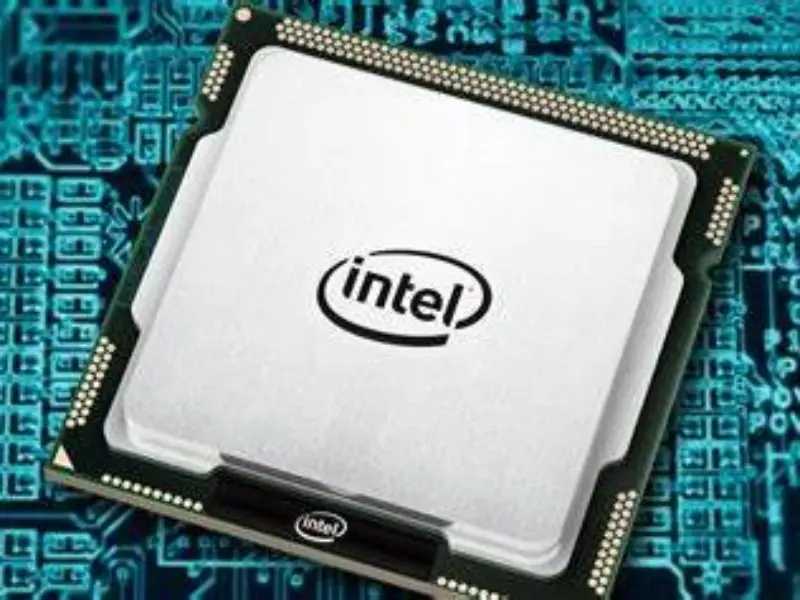
Intel is a public record based on article evidence, entity context, event links, and relationship context.
Intel has confirmed the launch of its next-generation Core Ultra processors, codenamed “Lunar Lake”, on September 3 in Berlin, featuring a significant focus on AI and performance improvements. The CPUs include an updated NPU delivering 48 TOPS, a new GPU supporting ray tracing, and a unique layout designed to enhance performance and battery life, setting the stage for Intel’s upcoming “Arrow Lake” desktop and laptop CPUs. OUR TAKE Intel’s Lunar Lake launch signifies a strategic pivot towards AI and improved performance, essential for regaining market dominance.
The new CPUs aim to match rivals AMD and Qualcomm, offering competitive AI capabilities and better performance-per-watt. However, Intel must overcome the challenge of convincing consumers of its relevance in an increasingly AI-focused landscape. –Vicky Wu, BTW reporter What happened Intel has officially confirmed the launch of its next-generation Core Ultra processors, codenamed “Lunar Lake,” in a September 3 event in Berlin. The new mobile CPUs will be showcased alongside systems from partner companies.
Lunar Lake represents a significant shift in Intel’s strategy, focusing equally on artificial intelligence and general performance improvements. The updated neural processing unit (NPU) in Lunar Lake delivers an estimated 48 TOPS (trillion operations per second), making it competitive with AMD’s Ryzen AI 300 lineup and Qualcomm’s Snapdragon X series. The architecture includes four efficiency cores and four faster performance cores. Intel claims a 50% estimated graphics speedup through an integrated Battlemage GPU, which also supports ray tracing.
Additionally, Lunar Lake features a fundamentally different layout, with RAM sitting directly on the package similar to Apple’s M-series chips, and the efficiency cores placed separately from the performance cores. This design is intended to improve performance and battery life, albeit sacrificing upgradeable memory. Intel plans to expand the Lunar Lake concept to desktops and more laptop designs with the upcoming “Arrow Lake” CPU family. The Lunar Lake launch could be one of Intel’s most significant consumer chip releases, aiming to regain competitiveness in the face of challenges from rivals like AMD and Qualcomm.
Also read: Intel confirms 13th/14th generation processor stability issues Also read: Intel expects to reach $1B in revenue from software strategy Why it’s important Lunar Lake marks a critical moment for Intel, which has faced increasing competition from chipmakers in both design and manufacturing processes. The success of Snapdragon-based Copilot+ PCs, such as the Surface Laptop 7, signalled a shift away from Intel’s dominance. Lunar Lake theoretically matches competitors on several fronts while providing broader Windows app compatibility than Qualcomm.
The challenge for Intel is to convince consumers that it remains relevant in an AI-dominated era. Although the current Core Ultra line has made strides in speed and efficiency, Lunar Lake needs to demonstrate significant advancements to stay competitive. The new CPUs will be compared directly with AMD’s Strix Point-based Ryzen AI 9 HX 370 and Qualcomm’s Snapdragon X Elite, and early benchmarks suggest they perform well in single-core tests but lag in multi-core performance due to fewer CPU cores. In terms of performance-per-watt, Lunar Lake outperforms the Snapdragon X Elite but falls short of Apple’s offerings.
Intel’s Lunar Lake launch is a bold move to reclaim its position as a leader in mobile computing and AI, and the September 3 event will be crucial for gauging its success.
Member Briefing
Deeper Trend Context
Sign in with the right membership level to unlock the full briefing and source notes.
Only for Strategic Circle
Strategic Circle
Open to all readers. Unlock trend briefings after joining and signing in.
Join Strategic CircleOnly for Leadership Alliance
Leadership Alliance
For operators, investors, and policy teams that need relationship evidence, failure paths, and source notes. Sign in to unlock.
Join Leadership Alliance