
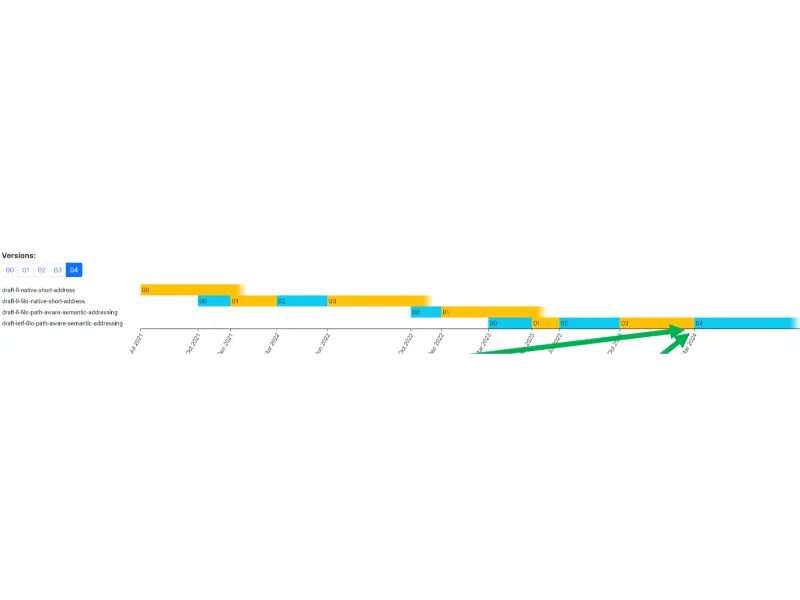
- Since IETF 118, there has been a low power and lossy networking draft – IETF-60 – Low Path Awareness – Semantic Addressing -04. But now there is one major change: adapting the text to GAAO.
- Generic Address Assignment Option for 6LowPAN’s main changes are practical, adding “Definition of terms Go conditions”, “Gaad error code”, “Address assignment function registry”, and more.
On March 22, 2024, L. Iannone, a researcher at Huawei Technologies France, presented a new approach called Path-Aware Semantic Addressing (PASA) for improving Internet connections in networks with limited resources.
He confirmed that the main technical details have remained consistent in recent updates. Additionally, he mentioned a new document addressing the reliability of this approach, titled “draft-li-6lo-pasa-reliability-03.”
PASA for low power and lossy networks
- Document does not update RFC 8505 anymore
- Structure remained more or less the same
- Terminology has been updated
- Added reference to GAAO document
Since IETF 118, there has been a low power and lossy networking draft – IETF-60 – Low Path Awareness – Semantic Addressing -04. But now there is one major change: adapting the text to GAAO.
The first main content change:
- The discussion on an alternative method for assigning addresses has been eliminated. This function is now part of GAAO.
- Previously, PASA used one bit in 6CIO to indicate its presence. Now, PASA uses GAAO, so there’s no need to make any changes to 6CIO.
The second main content change:
- There’s no need to create new options for Neighbor Discovery anymore; it’s now handled by GAAO.
- Just utilize the GAAO option, with examples included in the document.
IANA Section’s Changes:
- No need anymore to create an AAF registry, now it is done in GAAO.
- No need to allocate bits in EARO
- No need to allocate bits in 6CIO, now it is done in GAAO.
- Just request one code point for PASA assignment function in the registry created by GAAO.
So yes, main technical content not changed in the last revisions. But apparently yes, draft is ready to move forward and asked early reviews from other areas.
Also read: IETF 119 officially kicks off in Brisbane
Generic Address Assignment Option for 6LowPAN
Main change is that: Document Beefed up!
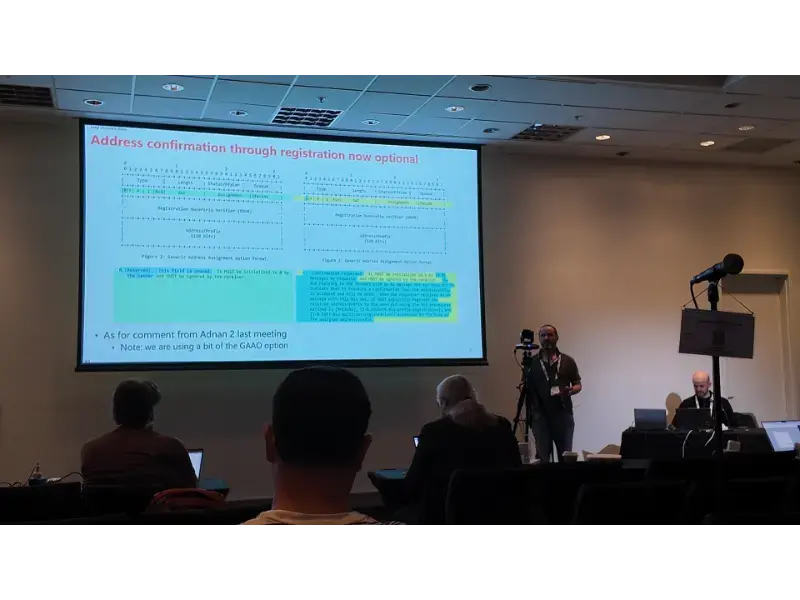
The catalog has now been updated to include sections such as “Term Definitions,” “GAAO Conditions,” “GAAO Error Codes,” “Address Assignment Function Registry,” and “Acknowledgements.” In addition, confirming the address by registration is now optional. Regarding Adnan’s comments at the last meeting, the draft is implementing part of the GAAO option.
After some modifications, now it looks like a new structure:
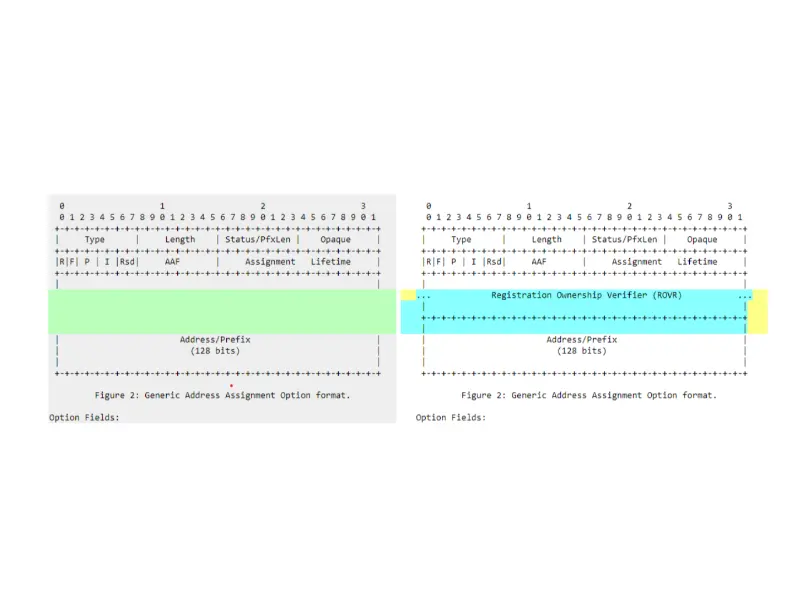
Regarding the updated IANA section, several actions have been taken, including defining ND Option type for GAAO, 6CIO Bit, GAAO Error code, and AAF Registry. IANA has already reviewed the section, and there are a few more changes to make. Moving forward, what are the next steps regarding the reliability considerations of path-aware semantic addressing?
What to do with this document? Three options for you:
A. Let it expire, it fulfilled its purpose. See also IESG Statement about supporting documents.
B. Adopt as informational
C. Merge with PASA